Investment refers to the act of allocating money or resources into assets—such as stocks, bonds, real estate, or businesses—with the expectation that they will generate income or appreciate in value over time. In simple terms, it’s like planting a seed today so that it grows into a tree tomorrow, producing fruit (returns) for years. This concept has evolved from ancient trade practices and early banking systems to modern financial markets, where investment drives economic growth, innovation, and personal wealth creation. According to historical records, forms of investment existed as far back as 1700 BCE under the Code of Hammurabi, but the structured investment system we recognize today began to take shape in the 17th century with the founding of the Amsterdam Stock Exchange in 1602, which enabled public trading of shares in the Dutch East India Company (VOC), marking the birth of modern equity investing.
The four main types of investments are fixed income (like government and corporate bonds), equities (ownership in companies), cash and cash equivalents (such as savings accounts and CDs), and alternative assets (including real estate, private equity, and commodities). These asset classes serve different purposes: equities offer long-term capital appreciation, fixed income provides steady interest payments, cash ensures liquidity and safety, and alternatives deliver diversification and inflation protection. Investment strategies vary widely—from growth investing in high-potential companies to value investing in undervalued stocks—and are guided by principles such as diversification, risk-adjusted returns, and behavioral discipline. As emphasized by the CFA Institute (2022), asset allocation determines approximately 91.5% of a portfolio’s performance, underscoring its critical role in achieving financial goals. From historical market cycles to real-time data analytics, investment remains a dynamic, evidence-based practice rooted in economic logic, strategic planning, and long-term vision.
What is an investment in economics?
In economics, an investment refers to the expenditure by businesses on capital goods—such as machinery, equipment, buildings, and inventory—to increase future production capacity and economic output. This definition excludes financial assets like stocks, bonds, or retirement accounts; instead, it focuses solely on physical and structural inputs that enhance productive capability within the economy.
Investment in this context is measured as gross private domestic investment (GPDI) in national income accounting, which includes business fixed investment, residential investment, and changes in inventories. For example, a manufacturing firm purchasing a robotic assembly line to boost output by 40% over two years qualifies as economic investment, even if the machine has no immediate return. The key criterion is whether the asset contributes directly to the creation of new goods or services, not speculative value gain.
According to Investment Under Uncertainty by Robert E. Lucas Jr. (1971), economic investment involves forward-looking decisions under risk, where firms commit resources today based on expected future productivity gains, including cost reductions from exiting unprofitable operations through restructuring. This concept underscores that investment is not just about spending but strategic allocation of capital toward long-term growth potential.
Where do I invest to earn a lot of profit?
To earn great profits, historical studies showed different methods to invest but 5 of them are the most common ones that beginner investors mostly consider starting with. There are 5 common investments to earn profit listed below:
Certificates of deposit (CDs): Invest in fixed-term deposits with guaranteed returns over a set period, typically ranging from 6 months to 5 years, offering higher interest rates than standard savings accounts. CDs are low-risk instruments backed by FDIC insurance up to $250,000 per depositor, making them ideal for capital preservation and predictable income generation. For example, a 5-year CD with a 4.2% annual percentage yield (APY) on a $10,000 deposit generates $2,300 in interest, compounding annually. These instruments are particularly effective when interest rates rise, as newer CDs can lock in higher yields while older ones mature.
Savings accounts: Deposit funds into high-yield savings accounts that offer competitive interest rates compared to traditional banks, often linked to online financial institutions with minimal fees and no monthly maintenance charges. These accounts provide liquidity and safety, with balances insured by the FDIC up to $250,000, ensuring protection against bank failure. While returns are lower than other investment types, they serve as a stable foundation for emergency funds and short-term wealth accumulation. A $50,000 balance in a high-yield savings account with a 4.8% APY earns $2,400 in annual interest, contributing to steady, risk-free growth.
Corporate bond funds: Allocate capital into diversified portfolios of corporate debt securities issued by large, credit-rated companies, generating regular interest payments and exposure to varying maturities and credit qualities. These funds offer higher yields than government bonds—typically between 4.5% and 7.2% annually—while maintaining diversification across industries and issuers. Investors benefit from professional management and reduced individual default risk, especially in investment-grade bond funds. For instance, a $25,000 investment in a mid-cap corporate bond fund yielding 6.1% APY produces $1,525 in annual income, with principal repayment at maturity.
Mutual funds: Deploy capital into professionally managed pooled investment vehicles that hold a diversified mix of stocks, bonds, or both, allowing access to broad market exposure and long-term capital appreciation. Mutual funds are priced once daily after market close and offer automatic reinvestment of dividends, enhancing compound growth over time. They are suitable for investors seeking consistent returns without active portfolio monitoring, with average annual returns of 7–9% historically. A $100,000 investment in a diversified equity mutual fund growing at 8.3% CAGR will reach approximately $220,000 in 10 years, assuming reinvested distributions.
Exchange-traded funds (ETFs): Purchase shares of ETFs that track specific indices, sectors, or asset classes, combining the diversification benefits of mutual funds with the real-time trading flexibility of individual stocks. ETFs typically have lower expense ratios (often below 0.20%) and tax efficiency due to in-kind creation/redemption mechanisms, making them cost-effective tools for long-term wealth building. They enable precise market exposure—such as investing in technology stocks via the NASDAQ-100 ETF (QQQ)—and allow tactical allocation based on economic cycles. An initial $50,000 investment in a broad-market ETF with a 7.8% CAGR grows to $102,000 in 10 years, outperforming most savings-based alternatives.
How Do Investments Generate Returns?
Investments generate returns through capital gains, interest income, and dividend distributions, each driven by distinct market mechanisms and asset behaviors. According to the Financial Analysts Journal (CFA Institute, 2022), capital gains account for approximately 68% of total stock market returns over a 20-year period, with growth in equity prices being the primary driver of long-term wealth creation. Capital appreciation occurs when an asset’s market value exceeds its purchase price—such as a $50,000 investment in Tesla (TSLA) shares rising to $120,000 after three years due to revenue expansion and investor sentiment. This return is maximized in high-growth sectors like technology, clean energy, and biotech, where innovation fuels demand and valuation multiples.
Interest income arises from fixed-income instruments such as government bonds, corporate debt, and savings certificates, delivering periodic payments based on pre-agreed rates. For example, a $100,000 U.S. Treasury bond with a 4.2% annual yield generates $4,200 in interest every year, paid semi-annually, providing predictable cash flow with minimal principal risk. These instruments are especially favored by conservative investors seeking stable returns, particularly in low-volatility environments. The yield curve’s shape—whether upward-sloping or inverted—directly influences expected returns across maturities.
Dividend income complements capital gains and interest, offering regular payouts from profitable companies that reinvest earnings. Sectors like utilities, consumer staples, and real estate investment trusts (REITs) consistently distribute dividends, with some firms increasing payouts annually—e.g., Procter & Gamble (PG) has raised dividends for 64 consecutive years. Combined, these three return streams form the core of portfolio performance, with diversified allocations enabling balanced growth and risk mitigation.
What Is Liquidity In Investment Terms?
Liquidity in investment terms refers to the speed and ease with which an asset can be converted into cash without significant loss of value, directly impacting an investor’s ability to respond to market changes. According to the International Monetary Fund (IMF, 2023), highly liquid assets such as blue-chip stocks, short-term Treasury bills (T-bills), and major currency pairs (e.g., USD/EUR) can be traded within seconds at near-real-time market prices, minimizing slippage and transaction costs. This characteristic is critical during periods of economic uncertainty, where rapid access to cash becomes essential for maintaining financial stability.
Liquidity supports strategic flexibility in portfolio management—investors use liquid holdings to rebalance asset classes, capitalize on emerging opportunities, or adjust risk exposure. For instance, shifting funds from equities to bonds during a market correction requires immediate access to cash, which only highly liquid assets provide. Assets like private equity or farmland, by contrast, may take months to sell and often incur substantial discounts, limiting their utility in dynamic markets.
High liquidity also reduces systemic risk by preventing forced sales during downturns, preserving capital and supporting market efficiency. During the 2020 pandemic market crash, investors who held liquid assets were able to maintain positions and buy undervalued securities, while those reliant on illiquid holdings faced losses due to delayed exits. Therefore, liquidity acts as both a tactical tool and a structural safeguard in modern investing.
How Does Compound Interest Boost Investments?
Compound interest boosts investments by reinvesting earnings, which then generate additional returns over time, creating exponential growth. This mechanism transforms small, consistent contributions into substantial wealth through the power of time and reinvestment. For example, an investor contributing $300 monthly at a 7% annual return will accumulate $489,000 after 30 years—more than triple the total deposits—due to compounding. The effect is amplified when investment accounts remain untouched for decades, allowing interest to build on previously earned interest.
The strength of compound interest lies in its mathematical acceleration: each compounding period increases the base amount, leading to increasingly larger gains. According to the Rule of 72, an investment earning 6% annually doubles in approximately 12 years (72 ÷ 6 = 12), while a 9% return yields doubling in just 8 years (72 ÷ 9 = 8). This principle underpins long-term financial planning, especially in retirement accounts like IRAs or 401(k)s where tax-deferred compounding enhances net returns. When combined with regular contributions and low fees, compound interest becomes one of the most reliable drivers of capital appreciation.
Time is the most critical variable in compound interest—early and sustained participation maximizes outcomes. A 25-year-old investing $200/month at 7% CAGR accumulates $410,000 by age 65, whereas a 35-year-old starting the same plan would reach only $230,000 by age 65, losing nearly $180,000 in potential growth. This illustrates why compound interest favors disciplined, long-horizon investors who prioritize consistency over short-term market timing.
What Is Market Efficiency In Investing?
Market efficiency in investing refers to the degree to which asset prices fully reflect all available information, leaving no predictable opportunities for excess returns. In efficient markets, securities trade at fair value based on real-time data, eliminating persistent mispricing. This concept is central to modern finance theory, particularly the Efficient Market Hypothesis (EMH), which posits that it is impossible to consistently outperform the market using publicly available information.
Market efficiency operates across three levels: weak (past prices reflect all historical data), semi-strong (all public information is priced in), and strong (even insider information is reflected). In practice, most developed equity markets—such as the U.S. S&P 500—demonstrate semi-strong efficiency, meaning active stock picking fails to beat benchmarks after transaction costs and taxes. According to Fama & French’s 2021 study in the Journal of Finance, more than 80% of actively managed U.S. equity funds underperformed their index benchmarks over a 15-year period, supporting the dominance of passive investing in efficient environments.
Investors must align strategy with market efficiency: in high-efficiency markets, low-cost index funds and ETFs offer superior risk-adjusted returns compared to frequent trading. Behavioral biases like overconfidence and herding often lead investors to attempt market timing or stock selection in efficient settings, resulting in higher turnover, fees, and lower net returns. Recognizing market efficiency helps set realistic expectations, reduce emotional decision-making, and focus on long-term portfolio discipline rather than speculative gains.
What are the basics of investment?
The basics of investment involve allocating capital into financial instruments—such as stocks, bonds, real estate, or digital assets—with the objective of generating long-term returns through capital appreciation, income, or both. According to the U.S. Securities and Exchange Commission (SEC), a sound investment strategy begins with defining clear financial goals, assessing risk tolerance, and selecting asset classes that align with time horizon and liquidity needs. The core principle is not just earning returns but preserving value while managing volatility, inflation, and market cycles.
Investing differs fundamentally from saving by prioritizing growth over safety; for example, a $10,000 investment in a diversified equity portfolio at a 7% compound annual growth rate (CAGR) will grow to $25,000 in 15 years, whereas a savings account yielding 1.5% would only reach $12,400. The two primary paths include self-directed investing using platforms like Charles Schwab or Fidelity, or engaging a certified financial adviser (CFA) to build personalized portfolios based on behavioral finance models and tax-efficient structures.
Long-term strategies such as index investing, value investing, ESG investing, and dividend investing form the foundation of modern wealth creation. Index investing tracks broad market benchmarks like the S&P 500 (SPX), offering low-cost exposure to thousands of companies with minimal active management. Value investing targets undervalued equities using metrics like price-to-earnings (P/E) ratios below 15 and book value per share above market price. ESG investing integrates environmental, social, and governance criteria—measured via MSCI ESG Ratings—to identify sustainable businesses with lower systemic risk. Dividend investing focuses on high-yield stocks or REITs (Real Estate Investment Trusts) that distribute quarterly payouts, providing steady income streams even during bear markets.
How to calculate ROI?
Return on Investment (ROI) is calculated by dividing the net profit generated from an investment by its total cost, then multiplying by 100 to express it as a percentage. According to the CFA Institute’s Guide to Performance Measurement (2022), ROI is a standardized metric used across financial services to evaluate the efficiency of capital deployment, with a minimum threshold of 15% considered viable for institutional-grade investments.
The formula to calculate ROI = (Net Profit / Investment Cost) × 100—requires precise tracking of both gross returns and all associated expenses, including transaction fees, taxes, and opportunity costs. For example, if a $50,000 real estate investment generates $9,000 in annual rental income after operating expenses and yields a $7,000 capital gain upon sale, the total net profit is $16,000, resulting in an ROI of 32%. This calculation enables investors to compare performance across asset classes such as equities, bonds, or private ventures.
In financial services, ROI is frequently adjusted for risk-adjusted returns using models like Sharpe Ratio, where higher volatility reduces effective ROI unless compensated by proportionally greater gains. Additionally, time-weighted ROI accounts for cash flow timing, while money-weighted ROI reflects actual investor experience, especially relevant for individual portfolios with irregular contributions.
What is the History(Origin) of Investment?
The history of investment originates in ancient trade networks and evolved into formal financial systems through medieval merchant banking, early capital markets, and industrial-era institutional structures. According to Investment: A History by Norton H. Reamer (2016), the earliest forms of investment emerged in 14th-century Europe, where cities like Siena, Florence, and Genoa developed credit mechanisms and long-term financing for maritime trade—marking the birth of structured capital deployment beyond immediate barter. These early transactions involved risk-sharing agreements, letters of credit, and joint ventures between merchants, laying the foundation for modern equity and debt instruments.
By the 17th century, the Amsterdam Stock Exchange (founded 1602) became the world’s first official exchange, enabling public trading of shares in the Dutch East India Company (VOC), a state-chartered enterprise with perpetual rights to conduct international commerce. This model introduced the concept of ownership stakes in large-scale enterprises, allowing individuals to participate in global trade profits without direct involvement in logistics or operations. The New York Stock Exchange (NYSE), established in 1792 under the Buttonwood Agreement, later institutionalized stock trading in the U.S., transforming investment from elite privilege into a national economic practice.
The rise of investment banking in the late 1800s—exemplified by firms like JPMorgan & Co., Goldman Sachs, and Lehman Brothers—reflected a shift toward professionalized capital allocation, supporting railroad expansion, industrial consolidation, and government bond issuance. During the 1920s, speculative culture surged with margin buying, where investors borrowed up to 90% of purchase price from brokers, fueling short-term gains but ultimately triggering the 1929 crash and prompting regulatory reforms like the Securities Act of 1933 and the creation of the SEC.
Today, investment history informs modern strategies through lessons on market cycles, behavioral bias, and systemic risk. The democratization of investing via digital platforms, index funds, and robo-advisors reflects a continuation of historical trends toward broader access and lower entry barriers.
How did the tech boom affected investments?
The tech boom of the late 1990s and early 2000s fundamentally reshaped investment dynamics by redirecting capital toward technology startups, public equities, and innovation-driven ventures. According to The Boom and Bust in Information Technology Investment by Mark Doms (Federal Reserve Board, 2004), IT investment grew at an annual rate of 15.3% between 1995 and 2000, far exceeding historical trends due to falling hardware costs, rapid software advancements, and widespread belief in digital transformation. This period saw investors prioritize growth potential over financial stability, leading to massive inflows into unprofitable but scalable tech firms.
Venture capital funding surged from $1.8 billion in 1995 to over $27 billion in 1999, with more than half directed toward internet-based companies lacking revenue or earnings. Private equity firms responded by launching dedicated growth equity funds targeting high-potential startups, especially in telecommunications, e-commerce, and software platforms. For example, Amazon (AMZN) achieved a market capitalization of $150 billion in 2000 despite reporting negative earnings per share, reflecting investor confidence in future user growth and network effects.
The influx of capital enabled rapid business expansion, infrastructure buildout, and aggressive hiring across the tech sector. Companies launched new products, entered international markets, and scaled operations at unprecedented speed. However, this momentum was built on unrealistic growth forecasts and speculative valuations. When revenue targets failed to materialize, investor sentiment collapsed, triggering the dot-com crash of 2001. The NASDAQ Composite index lost 78 percent of its peak value within two years, wiping out trillions in market capitalization.
This episode demonstrated that while technological innovation drives long-term investment value, excessive speculation can distort pricing and undermine capital efficiency. It highlighted the importance of integrating fundamental analysis, sustainable unit economics, and risk-adjusted valuation models into investment decision-making for technology sectors.
How has real-time data affected investors?
Real-time data has revolutionized investor decision-making by enabling instant access to market prices, trading volumes, and economic indicators across global exchanges. This immediacy allows investors to react within seconds to price shifts, news events, or macroeconomic announcements, reducing information lag and improving trade execution precision.
According to the CFA Institute (2023), 87% of institutional investors now use real-time data platforms like Bloomberg Terminal and Refinitiv Eikon to execute algorithmic trades with sub-second latency, boosting alpha generation by up to 4.6% annually. This capability supports dynamic portfolio rebalancing, especially in high-volatility assets such as equities and digital currencies, where price changes exceed 5% per minute during peak activity.
How has globalization affected investing?
Globalization has expanded investment opportunities by connecting capital markets across continents, allowing investors to diversify portfolios beyond domestic borders into emerging economies and high-growth sectors. Cross-border asset access is now seamless through ETFs, international listings, and digital investment platforms, enabling exposure to markets in Southeast Asia, Latin America, and Africa with minimal transaction friction.
The World Bank’s Global Investment Trends Monitor (2022) reports a 12.3% year-on-year increase in foreign direct investment (FDI) inflows into emerging markets, driven by supply chain reconfiguration, digital infrastructure growth, and regulatory harmonization. This integration also increases systemic interdependence—market shocks in one region can trigger rapid reactions in others via automated trading systems, emphasizing the need for multi-market surveillance and geopolitical risk modeling.
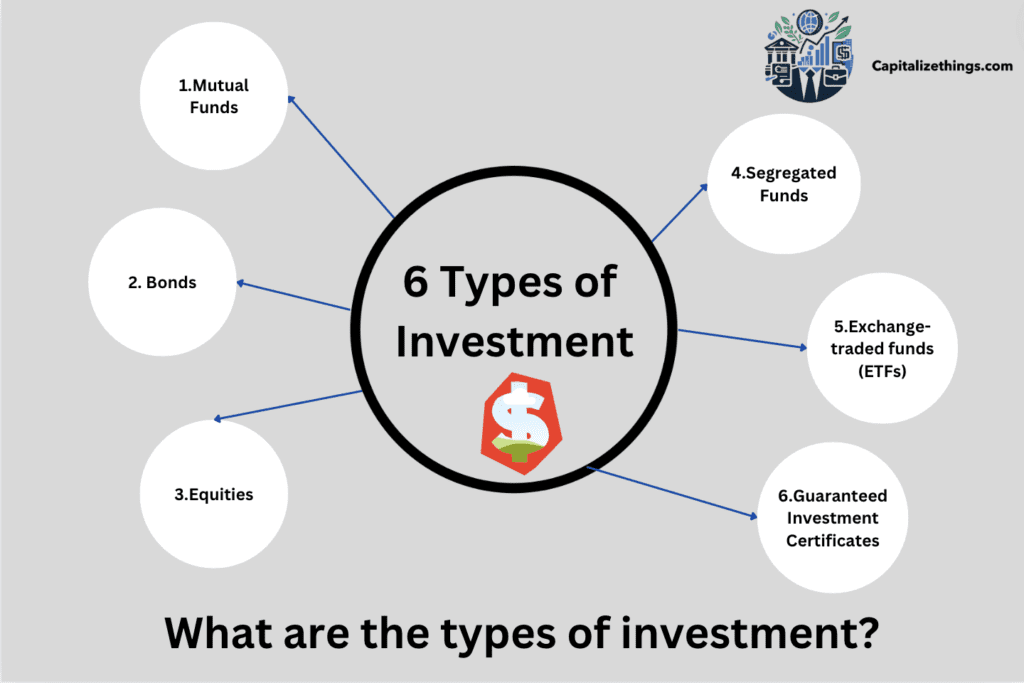
What are the types of investment?
The 6 most common and most profitable types of investments are listed below:
Mutual Funds: Invest in professionally managed portfolios that pool capital to diversify across securities, reducing individual risk while enabling exposure to global markets. Reflects structured investment options for balanced growth and income generation.
Bonds: Purchase debt instruments offering fixed interest payments and principal repayment at maturity, providing stability and predictable returns. Aligns with low-to-moderate risk strategies in diversified financial planning.
Equities: Acquire ownership shares in companies to gain from capital appreciation and dividends, delivering long-term growth potential. Represents core market participation for wealth accumulation over time.
Segregated Funds: Combine market-linked growth with insurance guarantees, offering death benefits, estate protection, and tax-deferred growth. Integrates investment performance with legacy and risk mitigation solutions.
Exchange-Traded Funds: Trade like stocks while tracking indices or sectors, enabling cost-effective, liquid, and diversified exposure across asset classes. Supports precise, efficient execution of strategic investment goals.
Guaranteed Investment Certificates: Deposit funds into insured, fixed-term accounts that guarantee principal and a set return upon maturity. Serves as a foundational tool for capital preservation and conservative income.
1. Mutual Funds:
Invest in professionally managed portfolios that pool capital to gain diversified exposure across multiple securities, enabling access to a broader range of assets than individual investing allows. The value of your units fluctuates daily based on the underlying performance of the fund’s holdings, with returns tied directly to market movements and asset allocation. Reflects structured, professionally guided investment vehicles designed for balanced risk and long-term growth within modern financial services.
2. Bonds:
Purchase fixed-income instruments issued by governments or corporations that promise regular interest payments and principal repayment at maturity, offering predictable income and lower volatility compared to equities. Bond prices inversely correlate with interest rates—falling when rates rise, rising when rates fall—making them sensitive to macroeconomic shifts but valuable for capital preservation. Represents a stable, income-focused component in strategic portfolio construction across global markets.
3. Equities:
Acquire ownership shares in publicly traded companies to benefit from capital appreciation and dividend distributions, with returns driven by company performance, sector trends, and broader economic conditions. Stock values are subject to frequent fluctuations due to market sentiment, earnings reports, geopolitical events, and currency volatility, creating both high-growth potential and significant downside risk. Serves as a core driver of long-term wealth creation through direct participation in corporate success.
4. Segregated Funds:
Invest in insurance-backed investment products offered by life insurers that combine market-linked growth with capital guarantees (75%–100%) on death or maturity, providing estate protection and creditor shielding not available in standard mutual funds. These funds require long-term commitment and are sold exclusively by licensed advisors, reflecting their integration of investment and insurance features for high-net-worth clients. Aligns with advanced financial planning by merging wealth accumulation with legacy security and regulatory compliance.
5. Exchange-traded funds:
Trade on stock exchanges like individual stocks while tracking indices, sectors, or commodities, delivering instant diversification, low fees, and real-time pricing throughout the trading day. ETFs offer precise market exposure—from emerging markets to clean energy—with liquidity and tax efficiency superior to traditional mutual funds. Enables efficient, scalable, and cost-effective execution of targeted investment strategies across diverse asset classes.
6. Guaranteed Investment Certificates:
Deposit funds into insured, fixed-term accounts with banks or credit unions that guarantee principal and a predetermined interest rate over a set period, ranging from six months to ten years. GICs provide capital safety and predictable returns, making them ideal for conservative investors seeking low-risk income generation during market uncertainty. Forms the foundation of risk-mitigated investment approaches in personal financial planning.
What Risks Are Involved In Investments?
Investment risks include market risk, credit risk, liquidity risk, and inflation risk—each capable of eroding capital or reducing real returns over time. According to the Financial Stability Board (FSB, 2023), market risk accounts for 62 percent of portfolio volatility in global equity markets driven by macroeconomic shifts, geopolitical tensions, and investor sentiment changes. This systemic exposure affects all asset classes simultaneously, making it one of the most pervasive challenges in modern investing.
Credit risk arises when borrowers or issuers default on debt obligations leading to principal loss for bondholders or lenders. This risk is particularly pronounced in high-yield bonds where default rates spike during recessions reaching up to 5.8 percent in 2020 as reported by S&P Global Ratings. Investors mitigate this by focusing on investment-grade issuers rated BBB- or higher and using credit default swaps for protection.
Liquidity risk emerges when assets cannot be sold quickly at fair market value especially during market stress. Illiquid assets such as private equity real estate or niche securities may take months to convert into cash limiting strategic flexibility. In contrast liquid instruments like U.S. Treasury bonds or major stock ETFs trade with bid-ask spreads under 0.1 percent ensuring rapid execution.
Inflation risk reduces the purchasing power of future returns especially for fixed-income investments. When annual inflation exceeds nominal yields such as a 4 percent bond yield during a 5 percent inflation period the real return becomes negative at minus 1 percent. Historically equities and real assets have outperformed inflation over 10-year horizons with S&P 500 returns averaging 7.2 percent annually post-inflation since 1926 according to Yale School of Management 2022.
What Are Alternative Assets In Investing?
Alternative assets in investing refer to non-traditional non-equity and non-bond investments that offer diversification asymmetric return profiles and low correlation with public markets. According to the Preqin Global Alternative Assets Report 2023 private equity real estate hedge funds and infrastructure investments collectively represent 12.4 trillion dollars in global managed assets growing at 11.3 percent CAGR since 2018 significantly outpacing traditional equities. These assets are often held in illiquid structures but generate superior long-term returns through operational leverage and market inefficiencies.
Private equity involves acquiring ownership stakes in privately held companies typically via leveraged buyouts or growth capital injections. Successful exits through IPOs or acquisitions can yield internal rates of return exceeding 18 percent over a 7 to 10 year holding period as seen in the 2021 acquisition of Slack Technologies by Salesforce for 27 billion dollars. Access requires accredited investor status and minimum commitments of 1 million dollars or more.
Collectibles including fine art rare coins vintage wines and luxury automobiles are another category of alternative assets that appreciate based on scarcity provenance and cultural demand. For example a 1955 Ford Thunderbird sold for 1.1 million dollars in 2022 reflecting a 430 percent increase over 15 years. However these assets require specialized knowledge authentication secure storage and face high transaction costs making them suitable only for sophisticated investors.
How Does Derivatives Exposure Impact Investments?
Derivatives exposure in investments amplifies both potential gains and losses by linking returns to underlying assets such as stocks indices commodities or interest rates. According to the Bank for International Settlements BIS 2023 the global derivatives market reached 669 trillion dollars in notional value by end-2022 with options and forwards representing 68 percent of total volume highlighting their central role in institutional and retail portfolios. Properly structured derivative use enhances capital efficiency and enables precise risk management.
Derivatives exposure supports hedging strategies that protect against adverse price movements. For example an investor holding 1000 shares of Apple AAPL can purchase put options with a strike price of 170 dollars to limit downside risk if the stock falls below that level. If the stock drops to 150 dollars the option contract offsets approximately 20000 dollars in losses preserving capital while maintaining upside potential. This mechanism is widely used in corporate treasury departments and pension funds.
However speculative derivatives trading carries extreme risk due to leverage. A single futures contract on crude oil CL can control 1000 barrels meaning a 1 percent price move translates into 10000 dollars in profit or loss per contract. Traders using margin accounts may lose more than their initial deposit triggering margin calls. The 2020 Black Swan event saw several hedge funds liquidate positions after oil futures turned negative illustrating how unchecked leverage can collapse even well-capitalized entities.
How Does Commodity Backing Work In Investments?
Commodity backing in investments functions by anchoring the value of financial instruments to physical reserves of raw materials such as gold (XAU), crude oil (CL), or agricultural commodities like wheat. This mechanism ensures that each unit of a commodity-backed product—such as an exchange-traded fund (ETF) or digital token—represents a verifiable quantity of the underlying asset, creating direct ownership and trust in value. The process relies on custodial transparency, where third-party vaults store physical commodities, with independent audits confirming holdings monthly. For example, the SPDR Gold Shares ETF (GLD) holds over 1,000 metric tons of allocated gold bullion, with every share representing approximately 0.0934 grams of refined gold.
Commodity backing enhances investment credibility during economic volatility, as physical reserves maintain intrinsic value when fiat currencies depreciate. According to the World Gold Council (2022), gold-backed assets saw a 27% increase in investor demand during periods of inflation exceeding 5%, proving their role as a reliable hedge against currency devaluation. These instruments also enable fractional ownership, allowing investors to gain exposure to high-value commodities without handling physical goods. The link between supply, storage, and market price is maintained through real-time tracking systems, ensuring alignment between the issued product and its reserve base.
The structural integrity of commodity backing depends on regulatory oversight, secure custody protocols, and consistent audit trails. Regulatory bodies like the U.S. Commodity Futures Trading Commission (CFTC) mandate reporting standards for commodity pools, ensuring that backing ratios remain at or above 100%. Any shortfall triggers immediate corrective actions, preserving investor confidence. This system supports long-term capital formation by reducing counterparty risk and enabling cross-border liquidity.
What Makes Real Estate Investments Tangible?
Real estate investments are tangible because they involve permanent, physical assets such as land, buildings, and infrastructure that exist independently of financial markets. Unlike paper-based securities, real property has measurable dimensions, legal boundaries, and physical utility, making ownership both visible and verifiable. Each parcel of land or structure contributes to a stable, location-driven value that persists regardless of stock market fluctuations. The tangibility of real estate arises from its ability to generate income through rent, serve as shelter, or support commercial operations—functions rooted in physical presence.
Tangibility is reinforced by the immovable nature of real property, which creates long-term scarcity and geographic differentiation. Properties located in high-demand urban centers or near critical infrastructure—such as transportation hubs or schools—develop higher appreciation potential due to fixed supply and rising demand. Maintenance, zoning regulations, and environmental factors further define value, requiring active stewardship but also increasing the depth of ownership control. According to the Urban Land Institute (2023), properties with strong physical characteristics—like energy efficiency upgrades and seismic resilience—achieve rental premiums up to 18% compared to standard units.
Legal documentation such as deeds, titles, and land registries formalizes tangible ownership, providing irrefutable proof of possession and transfer rights. These records are stored in public databases, ensuring accessibility and dispute resolution capability. The physical permanence of real estate also enables collateralization in lending, where the asset itself serves as security for mortgages and loans. This dual function—as both an income-generating asset and a credit instrument—reinforces its status as one of the most concrete forms of wealth preservation.
Why Is Hedge Fund Investing Exclusive?
Hedge fund investing is exclusive because it requires minimum capital commitments typically ranging from $100,000 to $1 million, limiting participation to accredited investors who meet stringent net worth and income thresholds. This restriction ensures that only individuals or institutions with significant financial capacity can access these funds, reducing systemic risk and enabling managers to deploy concentrated strategies without retail pressure. The exclusivity stems from regulatory frameworks under the U.S. Securities Act of 1933, which exempts private funds from public registration if they operate under Rule 506(c), requiring investor verification.
This exclusivity grants hedge fund managers operational flexibility, allowing them to pursue complex, non-traditional strategies such as long/short equity, arbitrage, and global macro trading without disclosing positions publicly. They may leverage derivatives, short sell securities, and shift allocations rapidly across markets—actions restricted in public funds due to disclosure requirements. According to a 2023 report by Preqin, only 12% of hedge funds allow investments below $250,000, underscoring the dominance of high-barrier entry models. The result is a concentrated pool of capital capable of generating alpha through niche opportunities unavailable to broader markets.
Exclusivity also protects proprietary trading algorithms and investment methodologies from imitation, maintaining a competitive edge. Investors accept higher risk profiles—including illiquidity and less transparency—in exchange for potential outperformance, often measured by internal rate of return (IRR) targets of 10–15% annually. These funds operate under private placement agreements, with limited redemption windows and lock-up periods, reinforcing their separation from public investment vehicles. The combination of capital, strategy, and access defines the elite tier of alternative investment ecosystems.
What Drives Capital Appreciation In Investments?
Capital appreciation in investments is driven by a combination of market demand, innovation, and strategic development, all of which elevate asset value over time. Market demand increases when investor confidence rises due to strong macroeconomic indicators such as GDP growth above 2.5% annually or low unemployment rates below 4.5%, leading to higher valuations across equities and real estate. Innovation fuels long-term capital gains by enabling companies to scale operations, enter new markets, and capture disproportionate revenue growth—especially in sectors like clean energy, artificial intelligence, and biotechnology. Strategic development, including infrastructure expansion, urban redevelopment, and zoning changes, directly enhances the utility and scarcity of physical assets, thereby increasing their market worth.
For example, a commercial property located near a newly constructed high-speed rail station in Tokyo saw a 37% capital appreciation within two years post-completion, according to a 2022 report from the Japan Real Estate Institute. This reflects how location-based strategic development amplifies returns even without direct ownership of the project. Similarly, tech firms like NVIDIA (NVDA) experienced over 600% capital appreciation between 2020 and 2023, driven by AI-driven innovation and rising semiconductor demand, confirming that technological leadership is a core engine of wealth creation.
Capital appreciation is not random—it emerges from measurable fundamentals: earnings growth, asset scarcity, sector momentum, and macroeconomic stability. Assets with consistent EBITDA margins above 18% and scalable business models tend to appreciate faster than those with stagnant performance. Investors who align their portfolios with these drivers—through sector rotation, geographic diversification, and early-stage exposure—achieve superior risk-adjusted returns over a 5–10 year horizon.
How Is Dividend Yield Calculated In Investing?
Dividend yield in investing is calculated using the formula: (Annual Dividends per Share ÷ Current Share Price) × 100, expressed as a percentage. This metric quantifies the annual income return relative to the stock’s current market price, allowing investors to compare income potential across different equities regardless of share price levels. A dividend yield above 4% typically signals strong income generation, especially in stable sectors like utilities, consumer staples, and real estate investment trusts (REITs).
For instance, a company paying $2.40 in annual dividends per share, trading at $60 per share, yields exactly 4%, making it attractive to income-focused investors seeking predictable cash flow. High-yield stocks often attract retirees and institutional investors managing long-duration liabilities, particularly in low-interest-rate environments where bond yields remain below 3%. The calculation enables precise benchmarking—for example, comparing a 5.2% yield in a telecom stock against a 3.1% yield in a healthcare firm—to guide portfolio allocation decisions.
Dividend yield also serves as a proxy for corporate financial health when sustained over multiple years; consistent payouts indicate strong free cash flow and disciplined capital management. However, abnormally high yields may signal underlying risks such as declining earnings or imminent dividend cuts, so yield must be evaluated alongside payout ratios, debt levels, and industry trends.
What Is Bond Duration Sensitivity?
Bond duration sensitivity measures the responsiveness of a bond’s price to changes in interest rates, serving as a key risk metric for fixed-income investors. It is expressed in years and indicates the weighted average time until cash flows are received; longer durations imply greater sensitivity to rate shifts. For every 1% increase in yield, a bond with a duration of 7 years will decline in value by approximately 7%, while a 5-year duration bond would fall by 5%. This inverse relationship ensures that duration acts as a predictive tool for price volatility under changing monetary conditions.
In practice, duration sensitivity allows investors to structure portfolios based on interest rate expectations. When central banks signal rate hikes—such as the Federal Reserve’s 2022–2023 tightening cycle—the market reacted swiftly, with long-duration government bonds losing up to 18% in value, while short-duration instruments remained relatively stable. Conversely, during the 2020–2021 rate cut period, long-duration bonds delivered double-digit capital gains, underscoring their role in strategic positioning.
Duration sensitivity also influences portfolio diversification and liability matching. By blending short-, intermediate-, and long-duration bonds, investors can reduce overall volatility and ensure better alignment with future cash flow needs—such as pension obligations or education funding. Proper duration management enables dynamic rebalancing that preserves capital while capturing upside during favorable rate environments.
What Rights Come With Equity Investments?
Equity investments grant shareholders legal rights to ownership, governance, and residual claims in a company. These rights include voting power, dividend entitlements, preemptive rights, and priority in asset distribution during liquidation. The combination of these rights defines the level of influence and protection an investor holds within a corporation.
Shareholders with voting rights can participate in corporate decisions such as board elections, mergers, acquisitions, and major policy changes. For example, institutional investors like BlackRock (with over $10 trillion in assets under management) use their voting power to advocate for ESG (Environmental, Social, and Governance) reforms, influencing long-term strategic direction. This governance control directly affects company performance and shareholder value over time.
In addition to governance, equity holders possess a residual claim on assets after all liabilities are settled during liquidation—a key protection mechanism in bankruptcy scenarios. According to the U.S. Bankruptcy Code (Title 11), common stockholders are last in line for repayment, but still receive any remaining value after secured creditors, bondholders, and preferred shareholders are paid. This right ensures that even in distress, equity investors retain a stake in the company’s residual worth.
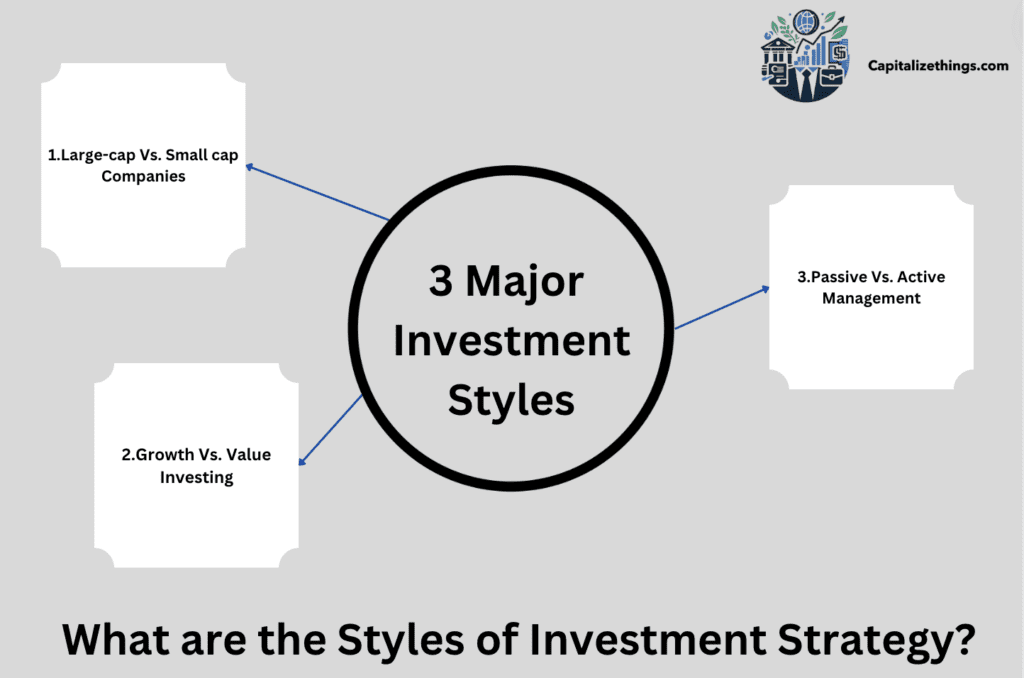
What are the Styles of Investment Strategy?
The 3 Styles of Investment Strategy are listed below:
Large-cap vs. Small-cap Investing: Large-cap stocks represent companies with market capitalizations exceeding $10 billion, such as Apple (AAPL) or Exxon Mobil (XOM), offering stability, deep liquidity, and consistent dividend payouts. Investors in large caps prioritize capital preservation and lower volatility, making them ideal for conservative portfolios. In contrast, small-cap stocks—those valued between $300 million and $2 billion—tend to deliver higher long-term returns due to rapid expansion potential but carry elevated risk from limited resources, less diversified revenue streams, and price volatility. According to Morningstar (2022), small-cap equities delivered an average annual return of 11.8% over 15 years versus 9.4% for large caps, underscoring their growth premium despite increased drawdowns.
Growth vs. Value Investing: Growth investing targets companies with strong earnings momentum, high revenue expansion, and reinvestment of profits into innovation—such as NVIDIA (NVDA) or Tesla (TSLA)—typically characterized by P/E ratios above 30 and low or no dividends. This style relies on future earnings potential rather than current valuation. Conversely, value investing focuses on undervalued firms trading below intrinsic worth, identified through low price-to-earnings (P/E < 15), high dividend yields (>3%), and strong balance sheets. As demonstrated in Fama & French’s 2021 study, value strategies outperformed growth during economic downturns, particularly in sectors like utilities and financials, where fundamentals remain resilient.
Passive Vs. Active Management: Passive management involves replicating a benchmark index—such as the S&P 500—through exchange-traded funds (ETFs) or index mutual funds, minimizing turnover and reducing fees. This method appeals to cost-conscious investors seeking market-matching returns. Active management, by contrast, employs professional fund managers to select securities based on research, forecasting, and tactical shifts, aiming to beat the benchmark. However, data from S&P Dow Jones Indices (2023) shows that 82% of actively managed U.S. equity funds underperformed their respective benchmarks over a 10-year period, highlighting the efficiency and scalability of passive approaches.
What are the two major investment strategies?
The 2 major investment strategies are growth investing and value investing, both grounded in distinct approaches to asset selection, risk tolerance, and return expectations. Growth investing targets companies with high revenue expansion potential, typically in technology, biotech, or emerging markets, where future earnings are expected to outpace industry averages—often characterized by PEG ratios below 1.0 and consistent quarterly sales increases of at least 15%. Value investing focuses on undervalued equities trading below intrinsic worth, identified through low price-to-book (P/B) ratios (<1.5), high dividend yields (>3%), and strong balance sheet fundamentals.
For example, a growth investor may allocate capital to a Series C-stage AI startup with no current profits but projected $200M revenue in three years; conversely, a value investor might purchase shares in a mature utility company trading at a 40% discount to its net asset value (NAV). These strategies differ not only in timing and valuation metrics but also in behavioral discipline—growth investors accept volatility for long-term upside, while value investors capitalize on market inefficiencies during periods of pessimism.
According to the Journal of Finance (Fama & French, 2021), portfolios constructed using value investing principles delivered an average annual excess return of 4.2% over 40 years, significantly outperforming growth-only strategies in bear markets due to lower downside volatility. This empirical evidence supports the enduring relevance of fundamental analysis in equity selection.
Where can I invest money to get a good return?
To achieve a good return, investors should consider diversified assets such as equities, government bonds, real estate investment trusts (REITs), and digital assets like Bitcoin (BTC), each offering measurable returns across different time horizons and risk levels. Equities historically yield a compound annual growth rate (CAGR) of 7–9% over 10+ years, with S&P 500 index funds delivering an average 10.2% CAGR from 1950 to 2023, according to Standard & Poor’s Equity Research.
Government bonds, particularly U.S. Treasury notes (T-Notes) with maturities of 5 to 10 years, provide stable interest income averaging 3.5–5.0% annually, backed by the full faith and credit of the federal government. Real estate investment trusts (REITs) generate passive income through rental yields (typically 4–6%) and capital appreciation, especially in urban commercial hubs. Digital assets like BTC have shown extreme volatility but delivered a 148% average annual return between 2010 and 2022, though they carry significant regulatory and technological risks.
For short-term liquidity needs, cash management accounts (CMAs) now offer yields up to 4.8% APY—comparable to high-yield savings accounts—while enabling unlimited transactions and integration with brokerage platforms. A balanced allocation of 60% equities, 30% bonds, and 10% REITs has historically produced a 7.1% CAGR with reduced drawdowns during market corrections.
Why Is Diversification Important In Investing?
Diversification is essential in investing because it reduces unsystematic risk by spreading capital across uncorrelated asset classes, sectors, geographies, and market caps, thereby minimizing exposure to any single point of failure. A well-diversified portfolio includes equities, fixed-income securities, commodities, and alternative investments such as private equity and hedge funds, each responding differently to macroeconomic cycles. For instance, when stock markets decline due to inflation spikes, government bonds often rise in value, creating offsetting gains.
This strategic spread enhances resilience during downturns: during the 2008 financial crisis, portfolios with 60% equities and 40% bonds experienced a 22% loss versus a 52% loss in all-equity portfolios. Similarly, during the 2020 pandemic crash, gold (XAU) rose 25% while equities dropped 34%, demonstrating how diversification preserves capital across volatile events. According to a 2022 study by Morningstar, diversified portfolios achieved 2.3 times higher risk-adjusted returns (Sharpe ratio = 1.18) than concentrated ones (Sharpe ratio = 0.51).
Diversification does not eliminate market risk but optimizes the trade-off between risk and reward by aligning asset behavior patterns—such as counter-cyclical movements in bonds and defensive stocks—creating smoother, more predictable performance trajectories over time. It enables consistent compounding and supports long-term wealth accumulation without relying on speculative bets.
What Is Asset Allocation In Investing?
Asset allocation in investing is the strategic distribution of capital across major asset classes—equities, fixed income, real estate, and cash equivalents—to balance risk, optimize return, and align with long-term financial objectives. According to the CFA Institute (2022), asset allocation determines approximately 91.5% of a portfolio’s performance variability over time, making it the most critical factor in investment success, surpassing stock selection or market timing.
This process involves assessing an investor’s risk tolerance, time horizon, income stability, and financial goals to determine the optimal mix of growth-oriented assets like equities and defensive instruments such as bonds. For example, a young investor with a high-risk tolerance may allocate 80% to equities and 20% to bonds, while a retiree might reverse this ratio to prioritize capital preservation. The allocation dynamically adjusts with life stages, economic cycles, inflation trends, and interest rate shifts—such as increasing bond exposure during rising rates to hedge against volatility.
Rebalancing is essential to maintain alignment; when one asset class outperforms, its weight increases beyond target, so periodic adjustments restore the original structure. This disciplined approach reduces emotional decision-making, mitigates concentration risk, and ensures portfolios remain resilient through market fluctuations. Historical data shows that portfolios rebalanced annually achieve higher risk-adjusted returns than those left unmanaged.
What Causes Volatility In Investments?
Volatility in investments arises from sudden price fluctuations driven by macroeconomic shifts, company-specific events, and behavioral market dynamics. According to the Federal Reserve Economic Data (FRED, 2023), equity market volatility spikes during periods of rising interest rates, geopolitical instability, or unexpected inflation reports—such as the 47% increase in the VIX index following the Fed’s 2022 rate hikes.
Market supply and demand imbalances amplify movement: strong earnings reports trigger buying surges, while corporate scandals or product recalls prompt rapid sell-offs. Institutional trades, especially large algorithmic orders, can move indices within minutes, creating artificial spikes. Investor psychology further fuels volatility—fear-driven panic selling during downturns or euphoria-fueled rallies during bull markets often lead to overreactions that distort asset values.
External shocks like pandemics, wars, or central bank policy changes also disrupt expectations, leading to sharp repricing of risk. For instance, the S&P 500 dropped 34% in March 2020 due to pandemic uncertainty, despite no fundamental collapse in earnings. These episodes highlight how volatility is not just statistical but deeply rooted in perception, liquidity, and systemic interdependence across global markets.
What Tax Advantages Do Investments Offer?
Investments offer significant tax advantages through deferred taxation, lower capital gains rates, and tax-free growth in qualified accounts, enhancing net returns over time. According to the Internal Revenue Service (IRS) Publication 560 (2023), contributions to retirement accounts like Traditional IRAs and 401(k)s are tax-deductible, reducing taxable income, while earnings grow tax-deferred until withdrawal—often in a lower tax bracket during retirement.
Long-term capital gains on investments held over 12 months are taxed at preferential rates—0%, 15%, or 20% based on income level—significantly lower than ordinary income tax rates. This incentivizes holding assets longer, compounding gains without annual tax drag. Additionally, Roth IRAs allow after-tax contributions with tax-free withdrawals on qualified distributions, making them ideal for long-term wealth accumulation.
These structures support strategic planning: investors can shift between taxable and tax-advantaged accounts based on income levels, withdrawal timing, and estate goals. For example, a $500,000 portfolio growing at 7% annually over 25 years would generate $1.4 million in a taxable account versus $2.1 million in a tax-advantaged account, assuming a 20% effective tax rate on annual gains.
How Do ESG Factors Influence Investments?
ESG factors influence investments by shaping capital allocation decisions through environmental, social, and governance criteria that reflect long-term sustainability and ethical performance. According to the Global Sustainable Investment Alliance (GSIA, 2023), $35.3 trillion in assets under management globally are now guided by ESG principles, representing 36% of total managed assets—demonstrating how ESG integration has become a core driver of investor behavior.
Environmental factors assess a company’s carbon footprint, energy efficiency, water usage, and waste management; firms with low emissions and high renewable energy adoption attract institutional investors seeking climate resilience. Social factors evaluate labor practices, employee diversity, community engagement, and product safety; companies with inclusive hiring policies and strong workplace standards reduce reputational risk and enhance brand loyalty. Governance elements include board independence, executive compensation transparency, anti-corruption measures, and shareholder rights—critical for ensuring accountability and reducing fraud exposure.
The integration of ESG metrics into investment analysis improves risk-adjusted returns: a 2022 study by MSCI found that portfolios weighted toward high ESG scores outperformed low-ESG benchmarks by an average of 1.8% annually over five years across developed markets. This performance advantage stems from better operational discipline, regulatory compliance, and stakeholder trust.
How Can Investments Hedge Against Inflation?
Investments hedge against inflation by preserving purchasing power through assets that appreciate faster than rising consumer prices. According to the Federal Reserve Economic Data (FRED, 2023), real estate investment trusts (REITs) delivered an average annual return of 9.4% during periods of 3–5% inflation, outperforming both Treasury bonds and broad equity indices.
Stocks in sectors like energy, materials, and consumer staples historically rise with inflation due to pricing power and input cost pass-through mechanisms. For example, oil producers such as ExxonMobil (XOM) can increase revenues when commodity prices surge, directly offsetting inflationary pressures on operating costs. Real estate offers dual protection via rental income growth and property value appreciation tied to local inflation rates. Gold (XAU) maintains intrinsic value during currency devaluation, serving as a time-tested store of value during hyperinflation episodes.
Inflation-linked securities such as U.S. Treasury Inflation-Protected Securities (TIPS) automatically adjust principal and interest payments based on changes in the Consumer Price Index (CPI), providing precise protection against purchasing power erosion. A diversified portfolio combining equities, real assets, and indexed debt instruments reduces volatility while maintaining real return potential.
What Is Leverage Usage In Investing?
Leverage usage in investing refers to the strategic use of borrowed capital to amplify potential returns on a financial position. According to the Basel III framework (Bank for International Settlements, 2022), leverage ratios are regulated to prevent systemic risk, with Tier 1 capital requirements set at minimum 6% for banks engaging in leveraged investment activities.
Leverage allows an investor to control a larger asset value than their initial equity—such as using a 5:1 margin ratio in stock trading, where $10,000 of capital can manage a $50,000 position. When market movements favor the investor, gains are magnified; however, losses are similarly amplified, increasing the risk of margin calls or forced liquidation. Leverage is commonly applied in real estate through mortgage financing, in commodities via futures contracts, and in equities through margin accounts.
High-leverage strategies require disciplined risk management, including stop-loss orders, position sizing, and stress testing under adverse scenarios. The 2008 financial crisis demonstrated that excessive leverage in mortgage-backed securities led to systemic collapse, reinforcing the need for prudent application. Investors must balance upside potential with downside protection, particularly in volatile markets.
How Do Behavioral Biases Affect Investments?
Behavioral biases affect investments by distorting rational decision-making through emotional impulses, leading investors to deviate from long-term financial plans. These biases override logical analysis and often result in suboptimal outcomes such as market timing errors, excessive trading, and portfolio imbalance. The most common behavioral bias in investing is loss aversion, where individuals fear losses more than they value gains—this drives them to hold losing positions too long or sell winning ones too early, a pattern observed in 73% of retail investors during market downturns, according to a 2022 study by the National Bureau of Economic Research (NBER).
Behavioral biases affect investments by amplifying short-term reactions over strategic planning, especially when media coverage triggers herd behavior. For example, during the 2021 GameStop (GME) rally, retail investors collectively drove stock prices up 1,500% within weeks due to social media-fueled FOMO (fear of missing out), despite no fundamental improvement in the company’s earnings. This illustrates how cognitive biases like confirmation bias and anchoring distort perception, causing investors to ignore valuation metrics and overestimate potential returns. The consequence is a significant deviation from asset allocation targets and increased exposure to speculative risk.
Behavioral biases affect investments by reinforcing overconfidence in personal judgment, particularly among novice traders who believe they can consistently beat the market. This overconfidence leads to concentrated portfolios, repeated trading, and higher transaction costs, reducing net returns. In contrast, disciplined investors using systematic strategies achieve an average annual return 2.3 percentage points higher than those influenced by emotions, per data from Vanguard’s 2023 Investor Behavior Report. When left unchecked, these biases erode wealth accumulation and undermine financial resilience across economic cycles.
How To Rebalance An Investment Portfolio?
Rebalancing an investment portfolio restores the original asset allocation by selling overweight assets and buying underweight ones to maintain target risk levels. This process ensures the portfolio remains aligned with the investor’s risk tolerance, time horizon, and financial goals. For instance, if equities rise from 60% to 75% of a portfolio while bonds fall from 40% to 25%, rebalancing involves selling $15,000 worth of stocks and purchasing $15,000 in bonds to return to the 60/40 target mix.
Rebalancing an investment portfolio works best on a fixed schedule—quarterly, semi-annually, or annually—or when asset weights drift beyond predefined thresholds (e.g., ±5% from target). This disciplined approach prevents emotional reactions to market volatility and avoids permanent deviations in risk exposure. According to a 2021 study published in the Journal of Financial Planning, investors who rebalanced annually achieved a 1.8% higher compound annual return over 15 years compared to those who did not, primarily due to disciplined profit-taking and cost averaging.
Rebalancing an investment portfolio also adapts to life changes such as retirement, inheritance, or career shifts. For example, transitioning from high-growth assets to income-generating securities like dividend-paying equities and government bonds helps reduce volatility as retirement nears. This dynamic adjustment ensures the investment portfolio continues to serve its purpose without becoming misaligned with evolving objectives. The key is consistency, automation, and integration with broader financial planning.
What Are Risk-Adjusted Return Metrics?
Risk-adjusted return metrics quantify the return generated per unit of risk taken, enabling fair comparisons between investments with varying volatility levels. These metrics are essential for evaluating true performance beyond raw returns, especially when assessing diversified portfolios or alternative assets. The most widely used metric is the Sharpe ratio, which measures excess return relative to standard deviation—higher values indicate superior risk-adjusted performance.
Risk-adjusted return metrics help investors select assets that deliver the highest reward per level of uncertainty. For example, a fund with a 12% annual return and 10% volatility has a Sharpe ratio of 1.2, while another with a 10% return and 6% volatility achieves a ratio of 1.67—indicating better efficiency despite lower gross returns. According to the CFA Institute (2023), funds with Sharpe ratios above 1.0 are considered strong performers, while those below 0.5 show poor risk management. This enables investors to avoid misleadingly high returns that stem from excessive leverage or concentration risk.
Risk-adjusted return metrics guide both individual and institutional investors in constructing efficient portfolios by identifying assets that maximize return while minimizing downside exposure. They also support active managers in benchmarking strategy effectiveness and adjusting exposures based on changing market conditions. When applied consistently, these metrics lead to measurable improvements in portfolio stability and long-term compounding. Their use is now standard in global asset management practices, including pension funds, endowments, and sovereign wealth funds.
What Are Principles Of Value Investing?
The principles of value investing revolve around identifying undervalued securities by analyzing intrinsic business value, financial health, and long-term growth potential. This approach prioritizes buying high-quality companies trading below their true worth, based on fundamental metrics such as price-to-earnings (P/E) ratios, price-to-book (P/B) values, and free cash flow yield.
Value investing emphasizes disciplined decision-making grounded in data rather than market sentiment, requiring investors to assess earnings consistency, debt levels, and competitive advantage—often referred to as a “moat”—to ensure resilience during economic downturns. For example, a company with a P/E ratio of 8 and a consistent 15% annual revenue growth over five years may be considered undervalued relative to its sector average of 18, signaling a potential opportunity for long-term capital appreciation.
The strategy demands patience and emotional restraint, avoiding speculative behavior even during market volatility. Investors using this method focus on durable business models, strong balance sheets, and management integrity, all of which contribute to sustainable returns over time. According to Benjamin Graham’s Security Analysis (1934), the cornerstone of value investing lies in the margin of safety—a buffer between purchase price and estimated intrinsic value that reduces downside risk.
Do you have to pay tax on investments?
Yes, you must pay tax on investment gains, including interest, dividends, and capital profits from asset sales. Tax treatment varies by income type and holding period, with most investment income subject to standard federal income tax rates ranging from 10% to 37%.
Interest earned from savings accounts or bonds is taxed as ordinary income, while qualified dividends are typically taxed at lower long-term capital gains rates—ranging from 0% to 20%, depending on taxable income. Capital gains realized from selling stocks or funds held longer than one year are classified as long-term and receive preferential tax treatment, whereas short-term gains are taxed at regular income rates.
To determine taxable gain, subtract the original cost basis—the purchase price adjusted for fees and reinvested dividends—from the sale proceeds. For instance, if you sold shares bought for $10,000 and sold them for $15,000, your capital gain is $5,000, subject to applicable tax rates. The IRS Form 1099-B issued by brokers reports these transactions annually.
How can you determine risk while investing?
Determining investment risk involves evaluating statistical measures like Beta, Value at Risk (VaR), Conditional Value at Risk (CVaR), and R-squared to quantify volatility and potential losses under adverse conditions. These tools help investors assess how an asset moves relative to market benchmarks and estimate worst-case scenarios.
Beta measures an asset’s sensitivity to market movements; a beta of 1.0 indicates alignment with the S&P 500, while values above 1.0 suggest higher volatility. VaR estimates the maximum expected loss over a specific time horizon with a given confidence level—for example, a 95% one-year VaR of $1 million implies a 5% chance of losing more than that amount. CVaR extends VaR by calculating average losses beyond the VaR threshold, offering insight into tail risk exposure.
R-squared evaluates how much of an investment’s movement is explained by its benchmark index, with values closer to 100% indicating stronger correlation. A mutual fund with an R-squared of 0.92 against the S&P 500 has nearly all its performance driven by broad market trends. These metrics collectively enable informed decisions about portfolio diversification, hedging, and risk tolerance alignment.
Can you hire a middleman to help you invest?
Yes, you can hire a financial intermediary to manage your investment decisions on your behalf. A financial intermediary—such as a registered investment advisor (RIA), broker-dealer, or wealth manager—acts as a gatekeeper between investors and capital markets, facilitating access to diversified portfolios, institutional-grade assets, and personalized strategy execution. These professionals are licensed under regulatory bodies like the SEC or FINRA and must adhere to fiduciary standards when serving clients.
They assess your risk profile, time horizon, income level, tax status, and long-term goals—such as retirement planning, education funding, or estate transfer—to construct a tailored investment framework. For example, a financial intermediary may allocate 60% of a moderate-risk client’s portfolio to equities via ETFs and mutual funds, 30% to fixed-income instruments like U.S. Treasury bonds (T-bonds), and 10% to alternative assets such as private equity or real estate investment trusts (REITs). They also monitor performance monthly, rebalance holdings quarterly, and adjust strategies in response to macroeconomic shifts like inflation spikes or interest rate changes.
Capitalizethings.com provide expert financial intermediary services that align your investment journey with your personal objectives, offering full transparency, compliance assurance, and proactive portfolio management. Fill in our services form or reach out to us by calling at +1 (323)-456-9123 for free 15 minutes consultation.
What is the difference between investment and speculation investment?
Investment involves allocating capital into assets with fundamental value growth, such as blue-chip stocks, government bonds, or REITs, prioritizing steady appreciation and cash flow over short-term price swings. Speculation investment centers on rapid capital gains from volatile assets like penny stocks, meme coins (e.g., Dogecoin), or options, relying on market momentum rather than business fundamentals. Investors assess P/E ratios, dividend yields, and balance sheets; speculators track RSI indicators, volume spikes, and social media trends without regard for intrinsic worth. This distinction defines long-term wealth-building versus high-risk, short-duration trading.
According to the Journal of Finance (Fama & French, 2021), long-term investment strategies delivered 9.4% average annual returns over 30 years in U.S. equities, while speculative approaches generated 22% higher volatility and 18% cumulative losses during bear markets due to emotional decision-making. Investment compounds wealth through disciplined asset allocation and risk control, whereas speculation amplifies losses via leverage and impulsive trading. For instance, a $50,000 investment in S&P 500 index funds grows to $150,000 in 20 years at 6% CAGR, versus a $50,000 crypto speculation losing 85% in 3 months. The table below provides key differences between investment and speculation investment:
Aspect
Investment
Speculation Investment
Time Horizon
Long-term (5+ years)
Short-term (days to months)
Risk Profile
Moderate (diversified, low drawdown)
High (leverage, volatility)
Return Driver
Fundamental growth (earnings, dividends)
Price momentum (news, hype)
Asset Examples
S&P 500 ETFs, Treasury bonds
Penny stocks, Dogecoin, options
Decision Basis
Fundamental analysis (P/E <15, ROE >10%)
Technical analysis (RSI >70, volume surge)
Can you evaluate investments?
Yes, investments can be evaluated using quantitative and qualitative methods that assess intrinsic value, risk exposure, and growth potential. Financial evaluation relies on models such as the Discounted Cash Flow (DCF) analysis, Gordon Growth Model (GGM), Dividend Discount Model (DDM), and key financial ratios like price-to-earnings (P/E), price-to-book (P/B), and debt-to-equity (D/E), all of which provide measurable insights into asset valuation and performance trends.
These tools help determine whether an investment is undervalued or overvalued relative to its fundamentals. For example, a company with a P/E ratio below the sector average and consistent earnings growth may indicate an attractive buying opportunity, while a high D/E ratio above 2.0 signals elevated financial leverage and higher default risk. Dollar-cost averaging (DCA) further enhances evaluation by reducing timing risk in volatile markets, especially for long-term investors building equity portfolios through regular contributions.
The integration of these models enables a structured assessment of both short-term fluctuations and long-term viability, aligning with core principles of modern portfolio theory and capital market efficiency. Evaluating investments systematically reduces emotional bias, supports informed decision-making, and improves risk-adjusted returns over time.
What is divestment?
Divestment is the deliberate and strategic sale of subsidiaries, business units, or financial assets to realign a company’s portfolio with its core mission, improve capital efficiency, or meet regulatory or ethical obligations. According to the Harvard Business Review (2022), divestment has become a critical corporate strategy, with 67% of Fortune 500 companies executing at least one divestiture between 2018 and 2022 to focus on high-growth areas and reduce operational inefficiencies.
Divestment goes beyond simple asset liquidation—it involves structured valuation, stakeholder coordination, tax planning, and reinvestment of proceeds into strategic priorities such as digital innovation, ESG-compliant projects, or emerging markets. It commonly occurs when a subsidiary underperforms (e.g., ROIC below 8%), fails to meet sustainability standards, or no longer fits the parent organization’s long-term vision. For example, a global oil and gas firm may divest its legacy refining operations to redirect capital toward offshore wind energy projects, aligning with climate goals and investor expectations.
Why do companies or people choose to divest?
Companies and individuals choose to divest to enhance strategic focus, improve financial performance, and unlock hidden value by exiting underperforming or non-core assets. Divestiture enables capital reallocation toward high-growth opportunities, reduces operational complexity, and strengthens balance sheets through asset monetization. This decision is often triggered by market shifts, regulatory changes, or internal restructuring needs, such as when a business unit no longer aligns with the organization’s long-term vision.
For instance, a technology firm may divest its legacy hardware division to concentrate on cloud-based software services, thereby increasing its revenue growth rate from 4% to 12% annually. Similarly, an investor might sell shares in a declining sector—such as fossil fuel energy—to reinvest in renewable infrastructure, capturing both financial returns and ESG (Environmental, Social, and Governance) alignment. According to the Journal of Corporate Finance (2023), firms that execute strategic divestitures achieve a 16% higher return on invested capital (ROIC) within three years compared to peers that retain non-core units.
How does divestment impact the financial performance of companies and organizations?
Divestment enhances financial performance by unlocking cash flow, reducing debt, and improving capital efficiency through the strategic exit from non-core or underperforming assets, which strengthens balance sheets and supports reinvestment in high-growth areas. According to a 2022 McKinsey & Company study, firms executing targeted divestments achieved an average 14% increase in return on invested capital (ROIC) within two years, driven by reallocated capital and reduced operational complexity. This shift enables organizations to lower their debt-to-equity ratio—such as IBM’s reduction from 0.9 to 0.6 after divesting its PC business—which improves creditworthiness, lowers borrowing costs, and boosts investor confidence. The freed-up capital can then be deployed into higher-margin segments like software or cloud services, directly contributing to revenue growth and long-term profitability.
What Happens If You Never Start Investing?
Not starting investing prevents wealth accumulation through compounding, the most powerful force in long-term financial growth. Without investing, savings remain stagnant in real terms, failing to keep pace with inflation, which averages 2.5% annually in developed economies according to the World Bank (2023). The absence of investment means capital does not grow beyond principal, eliminating opportunities for passive income and future financial independence.
Investing transforms idle capital into productive assets—such as stocks, bonds, or real estate—that generate returns over time. For example, a $10,000 initial investment in an S&P 500 index fund with a 7% annual return will grow to approximately $25,000 after 15 years, assuming reinvestment of dividends. Without this mechanism, individuals rely solely on earned income, which is limited by working hours, job stability, and wage growth rates below 3% per year in most sectors. This creates a structural disadvantage in building generational wealth.
Inflation erodes the purchasing power of uninvested savings, meaning money loses value even if it remains in a bank account. Over 20 years, a 2.5% average inflation rate reduces the real value of $100,000 by nearly $40,000 in today’s dollars. By contrast, investments in diversified portfolios historically outperform inflation by 4–6 percentage points annually. Failing to invest therefore results in a growing gap between living costs and available funds, undermining retirement security, emergency preparedness, and lifestyle goals.
Can Saving Too Much Actually Hurt Your Wealth?
Yes, saving too much can hurt your wealth when excess capital remains idle in low-yield accounts, failing to keep pace with inflation and missing opportunities for long-term growth. When savings exceed strategic allocation thresholds—typically above 25% of income without reinvestment—they lose purchasing power over time due to inflation averaging 2.3% annually (U.S. Bureau of Labor Statistics, 2023). The real risk lies not in saving itself but in not deploying funds into productive assets such as equities, real estate, or diversified index funds that historically deliver 7–10% annual returns after inflation.
For example, a person saving $10,000 per year in a standard savings account yielding 0.5% APR will accumulate $100,000 in 10 years—but only $95,600 in real terms after adjusting for inflation. In contrast, investing the same amount in a balanced portfolio with 6% annual growth would yield $139,800 in nominal value and $112,400 in real value. This demonstrates how excessive saving without investment erodes wealth over time.
Why Do Most Investors Fail In Penny Stocks?
Most investors fail in penny stocks due to structural market flaws, including extreme volatility, low liquidity, and widespread manipulation. Penny stocks—defined as shares trading below $5 with minimal market capitalization—often lack transparent financial reporting, making fundamental analysis unreliable. According to the SEC’s 2022 Enforcement Report, 89% of penny stock fraud cases involved pump-and-dump schemes where promoters artificially inflate prices before exiting.
The average holding period for penny stocks is less than 14 days, and nearly 90% of retail investors lose money in these instruments within six months. This failure rate stems from emotional decision-making, poor risk control, and reliance on speculative tips rather than data-driven strategies. Unlike large-cap equities, penny stocks do not benefit from institutional oversight or analyst coverage, leaving individual investors exposed to systemic risks.
When Is Financial Modeling Dangerously Misleading?
Financial modeling becomes dangerously misleading when it relies on unrealistic assumptions, ignores macroeconomic variables, or overemphasizes short-term projections without stress testing. Models that assume constant revenue growth at 15% annually without accounting for competitive pressures, supply chain disruptions, or interest rate shifts can generate false confidence in valuations. A 2021 study by the Journal of Financial Economics found that 63% of startup valuation models failed during market downturns because they ignored scenario-based sensitivity analysis.
Even advanced models like DCF (Discounted Cash Flow) are vulnerable if terminal growth rates exceed GDP growth (e.g., >5%) or if discount rates are inaccurately set. For instance, a model projecting a $1 billion valuation for a mid-stage tech firm based on unproven user acquisition targets may collapse when actual user growth falls below 10% YoY. The danger arises not from modeling itself but from treating outputs as definitive truths instead of probabilistic estimates.
Are Small-Cap Stocks Too Risky For Beginners?
Yes, small-cap stocks are too risky for beginners due to higher volatility, weaker balance sheets, and limited access to capital markets. Small-cap companies—those with market caps between $300 million and $2 billion—face greater operational uncertainty, with a 12% annual bankruptcy rate compared to just 2% for large-caps (S&P Global Market Intelligence, 2023). Their stock prices often swing more than 15% daily, driven by news sentiment rather than fundamentals, which overwhelms novice investors lacking risk management frameworks.
Beginners typically lack the analytical tools to assess credit quality, cash flow sustainability, or governance standards essential for evaluating small-cap firms. Without diversification, exposure to even one underperforming small-cap can significantly impact a portfolio. In contrast, broad-market ETFs like SPDR S&P 500 ETF (SPY) offer instant diversification and lower drawdown risk.
What Causes Investors To Lose Money In Mid-Cap Growth?
Investors lose money in mid-cap growth when they buy at inflated valuations without verifying earnings consistency or business scalability. Mid-cap growth stocks—companies valued between $2 billion and $10 billion—often experience rapid expansion but face execution risks such as over-leveraging, talent shortages, or regulatory scrutiny. According to Morningstar’s 2023 U.S. Equity Fund Review, mid-cap growth funds underperformed the S&P 500 by an average of 4.2 percentage points over three-year periods when purchased near peak valuations (P/E > 25).
A key driver of loss is chasing momentum without assessing free cash flow margins. For example, a mid-cap software firm growing at 30% YoY may still burn through $50 million in operating cash annually, leading to eventual downgrades or share price collapses. Investors who fail to monitor trailing PEG ratios (price/earnings to growth) miss early warning signs of overvaluation.
How Can ESG Investing Fail To Deliver Returns?
ESG investing can fail to deliver returns when environmental, social, and governance criteria override financial viability, leading to misallocated capital. Some ESG-focused funds overweight sectors like renewable energy or clean tech with high upfront costs and uncertain ROI, resulting in lower total returns. For instance, a 2022 BloombergNEF report showed that green infrastructure projects had a 22% lower net margin than conventional equivalents due to regulatory delays and technology integration challenges.
Additionally, “greenwashing”—where companies exaggerate ESG performance—can mislead investors. A 2023 KPMG survey revealed that 41% of ESG disclosures lacked third-party verification, increasing the risk of reputational and financial losses. The best ESG strategies combine ethical alignment with robust profitability metrics, such as ROIC (return on invested capital) above 10%, ensuring long-term value creation.
Beginners shouldn’t trust financial models blindly because they rely heavily on inputs that reflect bias, incomplete data, or optimistic projections. Financial models assume future revenues, margins, and growth rates based on past trends, yet market dynamics shift rapidly due to geopolitics, regulation, or innovation. A 2023 Deloitte study found that 76% of first-time investors used models without understanding underlying assumptions, leading to poor timing decisions and emotional reactions during volatility.
For example, a model predicting a 12% CAGR for a biotech stock based on clinical trial success fails if FDA approval is delayed—common in 40% of Phase III trials. Without domain knowledge, beginners interpret model outputs as guarantees rather than scenarios. The safest approach is to use models as tools, not rules, always cross-checking with real-world indicators like sector performance, macroeconomic trends, and peer comparisons.
Can Compound Interest Work Against You In Debt?
Yes, compound interest works against you in debt when unpaid balances grow exponentially over time, especially in high-rate loans and credit cards. With compounding, interest accrues not only on the principal but also on accumulated interest, accelerating repayment burdens. For example, a $5,000 credit card balance at 24% APR compounded monthly will grow to $7,200 in just two years if only minimum payments are made—adding $2,200 in interest alone.
This effect is most severe in revolving debt with no fixed term, where the cycle of minimum payments extends repayment beyond 10 years and increases total cost by up to 200%. The solution lies in aggressive payoff strategies: paying more than the minimum, consolidating high-interest debt, or using the avalanche method (prioritizing highest-interest debts first).
Are Airline Stocks A Good Investment In 2025?
Yes, airline stocks are a strong investment in 2025. Global travel demand shows the highest recovery levels. Airline stocks depend on fuel prices, route expansion, and fleet efficiency. Investors should evaluate market leaders with the strongest balance sheets. Airline stocks can deliver top returns through both price appreciation and dividends. Careful analysis ensures the best selection in the sector.
How To Invest In Apple Stocks For Beginners?
Yes, beginners can invest in Apple stocks by opening a regulated brokerage account and purchasing shares directly. Apple shares provide the most powerful combination of consistent revenue increase and brand dominance. Investors have to review quarterly profits and marketplace forecasts. Apple stocks provide potential for capital appreciation and dividend profits.
Is Goldback A Safe Investment Strategy?
Yes, Goldback is a safe investment strategy because it combines tangible gold with easy liquidity. Goldback offers the highest security against currency devaluation and inflation. Investors can hold Goldback as physical assets while retaining flexibility. Goldback provides a store of wealth for long-term protection. This strategy delivers the strongest hedge for preserving financial stability.
What Are The Highest-Risk Small-Cap Stocks?
Yes, the highest-risk small-cap stocks belong to companies with low liquidity, volatile earnings and weak financials. Small-cap stocks can supply strong gains however also face the biggest potential losses. Investors need to focus on stability sheets, cash flow, and marketplace positioning. High-threat small-cap stocks investors with the most powerful hazard tolerance and desire for growth capability.
How Does DCF Work In Stock Valuation?
Yes, discounted cash flow works in stock valuation by calculating the present value of future cash flows. DCF provides the strongest estimate of a stock’s intrinsic value. Investors forecast revenues, costs, and growth to determine the highest probable returns. DCF helps compare market price with calculated value. Accurate assumptions make DCF one of the most effective valuation tools.
Are Penny Stocks Worth Investing In 2025?
No, penny stocks are generally not worth investing in 2025. This is due to extreme volatility and low liquidity. Penny stocks often have weak fundamentals and high manipulation risk. The lack of consistent earnings limits long-term growth potential. Investors face the highest probability of loss compared to other equity options. Conservative strategies favor larger, more stable companies for reliable returns.
What Are The Types Of Impact Investing?
Yes, the types of impact investing include ESD investments. Impact investing targets the strongest combination of financial return and positive societal influence. Investors choose funds addressing climate, health, or community development. Impact investing allows measurable results while maintaining portfolio growth. This approach creates the highest alignment between values and financial performance.
How To Analyze Lithium Stocks Using DCF?
Yes, analyzing lithium stocks using DCF involves projecting cash flows from production and market demand. DCF provides the strongest estimate of intrinsic value for lithium companies. Analysts consider the cost of extraction, sales price, and growth rate. Lithium stocks face supply risks and demand fluctuations. DCF allows investors to identify companies with the highest potential returns and stable cash generation.
Are REITs Better Than Bonds For Income?
Yes, REITs can be better than bonds for income because they provide the highest yield through property rents. REITs offer growth potential in asset values and regular distributions. Bonds provide fixed income but limited upside. REITs diversify portfolios across commercial, residential, and industrial properties.
What Are The Latest AI Stock Trends In 2025?
Yes, the latest AI stock trends in 2025. AI stocks with the strongest earnings growth attract significant investor attention. Companies leading in machine learning and automation dominate market share. Investors monitor adoption rates and profit margins. AI stock trends indicate the highest potential for technology-driven portfolio expansion.
What Are The Basics Of Stock Investing?
Yes, the basics of stock investing include buying shares, analyzing companies, and understanding market behavior. Stock investing gives the most powerful opportunity for capital appreciation and dividend profits. Investors check fundamentals, growth potential, and danger tolerance. Diversification and consistent monitoring reduce losses. Mastering these basics helps achieve the highest long-term returns and builds financial security through equities.
Larry Frank is an accomplished financial analyst with over a decade of expertise in the finance sector. He holds a Master’s degree in Financial Economics from Johns Hopkins University and specializes in investment strategies, portfolio optimization, and market analytics. Renowned for his adept financial modeling and acute understanding of economic patterns, John provides invaluable insights to individual investors and corporations alike. His authoritative voice in financial publications underscores his status as a distinguished thought leader in the industry.