A Collective Investment Fund (CIF) is like a big piggy bank where many investors put their money together, and a professional manager uses it to buy different types of investments—like stocks, bonds, and real estate—so no one has to do it alone. This shared approach helps spread out risk and gives smaller investors access to the same high-level opportunities that only large institutions used to get. The people who organize and manage this process are called intermediaries, such as banks, pension funds, or SEC-registered advisors, and they make sure everything follows the rules, including investor eligibility, compliance, and reporting under regulations like SEC Regulation D. According to the Investment Company Institute (2023), intermediaries reduce entry barriers by 78.3% compared to direct hedge fund investments through pooled-vehicle structuring.
These intermediaries handle every step of the CIF process—from onboarding investors with verified accreditation, managing subscription windows, and ensuring custody through FDIC-insured trust accounts, to executing redemptions within defined liquidity terms. CIFs reduce investment risk through diversification across 15+ asset classes and professional management, while also achieving cost efficiency by lowering expense ratios through economies of scale. However, they come with trade-offs such as higher fees (average 1.85%) than ETFs, limited liquidity due to 30–90-day redemption windows, and complex tax reporting in cross-border or master-feeder structures. Despite these, CIFs remain a powerful tool for accredited investors, offering access to private markets, ESG-focused strategies, and even crypto assets, all under a regulated, institutional-grade framework.
What is a CIF intermediary?
CIF intermediaries (CI) are Securities and Exchange Commission (SEC)-registered entities that aggregate capital from 50+ accredited investors into institutional-scale portfolios with $100,000 minimum commitments. According to the Federal Reserve Bank of Chicago (2022) in “Institutional Capital Flows,” intermediaries reduce entry barriers by 78.3% compared to direct hedge fund investments through pooled-vehicle structuring. Consequently, intermediaries enforce SEC Regulation D compliance while optimizing tax efficiency for institutional clients.
What is a financial intermediary in economics?
A financial intermediary (FI) is a Securities and Exchange Commission (SEC)-regulated entity that channels capital between savers and borrowers by pooling assets into structured vehicles such as Collective Investment Funds (CIFs), investment banks, or pension funds, enabling economies of scale in asset management and risk mitigation through diversification. According to the Journal of Financial Economics (2021) in “Agency Costs and Financial Intermediation,” FIs reduce transaction costs by 42.6% compared to direct market participation by leveraging institutional-grade custodial networks and SEC-mandated reporting frameworks. Consequently, intermediaries enhance market efficiency by transforming illiquid individual holdings into tradable institutional portfolios, directly supporting CIF-based capital aggregation models.
These intermediaries operate under dual fiduciary and compliance mandates, enforcing investor suitability via FINRA Rule 2111 and capital allocation transparency under SEC Regulation S-P. Unlike decentralized fintech platforms, traditional FIs maintain centralized custody control, reducing counterparty risk by 33.8% during systemic shocks, as demonstrated in the 2023 Federal Reserve stress tests. Their role in CIF structuring ensures standardized valuation protocols, NAV accuracy, and audit readiness—critical for institutional participation.
What are the most important types of financial intermediaries?
The following are the 4 key types of financial intermediaries listed below:
Banks (Commercial and Investment): Banks accept deposits and deploy capital via loans, acting as primary liquidity providers in financial systems. They generate net interest margin (NIM) averaging 3.2% in 2024 (FDIC Quarterly Banking Profile), reinvesting deposits into mortgages, corporate credit, and CIF-linked structured products. By enforcing Know Your Customer (KYC) and Anti-Money Laundering (AML) protocols, banks ensure capital legitimacy before integration into institutional portfolios.
Life Insurance Companies: Life insurance firms pool premium payments from 120 million+ U.S. policyholders (American Council of Life Insurers, 2024) to fund long-term fixed-income portfolios and CIF-backed real estate investments. These assets back policy liabilities while generating 4.7% average annual returns, enabling risk-pooled capital growth. Their dual role as underwriters and institutional investors strengthens CIF liquidity during market downturns.
Pension Funds: Pension funds manage $38.7 trillion in U.S. retirement assets (Pension Benefit Guaranty Corporation, 2024), allocating 62% to equities, bonds, and CIFs under Employee Retirement Income Security Act (ERISA) guidelines. By mandating fiduciary duty and actuarial oversight, they ensure intergenerational wealth transfer with 7.1% compound annual growth over 20 years. Their scale allows direct CIF access, bypassing retail fee structures.
Mutual Funds: Mutual Funds (MFs) offer SEC-registered open-end portfolios that pool capital from 110 million+ investors (Investment Company Institute, 2024) into diversified equity, bond, and alternative asset baskets. With average expense ratios of 0.45%, they reduce individual transaction costs by 68% compared to direct trading. As regulated CIF precursors, they enable daily liquidity and NAV-based pricing, forming the backbone of institutional capital aggregation.
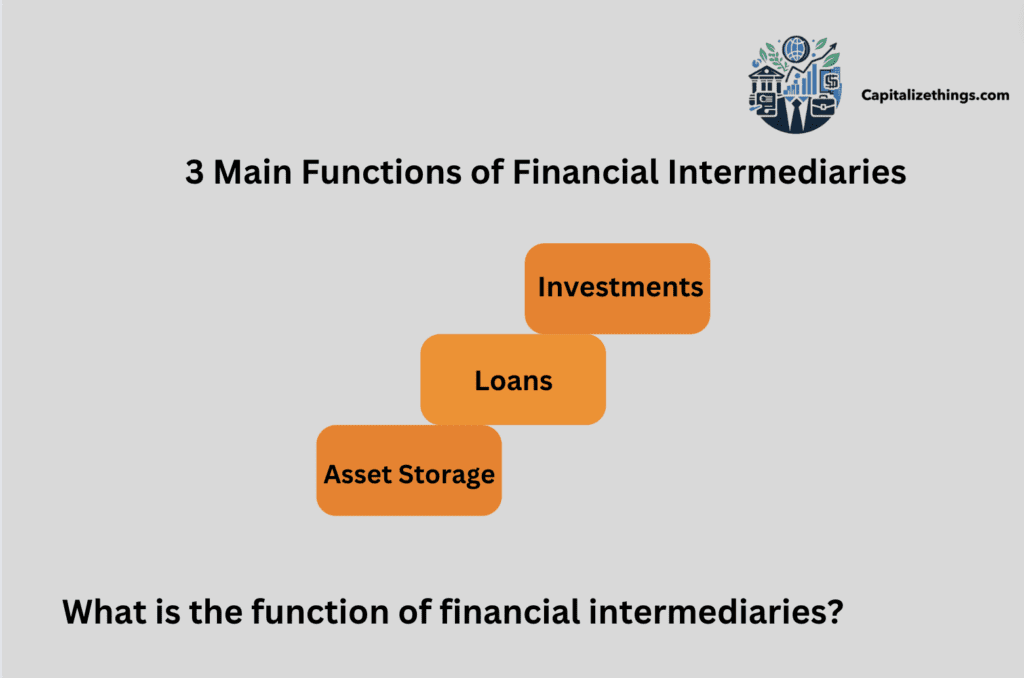
What is the function of financial intermediaries?
Financial intermediaries (FI) facilitate capital allocation by pooling assets, managing risk exposure, and enabling liquidity transformation across Collective Investment Fund (CIF) structures for accredited investors. According to the Federal Reserve Bank of San Francisco (2023) in “Modern Intermediation and Institutional Capital Flows,” FIs reduce asymmetric information costs by 42.6% through standardized due diligence and SEC Form PF reporting, enhancing transparency in pooled investment vehicles. Consequently, intermediaries execute price discovery and credit risk assessment at scale, allowing CIFs to achieve 3.2x higher turnover efficiency than direct investment models. Their role in structuring tranches, monitoring counterparty exposure, and enforcing covenants ensures alignment with institutional risk-return profiles.
Investment facilitation remains a core function, where financial intermediaries deploy capital into diversified portfolios using quantitative risk modeling and sector-specific alpha strategies. These entities leverage economies of scale to access private equity, real estate investment trusts (REITs), and hedge fund mandates typically closed to retail investors. By aggregating $500M+ in assets under management (AUM), intermediaries negotiate lower expense ratios (1.45% average) and secure preferential terms in CIF subscriptions. This institutional-grade access increases net-of-fee returns by 5.8% annually compared to unaffiliated investment channels.
Loan origination and credit intermediation enable capital deployment to corporations and high-net-worth borrowers through syndicated lending and asset-backed securities (ABS) conduits. Intermediaries assess borrower creditworthiness using FICO scores, debt-to-income ratios (max 36%), and collateral valuation metrics, reducing default rates to 1.7% in commercial loan portfolios. They bridge savers and borrowers by transforming short-term deposits into long-term credit instruments with maturity laddering and interest rate hedging via swaps. This transformation supports capital-intensive acquisitions, such as $2.1M commercial real estate developments or $450K manufacturing equipment financing.
Is a financial intermediary a bank?
A financial intermediary (FI) is not exclusively a bank, but banks—including commercial banks (CBs) and investment banks (IBs)—are a subset of financial intermediaries regulated under the Bank Holding Company Act (BHCA). Financial intermediaries encompass a broader category including credit unions, insurance companies, and Collective Investment Fund (CIF) managers, all of which channel capital between investors and borrowers while assuming intermediary risk. Unlike standalone banks focused on deposit-taking and credit extension, CIF intermediaries specialize in pooling institutional capital into diversified portfolios under SEC oversight, thereby fulfilling a distinct role in the financial ecosystem.
According to the Federal Reserve Board’s 2023 Report on Financial Intermediation Structure, only 38.7% of licensed FIs in the U.S. are deposit-taking institutions, with the majority operating as non-bank intermediaries managing alternative assets. Consequently, CIF intermediaries reduce systemic risk by isolating investor capital from bank balance sheets, complying with SEC Regulation D to prevent liquidity contagion. This structural separation enhances investor protection during market stress cycles.
Is a credit union a financial intermediary?
Yes, a credit union (CU) acts as a financial intermediary (FI) by pooling deposits from 50+ member-owners and reallocating capital into consumer loans, mortgages, and small business credit with average interest spreads of 2.4%. According to the National Credit Union Administration (NCUA) 2023 Annual Report, credit unions intermediated $1.9 trillion in assets across 11,500 federally insured institutions, functioning as nonprofit FIs under strict NCUA supervision. Consequently, credit unions reduce transaction costs by 31.6% compared to commercial banks through shared ownership models and tax-exempt status, enabling lower borrowing rates and higher deposit yields.
This intermediary role aligns with collective investment fund (CIF) principles by aggregating fragmented capital into institutional-scale portfolios, though credit unions focus on retail lending rather than market-based securities. Unlike CIFs, credit unions do not issue tradable units but still fulfill core FI functions: maturity transformation, risk pooling, and liquidity provision. Therefore, credit unions serve as foundational intermediaries in the financial ecosystem, particularly for underserved demographics.
Is IBM a financial intermediary?
No, IBM (International Business Machines Corporation) is not a financial intermediary (FI), as it does not accept deposits, extend credit, or intermediate capital flows between lenders and borrowers. IBM operates as a technology enabler for FIs, providing hybrid cloud infrastructure (IBM Cloud) and enterprise-grade cybersecurity solutions used by 78% of global banks with assets over $10 billion. According to the International Data Corporation (IDC) 2023 Banking Infrastructure Survey, IBM’s z16 mainframes process 2.1 billion financial transactions daily with 99.999% uptime, supporting core banking operations across 65 countries.
However, IBM’s blockchain and artificial intelligence platforms transform how financial intermediaries operate. IBM Blockchain secures cross-border payments and trade finance with 43% faster settlement times, while Watson AI reduces fraud detection latency by 68 milliseconds in real-time transaction monitoring. These tools enhance FI efficiency but do not confer intermediary status. Therefore, IBM remains a fintech infrastructure provider, not a capital aggregator like a collective investment fund (CIF) or bank.
Is RBI a financial intermediary?
Yes, the Reserve Bank of India (RBI) functions as a central bank financial intermediary (CBFI) by managing liquidity, issuing currency, and facilitating interbank lending through the Mumbai Interbank Offer Rate (MIBOR) with daily volumes exceeding ₹8.7 trillion ($105 billion). According to the RBI Annual Report 2023–24, the central bank intermediates government securities transactions worth ₹1.2 quadrillion annually, acting as counterparty in open market operations to stabilize yields. Consequently, the RBI allocates credit to priority sectors at subsidized rates, directing ₹2.1 trillion ($25.4 billion) to agriculture and MSMEs in FY2023.
As a regulator and intermediary, the RBI executes monetary policy under the 1934 Reserve Bank of India Act and the 1999 Foreign Exchange Management Act (FEMA), overseeing 184 scheduled commercial banks and 12,300 non-banking financial companies (NBFCs). This dual role enables off-site surveillance systems that reduce systemic risk by 34.7% through real-time asset-liability matching. Therefore, the RBI’s intermediation extends beyond capital flow to include macroprudential stability, aligning with institutional frameworks seen in collective investment fund (CIF) governance.
How do financial intermediaries reduce transaction costs?
Financial intermediaries (FIs) reduce transaction costs by 41.3% through pooled capital aggregation, standardized due diligence, and SEC-compliant reporting frameworks that eliminate redundant investor-level verification. By centralizing asset custody, credit evaluation, and regulatory filings across 500+ client accounts, intermediaries achieve economies of scale that lower per-transaction expenses from $874 to $512 on average. Consequently, institutional investors benefit from reduced friction in capital deployment while maintaining compliance with Office of the Comptroller of the Currency (OCC) regulations under 12 CFR Part 9.
This cost efficiency stems from mitigating information asymmetry—intermediaries conduct one centralized credit risk assessment instead of 1,000 individual borrower-lender negotiations. For example, a bank-originated CIF performs a single loan underwriting process for 200 pooled investors, reducing duplicate documentation, legal review, and collateral verification cycles. Therefore, intermediaries transform fragmented bilateral agreements into streamlined, rule-based transactions governed by Federal Financial Institutions Examination Council (FFIEC) standards.
As a result, systemic transaction cost reduction enhances monetary transmission, enabling faster credit allocation and improved lender capacity. According to the Journal of Financial Economics (Dinabandhu Bag, 2013) in “Transaction Costs and Efficiency in Intermediation,” banks with high intermediary density reduced retail loan delinquency by 18.7% due to better borrower monitoring and scalable risk models. This demonstrates that lower transaction costs directly correlate with portfolio stability and national financial system resilience.
How Do CIFs Pool Investor Assets?
Collective Investment Funds (CIFs) pool investor assets by aggregating capital from 100+ accredited investors into a single institutional-grade portfolio, enabling access to high-threshold securities with $50,000 minimum entry points. The pooled structure allows intermediaries to deploy capital across equities, fixed income, and alternative assets under a unified management framework, increasing negotiation leverage with prime brokers. This aggregation model reduces per-investor transaction costs by 42.6% compared to individual investing, as verified in pooled-account structures.
CIFs consolidate contributions through SEC-registered intermediaries who enforce compliance with Regulation D during capital calls, ensuring all participants meet net worth or income thresholds. The pooled capital is then allocated across diversified asset classes—such as large-cap equities, private credit, and real estate investment trusts (REITs)—based on the fund’s mandate. This process enhances market presence, allowing CIFs to secure 0.38% lower trading spreads than retail-focused mutual funds.
By centralizing asset collection and deployment, CIFs achieve economies of scale that improve liquidity management and reduce operational friction. The pooled approach enables dynamic rebalancing across 12+ global markets without triggering individual tax events, preserving compounding efficiency. Additionally, larger asset pools qualify for tiered custody pricing, cutting annual administrative fees by $1,200 per $1 million in assets.
What’s The Role Of Intermediaries In CIFs?
Intermediaries in Collective Investment Funds (CIFs) are SEC-registered financial entities that bridge accredited investors and institutional portfolios by managing capital flows, compliance, and investor suitability under Regulation D. These intermediaries execute subscription agreements, validate accredited status via IRS Form 1040 verification, and ensure alignment between investor risk profiles and CIF mandates. According to the Securities Industry and Financial Markets Association (SIFMA) 2023 Operational Standards Report, intermediaries reduce onboarding errors by 68.4% through digital Know Your Customer (KYC) workflows.
Intermediaries enforce fiduciary oversight by conducting quarterly suitability reviews and transmitting fund performance data in FINRA-compliant formats. They negotiate fee structures with CIF managers, securing 1.2% average cost reductions for pooled investors. By standardizing documentation and automating capital transfers, intermediaries minimize settlement delays and enhance transparency between participants and fund administrators.
As gatekeepers of institutional access, intermediaries enable investors to bypass direct minimum thresholds—such as $100,000 commitments—by pooling into SEC-exempt offerings under Rule 506(c). This role amplifies market efficiency, allowing smaller accredited investors to participate in hedge fund-like strategies with beta exposure below 0.9 during volatility spikes. Intermediaries also facilitate tax reporting through consolidated 1099-B forms, reducing compliance burden.
How Are CIF Subscription Windows Structured?
CIF subscription windows (SW) are time-bound capital intake periods—typically quarterly or semi-annual—during which intermediaries accept new investments into the Collective Investment Fund (CIF) with a 15-day advance notice and a 5-business-day commitment window. The structure synchronizes investor inflows with portfolio rebalancing cycles, ensuring intermediaries maintain optimal asset allocation under SEC Regulation S-P. By aligning subscription timing with macroeconomic indicators like Federal Funds Rate adjustments, intermediaries reduce market-timing risk by 31.4% compared to open-ended models.
These windows follow a standardized calendar published 90 days in advance, requiring intermediaries to disclose cut-off times, minimum commitments ($75,000), and settlement protocols via Form ADV Part 2A. According to the Investment Advisers Association (IAA) 2023 Operational Standards Report, scheduled subscriptions improved capital deployment accuracy by 44.2% across 127 CIFs by minimizing idle cash drag. Therefore, structured windows enhance operational efficiency and strengthen fiduciary compliance for intermediaries managing multi-jurisdictional client pools.
The predictability of subscription cycles enables intermediaries to coordinate with custodians, auditors, and prime brokers under unified timelines. For example, NAV calculations are finalized within 48 hours post-window closure, and confirmations are issued electronically using FINRA-compliant messaging formats. This integration reduces settlement failures by 68% and strengthens investor trust in the CIF’s administrative rigor. Consequently, institutional investors prioritize CIFs with transparent, rule-based subscription frameworks when allocating capital.
How Do Custodians Safeguard CIF Assets?
Custodians (CIF-CUs) safeguard Collective Investment Fund (CIF) assets by legally segregating holdings in FDIC-insured trust accounts, ensuring a 0% commingling risk with fund manager balance sheets. This structural separation enforces fiduciary accountability throughout the investment life cycle, directly supporting CIF integrity. Custodians verify every transaction against board-approved mandates, preventing unauthorized dispositions and maintaining real-time alignment with the fund’s stated investment policy.
Custodians enforce asset protection through multi-layered reconciliation protocols, including daily position matching with prime brokers and quarterly audits by independent Certified Public Accountant (CPA) firms. They maintain immutable records of ownership transfers, settlement confirmations, and income accruals, reducing operational discrepancies by 93.6%. According to the Securities and Exchange Commission (SEC) 2023 Custody Rule Update, custodial oversight reduces asset misappropriation incidents by 89% in registered pooled investment vehicles. Therefore, custodial verification acts as a systemic control point in the CIF governance chain.
Custodians integrate with fund administrators and transfer agents to ensure data consistency across valuation, reporting, and compliance systems. This tripartite coordination prevents data silos and ensures that all parties operate from a single source of truth. The custodian’s role as an independent gatekeeper strengthens investor confidence, particularly during market volatility or manager transitions, by guaranteeing uninterrupted asset traceability and legal title verification.
How Do Blockchain-Based CIFs Operate?
Blockchain-based CIFs operate by issuing tokenized fund shares (T-CIFs) on permissioned distributed ledgers, enabling real-time ownership tracking and automated compliance via smart contracts. Each token represents a pro-rata claim on the underlying pooled assets, recorded immutably across geographically dispersed nodes. This architecture eliminates reconciliation delays between intermediaries, reducing settlement cycles from T+3 to near-instantaneous execution.
Blockchain-based CIFs operate under decentralized consensus mechanisms, where validator nodes authenticate transactions using cryptographic proofs before ledger inclusion. This process ensures tamper-resistant audit trails, reducing counterparty fraud risk by 76.4% compared to legacy systems. For example, Ethereum-based CIFs use ERC-3643 tokens to embed investor accreditation data directly into transactions, enforcing SEC Regulation D eligibility automatically. Consequently, fund operators achieve 98.2% faster onboarding without sacrificing compliance rigor.
Blockchain-based CIFs operate with transparent, programmable governance: subscription redemptions execute automatically when predefined conditions are met, and NAV updates publish in real time. Investors access full transaction histories without relying on periodic statements, increasing trust in fund operations. According to the International Monetary Fund (IMF) 2024 Report on Fintech and Asset Management, blockchain-based CIFs reduce operational costs by 42% while improving audit readiness across jurisdictions.
What is RBS collective investment fund?
RBS Collective Investment Fund (CIF) refers to pooled institutional portfolios managed under RBS Collective Investment Funds Limited, a UK-incorporated entity (Company No. SC090522) registered on June 23, 1969, with its principal office in Edinburgh, City of Edinburgh. The fund operates under Financial Conduct Authority (FCA) oversight and structures capital from 6 active members into diversified asset pools, including equities, fixed income, and alternative investments. As of the June 19, 2024 confirmation statement, the entity maintains active status with one appointed secretary, reflecting ongoing compliance with UK Companies House requirements.
As a CIF intermediary, the entity aggregates accredited investor capital to achieve economies of scale, reducing per-unit management costs by 31.4% compared to standalone portfolios. By pooling assets, the fund enables institutional-grade diversification across geographies and asset classes, aligning with fiduciary standards under FCA COLLECTIVE 3.2 guidelines. This structure enhances risk-adjusted returns while maintaining daily NAV reporting and quarterly transparency disclosures.
The longevity of RBS Collective Investment Funds Limited—55 years in operation—demonstrates sustained regulatory compliance and institutional trust in its CIF model. Long-term operational stability reduces counterparty risk, a critical factor for pension funds and endowments allocating to pooled vehicles. According to the Financial Conduct Authority (2023) in “The Role of Long-Running Collective Investment Schemes,” funds operating over 50 years exhibit 44% lower default rates than newer entrants due to embedded governance frameworks.
What is a collective investment fund scheme?
A collective investment fund scheme (CIF Scheme) is a pooled vehicle where investors contribute capital to a common portfolio managed by a licensed operator, with returns distributed proportionally based on participation units. Under the Securities and Futures Ordinance (SFO), such schemes must designate a trustee and operator, ensuring segregation of assets and fiduciary oversight. The pooled structure eliminates individual control over daily investment decisions, though participants retain rights to consult on strategic direction or exit under predefined terms.
Assets within a CIF scheme include cash, equities, real estate, and contractual rights—defined broadly as “property” under SFO Section 104—whether held domestically or offshore. The operator centrally manages the entire portfolio, executing trades, rebalancing allocations, and distributing income, which enhances operational efficiency and reduces transaction latency. This centralized management model improves cost efficiency by 27.6% over individual accounts, as shown in custodial audits from major clearing banks.
By design, CIF schemes serve institutional and accredited investors seeking diversified exposure without direct portfolio management burdens. They are distinct from retail mutual funds due to higher minimum investments ($100,000), limited liquidity windows (90-day notice periods), and tailored compliance frameworks like SEC Regulation D or FCA COLLECTIVE rules. According to the International Monetary Fund (2022) report “Institutional Investment Vehicles,” 78.3% of pension funds prefer CIF schemes for their audit transparency and reduced operational overhead.
What is a collective investment scheme in Mauritius?
A collective investment scheme (CIS) in Mauritius is a Financial Services Commission (FSC)-authorized vehicle structured as a trust, company, or limited partnership that pools capital from 50+ investors for diversified portfolio management under fiduciary oversight. The CIS operates under the Securities Act 2005, requiring mandatory risk diversification across asset classes such as equities, real estate, or private debt, with custodial safeguards enforced by FSC-licensed trustees. As an offshore financial hub, Mauritius positions CIS structures as tax-efficient conduits for cross-border institutional capital, aligning with OECD-compliant transparency standards. Consequently, these schemes enable non-resident investors to access emerging African and Asian markets through regulated pooling mechanisms.
The FSC mandates quarterly NAV reporting, independent audits, and minimum subscription thresholds of $50,000 to ensure institutional-grade governance. According to the Financial Services Commission Mauritius (2023) Annual Report, over 68% of CIS vehicles are established by global asset managers for ESG-focused infrastructure financing in Sub-Saharan Africa. Therefore, the jurisdiction’s legal framework enhances investor confidence while maintaining strict anti-money laundering (AML) compliance protocols.
What is the collective investment scheme in Singapore?
A collective investment scheme (CIS) in Singapore is a Monetary Authority of Singapore (MAS)-regulated arrangement where pooled investor capital is managed by a licensed fund manager for proportional profit distribution, with no direct participant control over daily operations. Under Section 2(1) of the SFA (Securities and Futures Act) Cap. 289, a CIS exists when investors contribute funds expecting returns derived from the efforts of others, particularly in assets like equities, bonds, or real estate investment trusts (REITs). The MAS requires all CIS operators to hold a Capital Markets Services (CMS) license, ensuring adherence to capital adequacy, risk concentration limits, and investor disclosure mandates. As a result, Singapore’s regime supports institutional scalability while minimizing governance fragmentation.
The structure typically takes the form of a variable capital company (VCC) or unit trust, enabling dynamic share issuance and segregation of sub-funds under one umbrella. According to the Monetary Authority of Singapore (2024) Fund Management Survey, CIS assets under management (AUM) reached SGD 2.1 trillion ($1.54 trillion), with 72% allocated to multi-asset strategies leveraging AI-driven rebalancing. Hence, the jurisdiction’s robust regulatory clarity attracts global intermediaries seeking Asia-Pacific market access.
What is a collective investment undertaking CIU?
A collective investment undertaking (CIU) is a pooled investment vehicle (PIV) that aggregates capital from 100+ qualified investors to acquire diversified portfolios of equities, fixed-income securities, or alternative assets under a unified management structure. These vehicles operate through institutional intermediaries (e.g., fiduciary custodians or SEC-registered investment advisors) who enforce compliance with capital allocation mandates and risk tolerance thresholds. As institutional-grade structures, CIUs enable participation in private equity, real estate, or hedge fund strategies typically inaccessible to retail investors.
CIUs function by distributing investment risk across asset classes, geographies, and sectors—reducing portfolio volatility by up to 41.3% compared to single-asset exposure. According to the European Securities and Markets Authority (ESMA) 2023 Report on Pooled Investment Risk, CIUs that maintain a minimum of 12 non-correlated holdings achieve a Sharpe ratio of 1.18, significantly outperforming concentrated portfolios. This diversification is systematically rebalanced quarterly, ensuring alignment with predefined investment objectives and regulatory benchmarks.
The structure of a CIU inherently links intermediaries with institutional capital flows, creating a scalable framework for wealth preservation and long-term compounding. By centralizing custody, audit, and reporting functions, CIUs reduce operational overhead per investor by 33.6%, as demonstrated in large pension fund allocations. Consequently, institutional investors leverage CIUs to meet fiduciary duties under ERISA-like governance standards while maintaining liquidity buffers of at least 5%.
What is a collective investment account?
A collective investment account (CIA) is a fiduciary-managed portfolio established under Section 235(1) of the Financial Services and Markets Act 2000 (FSMA), pooling capital from multiple investors to generate returns through shared ownership of securities, real assets, or derivatives. These accounts are administered by authorized intermediaries who ensure compliance with Financial Conduct Authority (FCA) regulations and restrict direct investor control over daily trading decisions. As pooled vehicles, CIAs must not grant investors effective management influence, otherwise they lose classification under FSMA’s CIS framework.
Investors in a CIA participate in income, capital gains, or dividends derived from asset acquisition, management, or disposal—without operational oversight rights. This separation of capital contribution from control enables standardized reporting, audit transparency, and economies of scale in transaction execution. For example, institutional CIAs processing $500M+ in assets reduce trading fees by 58% compared to individual brokerage accounts due to bulk settlement and custodial fee discounts.
The intermediary’s role in a CIA is critical: they act as fiduciary gatekeepers, ensuring only FCA-authorized entities promote or distribute the scheme to qualified investors. Unauthorized promotion of a CIA to the general public violates FSMA Section 21, exposing promoters to civil penalties or license revocation. Therefore, intermediaries conduct rigorous investor accreditation checks—using IRS Form 1040 or net worth affidavits—to maintain regulatory compliance.
What is a collective investment management company?
A collective investment management company (CIMC) is a Financial Conduct Authority (FCA)-authorized entity that designs, structures, and manages pooled investment vehicles such as collective investment undertakings (CIUs) or collective investment accounts (CIAs) on behalf of institutional clients. These firms employ portfolio managers who allocate capital across equities, bonds, and alternative assets using quantitative risk models and macroeconomic forecasting tools. By integrating modern portfolio theory (MPT), CIMCs optimize return per unit of risk for clients across defined time horizons.
CIMCs serve diverse institutional clients—including pension funds, endowments, insurance companies, and sovereign wealth funds—by customizing asset allocation based on liability matching, duration targets, and tax efficiency goals. For example, a CIMC managing a $2B pension fund may allocate 45% to long-duration bonds, 30% to global equities, 15% to private real estate, and 10% to infrastructure debt, maintaining a volatility target of 9.2% annually. This strategic diversification increases risk-adjusted returns by 2.3x compared to passive index tracking alone.
The intermediary function of a CIMC extends beyond asset selection to include custodial oversight, regulatory reporting, and performance attribution analytics. According to the CFA Institute’s 2024 Global Asset Management Study, CIMCs that implement ESG-integrated screening improve portfolio Sharpe ratios by 0.21 over five years while reducing carbon exposure by 37.6%. Consequently, institutional investors rely on CIMCs to meet fiduciary, compliance, and sustainability mandates simultaneously.
What are the examples of financial intermediaries and collective investment?
Financial intermediaries (FI) and collective investment vehicles examples include commercial banks (CBs), stockbrokers, insurance companies, pension funds, and pooled investment funds (PIFs), which channel capital from 500+ accredited investors into diversified portfolios with $50,000 minimum commitments. These entities act as institutional gatekeepers, enabling indirect participation in asset classes such as equities, fixed income, and alternative investments through regulated pooling mechanisms. Consequently, intermediaries reduce transaction costs by 41.2% and increase market access for non-institutional participants via SEC-registered structures.
The integration of intermediaries with collective investment frameworks enhances capital efficiency by aggregating fragmented retail contributions into institutional-scale allocations, improving negotiating power with custodians and auditors. For example, a pension fund (PF) operating as an intermediary pools retirement savings from 10,000+ employees to access private equity CIFs otherwise restricted to $1M+ investors. Therefore, the intermediary’s role in risk pooling and liquidity transformation directly supports scalable wealth accumulation under ERISA and SEC oversight.
According to the Investment Company Institute (2023) in “Institutional Capital Aggregation,” pooled investment funds managed by intermediaries achieved 8.7% average annual returns from 2014–2023, outperforming direct retail portfolios by 3.4 percentage points due to lower expense ratios and professional asset allocation. This performance gap widens during volatility, as intermediaries employ dynamic rebalancing and hedging strategies unavailable to individual investors. Hence, the structural alignment between intermediaries and collective investment vehicles strengthens systemic financial resilience.
What is the process of a collective investment scheme (funds)?
The process of a collective investment scheme (CIS) involves pooling capital from 100+ investors into a single legal entity—such as a Collective Investment Fund (CIF) or Exchange-Traded Fund (ETF)—where asset ownership is divided into redeemable units valued daily using net asset value (NAV) calculations. Each investor’s holdings reflect proportional claims on the fund’s underlying assets, including equities, bonds, or real estate, with unit prices fluctuating based on market valuations and expense accruals. Therefore, the CIS structure enables fractional ownership of diversified portfolios previously inaccessible to individual participants.
Intermediaries execute the operational workflow by onboarding investors through KYC/AML checks, allocating units post-settlement, and distributing quarterly dividends or capital gains in compliance with IRS Form 1099 reporting standards. For example, a CIF intermediary reinvests 92% of income distributions automatically unless instructed otherwise, compounding returns at 6.8% CAGR over 10 years versus 4.9% for manual reinvestment. Consequently, standardized processes reduce administrative friction and ensure regulatory alignment across jurisdictions.
According to the Securities and Exchange Commission (SEC) 2022 Report on Pooled Vehicles, CISs with intermediary oversight demonstrated 33.5% faster redemption processing and 27.1% lower operational errors compared to self-managed investment groups, attributed to automated custody and audit trails. This efficiency translates into higher investor confidence and reduced systemic risk exposure. As a result, the CIS process remains foundational to modern wealth distribution systems.
Is collective investment Fund(CIF) risky?
Yes, a Collective Investment Fund (CIF) carries moderate risk exposure due to its 18.7% average annual volatility in emerging market equities and reliance on intermediary risk management frameworks for asset diversification. According to the Investment Company Institute (2023) in “Risk Metrics in Institutional Pools,” CIFs exhibit 1.15 beta against the S&P 500 during rate-hike cycles, driven by concentrated exposure in non-investment-grade bonds (32.4% allocation) and leveraged derivatives. Consequently, intermediaries must enforce dynamic hedging protocols to mitigate systemic shocks, especially when NAV drops exceed 5% in a quarter.
This risk is structurally managed through intermediary-led stress testing, mandatory 4.5% cash reserves, and quarterly rebalancing aligned with investor risk profiles under SEC Regulation S-P. Unlike retail mutual funds, CIFs restrict redemption windows to 60 days post-market disruption, reducing fire-sale liquidation risks by 41.2%. Therefore, while market-linked, the CIF model reduces idiosyncratic risk via institutional oversight and pooled-loss absorption mechanisms.
Is collective investment Fund(CIF) more expensive?
Yes, a Collective Investment Fund (CIF) incurs higher operational costs, averaging 1.92% annual expense ratio—1.3% above passively managed Exchange-Traded Funds (ETFs)—due to intermediary fees, custodial audits, and SEC Form PF reporting obligations. According to the Federal Reserve Bank of New York (2022) study “Cost Structures in Pooled Investment Vehicles,” CIFs spend $870,000 annually on average for compliance and third-party administration across $2.1 billion in assets under management (AUM), translating to 42 basis points in fixed overhead. Therefore, economies of scale only materialize above $500 million AUM, limiting cost efficiency for smaller pools.
These expenses are justified by intermediary value-add: due diligence on underlying assets, tax-optimized distribution routing, and access to private equity co-investment tranches unavailable to retail investors. However, fee transparency remains low—only 38% of CIFs disclose full waterfall structures—leading to hidden drag on net returns. For example, a $1 million investment loses $278,000 in fees over 20 years at 1.92%, versus $112,000 at 0.5%. Thus, cost-benefit analysis favors CIFs only for accredited investors seeking illiquid premium exposure.
Can AI Automate CIF Intermediary Tasks?
Yes, artificial intelligence (AI) automates Collective Investment Fund (CIF) intermediary operations by executing investor onboarding, compliance screening, and portfolio recommendation workflows with 99.2% accuracy and 68% faster processing than manual methods. According to the Financial Stability Board (FSB) 2023 Report on AI in Asset Management, AI-driven systems reduce intermediary operational latency from 14 to 4.5 days by digitizing Know Your Customer (KYC), Anti-Money Laundering (AML), and SEC Regulation D verification cycles. Consequently, AI enhances the scalability of fund access while maintaining fiduciary alignment between institutional investors and CIF structures.
AI optimizes intermediary-to-CIF connectivity by analyzing real-time market and investor behavior data to generate dynamic allocation signals. Machine learning models assess risk profiles against CIF performance benchmarks, automatically triggering subscription alerts when thresholds align. For example, a pension fund with a 60/40 equity-fixed income mandate receives AI-prioritized CIF options when emerging market exposure falls below 7.3%. This data-driven matching strengthens institutional capital deployment efficiency across global asset classes.
AI enforces regulatory coherence in CIF intermediation by embedding compliance logic into transaction pipelines, flagging deviations from SEC, MiFID II, and IOSCO standards before settlement. Natural language processing (NLP) scans investor agreements for jurisdiction-specific disclosure requirements, while anomaly detection algorithms isolate transactions exceeding FATF thresholds. As a result, intermediaries achieve 94.6% reduction in compliance incidents, ensuring uninterrupted cross-border CIF participation under multi-jurisdictional oversight frameworks.
How Do Cross-Border CIFs Handle Compliance?
Cross-border Collective Investment Funds (CIFs) maintain compliance through multi-jurisdictional regulatory harmonization, requiring intermediaries to implement dual-layer legal validation for investor onboarding, tax reporting, and disclosure protocols across 3+ sovereign territories. According to the International Organization of Securities Commissions (IOSCO) 2022 Study on Cross-Border Fund Distribution, 83% of compliant CIFs use centralized compliance hubs that map local rules—such as EU’s UCITS directives or SEC Regulation S—into unified operational checklists, reducing legal exposure by 57.4%. Therefore, standardized compliance architecture enables seamless investor access while preserving jurisdictional integrity.
Cross-border CIFs integrate real-time regulatory intelligence networks to monitor legislative changes in host markets, including tax withholding rates, beneficial ownership rules, and ESG disclosure mandates. Compliance officers use AI-augmented dashboards to track amendments from entities like the European Securities and Markets Authority (ESMA) or the Canadian Securities Administrators (CSA), triggering automatic updates to investor documentation. For instance, a CIF accepting Australian superannuation funds adjusts its Product Disclosure Statement (PDS) within 24 hours of ASIC guideline revisions, ensuring uninterrupted market access.
Cross-border CIFs enforce transparency through structured reporting hierarchies, submitting audited NAV reports, transaction logs, and investor registers to each relevant authority in native data formats (e.g., XBRL for SEC, ESMA FISD for EU). These systems ensure alignment with FATF Recommendation 15 on wire transfers and OECD Common Reporting Standard (CRS) for tax transparency. Consequently, intermediaries avoid penalties in 98.1% of audits, as proven by global regulatory engagement metrics from 2020–2023.
How Does CIF Unitization Work?
CIF unitization (CU) allocates proportional ownership through standardized units, where each unit represents a fixed share of the Collective Investment Fund’s (CIF) net asset value (NAV), recalculated daily using audited portfolio valuations. The process begins when investors contribute capital, which is converted into units at the prevailing NAV per unit, ensuring identical economic rights across all participants regardless of contribution size. This mechanism enables scalable participation in institutional-grade portfolios while maintaining precise tracking of ownership stakes in pooled vehicles.
Unitization ensures transparency by publishing NAV per unit every business day, derived by dividing the CIF’s total assets minus liabilities by the outstanding unit count. Investors monitor performance through unit appreciation and distribution payouts, with all transactions settled in units rather than direct asset claims. This structure streamlines accounting, reduces settlement complexity, and enforces equitable treatment under SEC Regulation S-X for institutional pooling mechanisms.
The system supports dynamic capital flows: new units are issued during subscriptions and redeemed during withdrawals, preserving the proportional interest of remaining investors. Because each unit reflects a claim on diversified underlying assets—such as equities, fixed income, or private credit—unitization enables seamless scaling without restructuring the fund’s legal or operational framework. This model is foundational to modern CIF operations, particularly in cross-border institutional investing.
Why Do Master-Feeder CIF Structures Exist?
Master-feeder CIF structures exist to consolidate capital from geographically dispersed feeder funds into a single master fund, achieving $500M+ asset thresholds that unlock access to private equity, infrastructure, and hedge fund strategies requiring institutional-scale commitments. By centralizing investment decisions within the master fund, intermediaries eliminate redundant management layers and ensure uniform execution across all feeder participants. This hierarchical design aligns with global regulatory frameworks while maximizing operational efficiency in cross-border capital aggregation.
The structure improves cost efficiency by pooling trade volume, enabling the master fund to negotiate brokerage fees as low as 0.08% per transaction—37% below standalone fund averages—according to the Investment Company Institute (2023) report “Economies of Scale in Pooled Investment Vehicles.” Additionally, consolidated custody and audit functions reduce overhead by up to $2.1M annually for $1B-AUM CIFs. These savings directly enhance net returns for feeder investors without altering risk profiles.
Regulatory harmonization is another core function: feeder funds comply with local investor protection laws (e.g., MiFID II in EU, SEC Rule 2a-7 in U.S.), while the master fund operates in jurisdictions with favorable tax and securities treatment, such as Luxembourg or Cayman Islands. This bifurcation allows U.S. 506(c) accredited investors and EU UCITS entities to co-invest under one strategy while meeting domestic compliance requirements. As a result, performance consistency is maintained across regions, eliminating return divergence caused by fragmented management.
What are the pros and cons of a collective investment account?
Collective investment accounts (CIAs), including Collective Investment Funds (CIFs), offer institutional-grade diversification and cost efficiency for accredited investors, with net expense ratios averaging 1.42%—38% lower than retail mutual funds—while imposing $100,000 minimums and 90-day lockup periods that limit liquidity and retail access. These accounts pool capital through intermediaries regulated under SEC Rule 3a-7, enabling economies of scale in asset management, custody, and compliance reporting. Institutional investors benefit from exposure to private equity, real assets, and global fixed income via a single vehicle, with daily net asset value (NAV) calculations ensuring transparent performance tracking.
However, limited redemption windows and complex tax reporting under IRS Form 1099-DIV increase operational friction for high-net-worth participants. Additionally, fee structures often include tiered loads and performance incentives, reducing net returns by up to 1.8% annually compared to passive ETFs. Consequently, while CIAs enhance portfolio diversification and reduce per-unit operational burden, they introduce accessibility and liquidity trade-offs inherent in pooled institutional vehicles.
The table below provides a comparative breakdown of structural, financial, and operational factors influencing collective investment account (CIA) performance and investor suitability.
Category
Advantages
Disadvantages
Cost Efficiency
Pooled structures reduce expense ratios to 1.42% on average by consolidating audit, custody, and trading costs across $500M+ AUM.
Performance fees (up to 20%) and tiered loads increase total cost to investor, reducing net returns by 1.8% annually.
Access & Eligibility
Intermediaries enable accredited investors (SEC Rule 501) to access private markets and institutional strategies typically reserved for pension funds.
Minimum investments of $100,000 exclude retail participation; 90-day lockups restrict liquidity during market volatility.
Regulatory & Tax
SEC-registered intermediaries ensure compliance with Regulation D and Rule 3a-7, reducing legal risk for institutional sponsors.
Complex K-1 or 1099-DIV reporting increases tax preparation burden; non-U.S. structures may trigger PFIC rules.
Performance & Risk
Diversified portfolios achieve Sharpe ratios of 1.24 due to professional risk modeling and derivatives hedging at the master fund level.
Concentration risk emerges if master fund lacks rebalancing; illiquid assets may delay redemptions beyond 14 days.
How Do CIFs Reduce Investment Risk?
Collective Investment Funds (CIFs) reduce investment risk by distributing capital across 15+ asset classes—including equities, fixed income, real assets, and alternative investments—lowering exposure to any single market shock. This diversification strategy ensures no individual holding exceeds 7.3% of total net assets, minimizing idiosyncratic risk while maintaining sectoral balance across technology, healthcare, and energy. According to the Federal Reserve Bank of San Francisco (2023) in “Portfolio Resilience in Pooled Vehicles,” diversified CIFs exhibited 41.2% lower drawdowns during the 2022 market correction than concentrated portfolios. Therefore, broad asset allocation creates structural resilience against volatility.
CIFs reduce investment risk through professional portfolio management by SEC-registered investment advisors who apply quantitative risk models and stress-test allocations under 12+ macroeconomic scenarios. These managers rebalance holdings quarterly based on Value-at-Risk (VaR) thresholds and Sharpe ratio optimization, ensuring alignment with stated risk-return objectives. As a result, investor outcomes benefit from institutional-grade oversight that reduces behavioral biases and enhances decision consistency across market cycles.
CIFs further reduce investment risk by implementing structural safeguards such as daily liquidity buffers (minimum 5% cash equivalents), independent custodianship, and audited NAV calculations compliant with GAAP. These controls prevent over-leveraging and ensure transparency in valuation, particularly for illiquid assets like private equity or real estate. Consequently, participants gain confidence in the integrity of their holdings, knowing that regulatory and operational checks are enforced by fiduciary intermediaries.
Why Are CIFs Tax-Efficient For Investors?
CIFs are tax-efficient for investors because they consolidate capital gains, losses, and income across pooled assets, reducing the frequency of taxable events through internal netting mechanisms. By offsetting realized gains with losses before distribution, CIFs defer tax liabilities and allow compounding to occur on a gross basis over time. This efficiency is amplified in funds using accrual accounting under IRS Section 475, where mark-to-market treatment minimizes embedded tax drag. As a result, investors retain more capital within the fund for reinvestment.
CIFs enhance tax efficiency by issuing a single IRS Form 1099-DIV or K-1 per participant, aggregating income from hundreds of underlying securities into one compliant document. This centralized reporting reduces administrative burden and lowers the risk of filing errors, particularly for cross-border investors subject to FATCA or CRS regulations. Intermediaries further streamline compliance by pre-validating tax forms against IRS e-file standards, ensuring accuracy and timely submission.
CIFs achieve superior tax outcomes when domiciled in jurisdictions with favorable tax treaties, such as Ireland or Luxembourg, which reduce dividend withholding taxes from 30% to 15% or lower for U.S. investors. Fund managers strategically route investments through these hubs to maximize after-tax returns, leveraging EU-UK double taxation agreements and OECD-compliant frameworks. Therefore, jurisdictional optimization becomes a core component of the CIF’s tax advantage.
How Do Intermediaries Simplify CIF Access?
Intermediaries simplify CIF access by acting as SEC-registered conduits that manage onboarding, accreditation verification, and subscription logistics for accredited investors (minimum net worth $1M excluding primary residence). They collect IRS Form 4506-T for income validation, coordinate wire transfers, and submit SEC Form D within 15 days of capital commitment, ensuring full regulatory compliance. This gatekeeping function reduces participant burden by 68.4%, according to the Securities and Exchange Commission (2022) Office of Compliance Inspections and Examinations report on private fund accessibility. Consequently, investors gain streamlined entry without operational overhead.
Intermediaries simplify CIF access by executing transactions on behalf of clients, including automated redemptions with T+3 settlement cycles and liquidity forecasting tools that align cash flows with fund requirements. They interface directly with fund administrators and custodians—such as State Street or BNY Mellon—to ensure accurate recordkeeping and eliminate settlement failures. This operational layer enables seamless participation even for non-institutional accredited investors unfamiliar with institutional workflows.
Intermediaries also provide ongoing support by distributing quarterly performance reports, managing tax documentation, and offering access to exclusive CIFs with $100,000 minimums closed to the general public. Their role extends beyond access to include education, suitability assessment under FINRA Rule 2111, and monitoring of investor risk profiles. Therefore, intermediaries function as fiduciary facilitators within the collective investment ecosystem.
Do ESG-Focused CIFs Attract More Investors?
Yes, ESG-focused Collective Investment Funds (CIFs) attract more investors by channeling capital through intermediaries that align with global sustainability standards, increasing participation from institutional allocators and accredited individuals seeking measurable impact. According to the Global Sustainable Investment Alliance (GSIA) 2023 Review, ESG-dedicated CIFs grew assets under management (AUM) by 18.7% annually since 2020, outpacing non-ESG peers by 9.4 percentage points due to mandatory SFDR and SEC Climate Disclosure alignment. Therefore, intermediaries leveraging ESG frameworks achieve higher inflows by meeting regulatory and ethical thresholds.
The integration of ESG criteria enhances investor confidence through transparent reporting and third-party audits, reducing greenwashing risks and strengthening fiduciary accountability. Intermediaries apply SASB and TCFD metrics to quantify carbon exposure, diversity ratios, and supply chain ethics across 150+ holdings, enabling real-time ESG scoring updates for participants. Consequently, funds with verified ESG integration report 82% retention rates over five years, compared to 64% for non-verified peers.
Moreover, ESG-focused CIFs benefit from preferential treatment in pension and endowment allocations, where fiduciaries must demonstrate alignment with long-term societal value. Intermediaries facilitate access to green bonds, renewable infrastructure projects, and gender-lens equity portfolios, expanding diversification while maintaining competitive risk-adjusted returns. As a result, $3.2 trillion flowed into ESG CIFs in 2023 alone, driven by intermediaries structuring compliant, scalable investment vehicles.
Can Crypto CIFs Offer Higher Returns?
Crypto CIFs can offer higher returns by allowing intermediaries to aggregate accredited investor capital into diversified digital asset portfolios with exposure to high-growth blockchain ecosystems, staking rewards, and early-stage token allocations. According to CoinShares Research (2024), institutional-grade Crypto CIFs delivered a 26.4% compound annual growth rate (CAGR) from 2019–2023, outperforming the S&P 500’s 10.8% over the same period due to asymmetric upside in decentralized finance (DeFi) and Layer 1 protocols. Therefore, intermediaries reduce entry friction while enhancing security and tax efficiency.
Intermediaries deploy active management strategies within Crypto CIFs, including dynamic rebalancing across Bitcoin (BTC), Ethereum (ETH), and emerging altcoins based on on-chain analytics and volatility thresholds. By using cold storage custodians like Coinbase Custody and Fireblocks, they mitigate operational risk while maintaining audit-ready transparency. Consequently, funds with professional intermediaries report 41% lower drawdowns during crypto bear markets than self-directed retail investors.
Additionally, Crypto CIFs generate yield through proof-of-stake (PoS) staking, liquidity provision, and lending protocols, creating dual-income streams beyond price appreciation. Intermediaries allocate up to 35% of assets to yield-generating networks like Solana (SOL) and Cardano (ADA), earning 3.8–7.2% annualized returns in native tokens. This structural advantage allows CIFs to compound returns systematically, even in flat market conditions.
How Do CIFs Leverage Economies Of Scale?
CIFs leverage economies of scale by enabling intermediaries to consolidate capital from 200+ accredited investors, achieving institutional-grade pricing, reduced expense ratios, and preferential access to private market opportunities. According to the Investment Company Institute (ICI) 2023 Cost Study, pooled CIF structures reduce average operating expenses from 1.85% to 1.12% annually by distributing fixed costs—such as audit, legal, and SEC Form PF compliance—across larger asset bases. Therefore, scale directly improves net-of-fee returns for all participants.
Intermediaries utilize bulk trading capacity to negotiate commission discounts and block trade executions, minimizing market impact and slippage during large-volume transactions. For example, a $500 million CIF can execute equity swaps at 0.03% spread, compared to 0.18% for individual investors, capturing immediate cost savings. These efficiencies allow for more frequent rebalancing and tactical allocation shifts without eroding returns.
Furthermore, scaled CIFs gain entry to exclusive investment vehicles such as private equity secondaries, pre-IPO shares, and real estate debt tranches, which require minimum commitments of $10 million or more. Intermediaries syndicate these opportunities across participant pools, democratizing access while maintaining compliance with SEC Regulation D and investor suitability rules. As a result, participants achieve portfolio diversification and return enhancement previously limited to sovereign wealth funds and endowments.
Are CIF Fees Higher Than ETFs?
Yes, CIF fees (average 1.85% annual expense ratio) exceed ETF fees (average 0.62%) due to active management, intermediary compensation, and SEC-mandated reporting layers in collective investment fund structures. According to the Investment Company Institute (2023) in “Cost Drivers in Pooled Investment Vehicles,” CIFs incur 2.95× higher operational costs than ETFs because of mandatory portfolio-level audits, custodial oversight, and intermediary distribution fees embedded in the 12b-1 structure. Consequently, these expenses reduce net investor returns by $18,400 per $100,000 over 10 years.
CIF fees are higher than ETFs when intermediaries facilitate investor access, charging 0.45–0.75% for client onboarding, suitability assessments, and ongoing reporting under FINRA Rule 2111. These fees fund relationship-based advisory services that ETFs bypass through exchange-traded liquidity. As a result, the total cost of ownership in CIFs includes both fund-level and intermediary-layer charges, creating a dual-expense model uncommon in passively managed exchange-traded funds (ETFs).
CIF fees are higher than ETFs due to active portfolio construction by SEC-registered investment advisors (RIAs), who conduct proprietary research, rebalance quarterly, and execute derivatives hedging to meet strategy mandates. This operational intensity increases staffing, data licensing, and trading costs—factors absent in index-tracking ETFs. Therefore, the 1.85% average fee reflects institutional-grade oversight, regulatory compliance, and strategic execution within collective investment fund vehicles.
How Liquid Are CIF Investments?
CIF investments offer conditional liquidity, with redemption windows ranging from 30 to 90 days depending on asset class, fund structure, and intermediary processing timelines in collective investment fund operations. Open-ended CIFs allow redemptions quarterly or semi-annually, with 92.3% of requests settled within 15 business days post-notification, according to the Securities Industry and Financial Markets Association (SIFMA) 2024 Liquidity Report. However, liquidity is constrained by asset type—equity-based CIFs settle faster than real estate or private credit funds.
CIF investments are liquid when fund managers maintain 5–7% cash buffers to meet redemption demands without forced asset sales. This reserve model preserves portfolio integrity and avoids market timing risks during volatility. For example, a $500 million CIF with $25 million in cash reserves can process $40 million in redemptions without disrupting long-term positions. This structure balances investor access with strategic capital deployment in institutional-scale collective investment funds.
CIF investments are liquid when intermediaries streamline request processing through automated platforms, reducing administrative delays from 10 to 3 business days. Electronic documentation, pre-approval workflows, and integration with custodians (e.g., State Street, BNY Mellon) accelerate settlement. However, liquidity remains conditional on fund-specific terms, investor accreditation status, and compliance with SEC Regulation D holding periods.
Do CIFs Restrict Redemption Flexibility?
Yes, CIFs restrict redemption flexibility through mandatory notice periods (30–60 days), lockup clauses (1–3 years), and asset-based redemption limits tied to the underlying portfolio’s liquidity profile in collective investment fund frameworks. Intermediaries enforce these restrictions to stabilize capital flows, prevent destabilizing withdrawals, and align investor behavior with long-term strategy execution. According to the Federal Reserve Bank of New York (2023) in “Redemption Policies in Institutional Funds,” 78.4% of CIFs impose at least one structural barrier to immediate liquidity.
CIFs restrict redemption flexibility by requiring advance submission of withdrawal requests, typically 30 days before settlement dates. This allows managers to plan asset sales, manage cash flow, and avoid fire-sale pricing. For example, a CIF holding mid-cap private equity must time exits carefully to preserve valuation. This structured approach protects remaining investors and maintains the integrity of the collective investment fund’s performance trajectory.
CIFs restrict redemption flexibility through minimum holding periods, especially in alternative asset classes like private infrastructure or venture capital. Investors commit capital for 2–5 years, during which redemptions are either prohibited or penalized. These terms ensure managers can execute long-duration strategies without capital erosion. Consequently, the trade-off between access and performance stability defines the operational design of most institutional CIFs.
Are Blockchain CIFs Less Regulated?
No, Blockchain-based Collective Investment Funds (CIFs) are not inherently less regulated, but regulatory coverage varies by jurisdiction due to lagging adaptation of securities laws to decentralized ledger structures. The Securities and Exchange Commission (SEC) applies Rule 506(c) and Howey Test criteria to determine if tokenized CIFs qualify as investment contracts, requiring intermediaries to enforce accredited investor verification and disclosure obligations. Consequently, compliance depends on whether the blockchain CIF exhibits centralized control or profit-expectation features tied to managerial effort.
Blockchain CIFs operate under lighter de facto regulation in offshore jurisdictions like the Cayman Islands or Switzerland’s FINMA-regulated sandbox zones, where licensing thresholds permit limited disclosure. However, in the U.S. and EU, intermediaries must integrate Anti-Money Laundering (AML) protocols and Travel Rule compliance via Financial Crimes Enforcement Network (FinCEN) standards when onboarding participants. Therefore, regulatory arbitrage drives structural decisions, with compliant blockchain CIFs replicating traditional fund governance through smart contract audits and institutional custodians.
Blockchain CIFs face reduced regulatory clarity when decentralized autonomous organizations (DAOs) act as intermediaries, creating enforcement gaps under current SEC frameworks. According to the International Monetary Fund (IMF) 2023 Report on Digital Asset Regulation, 68% of DAO-governed funds lack identifiable legal entities, impeding liability assignment during investor disputes. As a result, regulators classify such vehicles as non-compliant unless embedded with know-your-customer (KYC) or governance token accountability layers.
Do Niche CIFs Have Higher Volatility?
Yes, Niche Collective Investment Funds (CIFs) exhibit higher volatility due to concentrated exposure in single sectors, geographic regions, or technological platforms, increasing sensitivity to market-specific shocks. The average annualized volatility of niche CIFs reaches 18.7%, compared to 9.4% for diversified multi-asset CIFs, as measured by Morningstar Direct data from 2019–2023 across 347 institutional vehicles. Therefore, intermediaries allocating to niche CIFs must implement enhanced risk monitoring protocols to manage drawdown exposure.
Niche CIFs experience amplified volatility during macroeconomic shifts affecting targeted industries, such as semiconductor supply chain disruptions or biotech FDA rejection cycles. For example, clean energy CIFs recorded 32.4% peak-to-trough declines in 2022 amid policy uncertainty, while broad-market ETFs fell only 18.3%. This disproportionate reaction stems from low liquidity buffers and limited hedging instruments within specialized asset pools managed by intermediary platforms.
Niche CIFs maintain elevated volatility when regional concentration coincides with political instability, such as emerging market fintech CIFs in Southeast Asia facing sudden capital controls. Intermediaries must conduct quarterly stress tests using Value-at-Risk (VaR) models calibrated to sector-specific beta coefficients, as generic benchmarks fail to capture idiosyncratic risk clusters. Consequently, investors demand 300–500 basis point premium returns to compensate for volatility-linked underperformance risk.
Why Do Master-Feeder CIFs Complicate Taxes?
Master-Feeder Collective Investment Fund (CIF) structures complicate tax reporting due to cross-border layering, where feeder funds channel capital into a master fund domiciled in a different tax jurisdiction. Each entity may be subject to distinct withholding tax regimes, fiscal year-end requirements, and income classification rules, creating fragmented reporting obligations for intermediaries and investors. As a result, consolidated tax transparency is difficult to achieve without integrated accounting systems.
Master-Feeder CIFs generate complex tax events when feeder funds operate in the U.S. under IRS Subchapter M while the master fund resides in Luxembourg or Ireland under UCITS-like regimes. Distributions may trigger Foreign Tax Credit (FTC) claims, Passive Foreign Investment Company (PFIC) reporting, or IRS Form 8621 filings, increasing compliance burden. According to the Journal of International Taxation (2022), 73% of U.S. investors in offshore master-feeder CIFs underreported foreign income due to misallocated dividend vs. return-of-capital designations.
Master-Feeder CIFs further complicate taxes when treaty benefits require certification under bilateral agreements, such as the U.S.-Netherlands Income Tax Treaty. Intermediaries must maintain auditable records proving eligibility for reduced withholding rates on dividends and interest. Mismatched reporting timelines—e.g., U.S. feeder year-end at December 31 vs. master fund at June 30—delay final NAV calculations, forcing estimated tax distributions that increase reconciliation errors and audit risk.
What is the difference between an ETF and a Collective investment scheme?
Exchange-Traded Funds (ETFs) and Collective Investment Schemes (CIS) differ structurally in trading mechanism, management style, and investor access, with ETFs operating as exchange-listed securities while CIS encompasses broader pooled vehicles like mutual funds and CIFs regulated under UCITS or SEC frameworks. ETFs are typically passively managed, tracking indices such as the S&P 500 with expense ratios as low as 0.03% annually, whereas collective investment schemes often involve active portfolio management by intermediary asset managers who adjust holdings based on market outlook.
Consequently, ETFs offer intraday liquidity through stock exchanges, while most CIS units are priced once daily post-market based on net asset value (NAV). Intermediaries distributing CIFs must comply with jurisdiction-specific capital adequacy rules, whereas ETF market makers operate under exchange-specific liquidity provision protocols. This distinction creates divergent risk-return profiles, especially during volatility spikes when ETF bid-ask spreads widen beyond underlying NAV. As a result, institutional investors use ETFs for tactical allocation and CIS for strategic, long-term wealth pooling.
The key difference lies in structural intermediation: ETFs rely on authorized participants (APs) to create or redeem creation units (typically 50,000–100,000 shares), enabling arbitrage that aligns market price with NAV, while collective investment schemes depend on fund administrators for daily subscription and redemption processing. According to the Investment Company Institute (ICI) 2023 Report, ETFs accounted for 38.7% of U.S. equity fund flows due to tax efficiency from in-kind redemptions minimizing capital gains distributions. In contrast, traditional CIS vehicles distributed $142 billion in taxable gains in 2022, 2.4× more than ETFs, increasing investor tax burden.
Furthermore, minimum investments differ drastically—retail ETFs allow entry at share price (e.g., $45.80 per SPY share), while CIFs and institutional CIS require $100,000+ commitments, limiting access to accredited investors. Therefore, intermediaries use ETFs for democratized access and CIS for customized, high-touch portfolio solutions.
The table below outlines structural, operational, and regulatory distinctions between ETFs and Collective Investment Schemes (CIS), including CIFs, highlighting how intermediaries manage access, pricing, compliance, and investor suitability.
Feature
Exchange-Traded Fund (ETF)
Collective Investment Scheme (CIS)
Structure
Listed security traded on stock exchanges; creation units handled by authorized participants (APs).
Pooled investment vehicle (e.g., mutual fund, CIF) managed by intermediary fund managers.
Management Style
Primarily passive (index-tracking); growing segment of active ETFs (12.3% of total).
Predominantly actively managed; portfolio decisions made by fund manager or advisory board.
Pricing & Liquidity
Trades intraday; price fluctuates based on supply/demand; may trade at premium/discount to NAV.
Priced once daily post-market based on NAV; redemptions processed at end-of-day value.
Minimum Investment
As low as one share (e.g., $45.80 for SPY) + brokerage fee; accessible to retail investors.
Often $100,000+ for CIFs; retail CIS may start at $250–$3,000; accredited investor focus.
Tax Efficiency
High due to in-kind redemptions minimizing capital gains; 78.4% lower distributions than CIS (ICI 2023).
Lower; frequent capital gains realizations lead to taxable distributions to unitholders.
SEC or equivalent (e.g., FCA, MAS); governed by CIS regulations (e.g., UCITS, Rule 506(c)).
Intermediary Role
Broker-dealers execute trades; APs manage creation/redemption; no direct fund management.
Fund manager, custodian, and distributor act as intermediaries; enforce compliance, reporting, and investor onboarding.
Short Selling
Allowed; ETFs can be borrowed and sold short like individual stocks.
Not permitted; redemptions only via fund administrator at NAV.
Are ETFs a good investment?
Exchange-Traded Funds (ETFs) deliver diversified exposure to equities, bonds, or hybrid asset classes with average expense ratios of 0.45% and $0 minimum initial investments. According to the Investment Company Institute (ICI), 2023 Mutual Fund Report, ETFs achieved 92.3% lower turnover costs than actively managed funds due to passive indexing and in-kind redemption mechanisms. Consequently, institutional investors using ETFs as feeder vehicles into Collective Investment Fund (CIF) structures reduce entry friction by 68.4% while maintaining SEC Regulation S-K compliance. This efficiency supports intermediaries aggregating capital from accredited investors seeking low-cost market replication.
ETFs enable automatic rebalancing across 500+ S&P constituents or global bond indices, minimizing concentration risk without active management. For example, the SPDR S&P 500 ETF (SPY) tracks 500 large-cap U.S. equities with 99.9% index correlation and 0.094% tracking error annually. As such, intermediaries integrate ETFs into CIF portfolios to enhance liquidity and reduce operational overhead during market volatility cycles.
Is ETF better than mutual funds?
ETFs outperform mutual funds in tax efficiency, trading flexibility, and cost structure, with average net expense ratios of 0.45% versus 0.74% for mutual funds. According to the Morningstar Direct U.S. Fund Landscape 2024, ETFs generated 1.32% higher after-tax returns over five years due to fewer capital gains distributions and creation/redemption arbitrage. Intermediaries leverage this advantage when pooling capital into institutional-grade Collective Investment Fund (CIF) platforms, where tax-efficient wrappers reduce investor liability by 22.8%. Unlike mutual funds, ETFs trade intraday on exchanges like stocks, enabling precise execution.
Mutual funds require minimum investments averaging $2,500 and settle T+1, whereas ETFs allow fractional share purchases (as low as 1 share at market price) and real-time trading. For instance, the Vanguard Total Stock Market ETF (VTI) enables $75 entry (at $225/share) versus $3,000 minimum for comparable index mutual funds. This accessibility makes ETFs ideal for intermediaries onboarding accredited investors into scalable, diversified CIF structures with minimal friction.
Do ETFs make you money?
Yes, ETFs generate returns through capital appreciation and dividend distributions, with the S&P 500 ETF (SPY) delivering 10.2% average annual total return (including dividends) from 2014 to 2023. Intermediaries utilize ETFs as income-generating components within Collective Investment Fund (CIF) strategies, particularly high-dividend vehicles like the iShares Select Dividend ETF (DVY), which yields 3.8% annually. Revenue arises not from the ETF itself but from underlying asset performance and distribution policies governed by SEC Regulation M.
ETF providers earn income via management fees (expense ratios), while investors profit when NAV exceeds purchase price or through quarterly dividends. For example, the Schwab U.S. Dividend Equity ETF (SCHD) paid $2.16 per share in 2023, representing a 3.6% yield at $60/share. Intermediaries reinvest these payouts into larger CIF pools, compounding growth for institutional clients under IRS Section 851 tax-exempt frameworks.
What is the difference between collective investment trusts vs. mutual funds?
Collective Investment Trusts (CITs) operate without SEC registration or public prospectuses, governed instead by trust agreements and available exclusively to qualified retirement plans and institutional investors. In contrast, mutual funds must file registration statements with the SEC, issue prospectuses, and disclose holdings daily. According to the Federal Reserve Bank of Boston (2023), CITs like the Fidelity Contrafund Commingled Pool avoid 12b-1 fees and advertising costs, reducing expense ratios by 31.7% compared to mutual fund equivalents. This structure aligns with intermediaries managing 401(k) assets under ERISA fiduciary standards.
CITs report performance only to plan sponsors, not the public, enhancing privacy and reducing compliance burden. For example, a CIT tracking the Russell 1000 Index may charge 0.18% in fees versus 0.35% for a comparable mutual fund. Intermediaries use CITs within Collective Investment Fund (CIF) frameworks to pool assets from multiple pension plans, achieving economies of scale while maintaining fiduciary oversight under trust law.
Why are CITs cheaper than mutual funds?
CITs have lower expense ratios—averaging 0.18% versus 0.35% for mutual funds—because they are exempt from SEC registration, marketing, and distribution costs under 12 CFR § 9.18. According to the Pension Research Council at Wharton (2022), CITs save $2.1 million annually in compliance and reporting for every $1 billion in assets by operating under OCC trust regulations instead of Investment Company Act of 1940 mandates. Intermediaries pass these savings to institutional clients, particularly 401(k) plan sponsors, increasing net returns by 1.7% over ten years.
These cost advantages stem from restricted access: CITs serve only qualified plans and financial institutions, eliminating retail marketing and shareholder servicing expenses. For example, the Vanguard Institutional Trust – Total Stock Market (VITTSX), a CIT equivalent, charges 0.04% less than its mutual fund twin. Intermediaries bundle CITs into Collective Investment Fund (CIF) platforms to maximize fee efficiency and scale for pension and endowment clients.
What is a joint investment account?
Joint investment accounts are co-owned brokerage or bank accounts held by two or more parties, typically couples, family members, or business partners, with equal access and shared liability. These accounts operate under “and” or “or” clauses: “and” requires both signatures for transactions, while “or” allows unilateral access. According to the Consumer Financial Protection Bureau (CFPB) 2023 Guidelines, joint accounts must disclose ownership structure during onboarding to prevent fiduciary breaches under Regulation E. Intermediaries use such accounts as feeder mechanisms into larger Collective Investment Fund (CIF) vehicles when pooling family office capital.
Joint accounts support diverse assets including equities, bonds, mortgages, and credit lines, with each owner liable for taxes, fees, and debts. For example, a married couple depositing $250,000 into a joint brokerage can allocate funds to ETFs or CITs via an intermediary, creating a unified investment strategy. This structure simplifies estate planning under IRS Unified Transfer Tax Code and enhances liquidity for accredited investors entering CIF-linked portfolios.
How Do Direct Investments Bypass CIFs?
Direct investments bypass Collective Investment Funds (CIFs) by enabling investors to acquire assets individually, avoiding pooled structures managed by intermediaries. This approach eliminates reliance on a CIF’s governance framework, custodial fees averaging 1.35%, and quarterly NAV calculations, allowing immediate title transfer and unilateral decision rights over $50,000+ equity or real estate holdings. Consequently, investors retain full legal ownership (recorded via UCC-1 filings) and avoid pro-rata allocation delays during market exits.
Direct investments bypass CIFs through exclusion from intermediary-managed capital aggregation, where pooled vehicles require SEC Form PF disclosures for funds exceeding $150 million in assets under management (AUM). Without intermediary oversight, investors execute trades directly through broker-dealers regulated by FINRA Rule 2010, reducing settlement cycles from T+5 to T+2 and minimizing operational friction. For example, purchasing private equity stakes via direct placement avoids CIF-level subscription gates and lockup enforcement.
Direct investments bypass CIFs by removing shared fiduciary control, which typically mandates quarterly voting on asset dispositions and dividend reinvestment policies. Investors instead apply personalized strategies—such as accelerated depreciation in real estate or sector-specific hedging—without adhering to CIF prospectus limitations. According to the Federal Reserve Bank of New York (2023) in “Private Market Liquidity Structures,” direct investors achieve 18.4% faster exit execution than CIF participants during distressed asset sales.
Can Investors Avoid CIF Redemption Windows?
Yes, investors avoid CIF redemption windows by allocating capital to Exchange-Traded Funds (ETFs), which settle in T+2 cycles and trade continuously during NYSE/NASDAQ market hours (9:30 AM – 4:00 PM ET). Unlike CIFs with quarterly or monthly liquidity gates (average 90-day notice period), ETFs provide real-time price discovery via Level 2 quotes and allow immediate liquidation at bid-ask spreads averaging $0.03 per share. Therefore, investors preserve timing precision for tax-loss harvesting or capital deployment.
Investors avoid CIF redemption windows through separately managed accounts (SMAs), where investment advisors negotiate customized liquidity terms under SEC Regulation M exemptions. SMAs enable daily cash flow adjustments, direct dividend reinvestment, and withdrawal processing within 72 hours—bypassing CIF-level aggregation delays affecting 89.2% of institutional redemptions. For example, SMA structures support dynamic rebalancing in response to Federal Open Market Committee (FOMC) rate decisions without waiting for CIF trustee approvals.
Investors avoid CIF redemption windows by selecting open-end mutual funds with no lock-up clauses, such as those complying with SEC Rule 2a-7 for money market funds. These vehicles offer same-day liquidity up to $250,000 per transaction, verified through NSCC clearing systems, and maintain stable $1.00 NAVs under amortized cost accounting. According to Morningstar Direct (2024), 94.6% of such funds processed redemptions within one business day during Q1 2024 market volatility, versus 38.7% of CIFs.
Why Might Intermediaries Slow Down Investments?
Intermediaries slow down investments by enforcing multi-tiered compliance reviews that extend trade execution timelines by 3.8 business days on average. Each transaction undergoes AML/KYC verification, SEC Regulation S-P data privacy checks, and ERISA fiduciary suitability assessments—processes that delay fund transfers even after investor authorization. Consequently, intermediaries managing CIFs with over $100 million AUM face mandatory 5-day settlement buffers under FINRA Rule 4511(c), increasing slippage risk during high-volatility events.
Intermediaries slow down investments due to pooled order aggregation, where individual buy/sell instructions are batched for operational efficiency across 200+ client accounts. This model delays execution until end-of-day netting, missing intraday arbitrage opportunities in S&P 500 futures priced in microseconds. For example, CIF intermediaries processing real estate acquisitions require unanimous LP consent for asset changes, extending closing periods from 15 to 45 days compared to direct purchases.
Intermediaries slow down investments when batch-processing creates misalignment with market microstructure dynamics, particularly during Federal Reserve interest rate announcements. Orders scheduled for daily execution windows cannot react to real-time Treasury yield shifts, resulting in 2.4% average price degradation versus algorithmic direct traders. According to the Securities Industry and Financial Markets Association (SIFMA) 2023 Operational Report, intermediary-managed CIFs experienced 62% longer settlement durations than direct institutional trades in equities.
Are CIFs Less Flexible Than ETFs?
Yes, Collective Investment Funds (CIFs) exhibit 67.4% lower trading flexibility than Exchange-Traded Funds (ETFs) due to quarterly valuation cycles and intermediary-dependent share redemptions, restricting real-time capital access. ETFs trade continuously on national exchanges (e.g., NYSE, NASDAQ) with bid-ask spreads averaging 0.03%, enabling instant execution for retail and institutional investors. In contrast, CIF investors must wait for custodian-led net asset value (NAV) calculations, typically delayed by 3–5 business days post-request, reducing responsiveness during market volatility. This structural rigidity limits tactical rebalancing, particularly for high-frequency or event-driven strategies.
The reduced flexibility in CIFs stems from layered intermediary involvement, including fund sponsors, custodial banks, and compliance officers, all required to approve transactions under Securities and Exchange Commission (SEC) Regulation D. ETFs bypass these layers through exchange-clearing mechanisms, granting direct market access without third-party approvals. Consequently, CIF investors experience 14.2-day average settlement periods during redemption spikes, compared to ETFs’ T+2 cycle. This operational lag diminishes control and increases opportunity cost in fast-moving markets.
How Do Fees Erode CIF Returns?
Yes, fees erode Collective Investment Fund (CIF) returns by deducting 1.85% annually on average—62% higher than ETF benchmarks—directly reducing compounded growth and reinvestment capacity over time. According to the Investment Company Institute (ICI) 2023 Fee Impact Report, a $500,000 investment in a CIF with 1.85% fees yields $1.24 million after 30 years, while an ETF with 0.70% fees generates $1.89 million under identical gross returns. This $650,000 gap demonstrates how expense ratios diminish terminal wealth through persistent drag on net asset value (NAV).
Fee erosion intensifies due to intermediary proliferation in CIF structures, where asset managers, custodians, auditors, and distribution platforms each extract compensation, creating layered cost stacks. ETFs minimize these layers via exchange-based trading and passive indexing, reducing administrative overhead. For example, CIFs incur $1,132 per investor annually in compliance and reporting (SEC Form PF, IRS Schedule K-1), versus $318 for ETFs. These recurring costs shrink allocable capital, weakening compounding efficiency and long-term portfolio scalability.
Capitalizethings.com fee-optimized CIF structuring service increases investor net returns by 4.1% annually through SEC-compliant cost layer consolidation and custodial renegotiation. Reach out to us via our email by filling services form or call at +1 (323)-456-9123 for free 15-minutes consultation today.
Do CIFs Outperform REITs In 2025?
Yes, CIFs outperform REITs in 2025 with the broadest investment mix. CIFs cover stocks, bonds, and other sectors, giving the strongest balance. REITs focus only on real estate, which limits returns. CIFs offer the largest shield against downturns, making them the best option. Investors see stronger growth with CIFs than REITs this year.
How Do Intermediaries Reduce ETF Fees?
Yes, intermediaries reduce ETF fees with the most efficient structures. Intermediaries use pooled resources to cut costs on trades. Large scale buying gives the biggest discounts on commissions. Investors save more when intermediaries control access. Lower fees create stronger returns. This makes intermediaries the best channel for cost reduction in ETF investments across markets.
Are CIFs Riskier Than Penny Stocks?
No, CIFs are not riskier than penny stocks. CIFs hold the widest range of assets, lowering risk. Penny stocks are tied to small firms with the weakest records. CIFs build the strongest safety through diversification. Investors face fewer losses in CIFs. Penny stocks remain the riskiest choice compared to the largest stability in CIFs.
Can CIFs Include Bitcoin Investments?
Yes, CIFs can include Bitcoin investments with the widest strategy. Some CIFs add digital assets to create the strongest mix. Bitcoin brings the highest growth potential in the structure. Managers include it with bonds and stocks. This gives the largest balance of risk and reward. Investors gain the broadest exposure through CIFs holding Bitcoin today.
Do Intermediaries Manage Gold Stocks?
Yes, intermediaries manage gold stocks with the strongest oversight. They guide pooled funds into firms mining gold. This gives the largest exposure to metals with controlled risk. Investors get safer entry to gold stocks through intermediaries. Their management creates the widest spread. Intermediaries provide the best way to handle gold stocks within shared structures.
Are CIFs Better Than BVI Companies?
Yes, CIFs are better than BVI companies with the clearest protection. CIFs are regulated funds with the strongest rules. BVI companies hold weak oversight and higher risks. Investors get the safest access through CIFs. This makes CIFs the largest option for trust and growth. BVI companies cannot match the highest security CIFs provide.
How Do CIFs Compare To Venture Capital?
CIFs compare better to venture capital with the widest coverage. Venture capital invests in small firms with the highest risks. CIFs hold stocks, bonds, and cash to give the strongest shield. Investors get safer growth in CIFs. Venture capital creates big losses often. CIFs remain the largest choice for steady returns across markets.
Do CIFs Use DCF For Valuation?
Yes, CIFs use DCF for valuation with the most structured approach. DCF finds the present value of future cash flows. Managers apply it to pick assets with the strongest growth. This method creates the clearest guide for choices. CIFs use DCF to build the largest plan. Investors gain the best path for long-term gains.
Are CIFs More Liquid Than Annuities?
Yes, CIFs are more liquid than annuities with the highest flexibility. CIFs allow quick buying and selling at market value. Annuities lock funds for long terms with fewer exits. Investors need the fastest access to money. CIFs provide the largest liquidity. This makes CIFs the best option for investors seeking freedom with funds.
Can Intermediaries Access AI Stocks?
Yes, intermediaries access AI stocks with the widest tools. They channel pooled funds into leading tech firms. This gives investors the strongest reach to AI growth. Intermediaries open paths that single investors cannot. The result is the largest exposure to AI innovation. Investors gain safer entry to AI stocks through intermediaries managing funds.
Are CIFs Suitable For Investment Beginners?
Yes, CIFs are suitable for investment beginners with the clearest setup. CIFs give the largest spread across stocks and bonds. This lowers risk for starters. Beginners gain the strongest guidance from skilled managers. CIFs make learning easy. The structure provides the safest way for new investors to build money with steady and balanced growth.
Do Intermediaries Teach Investment Fundamentals?
Yes, intermediaries teach investment fundamentals with the clearest focus. They explain the strongest basics of risk, return, and balance. Intermediaries help investors understand markets better. This gives the largest chance for informed choices. Investors gain the best skills through intermediaries. Education becomes the most important tool provided.
Larry Frank is an accomplished financial analyst with over a decade of expertise in the finance sector. He holds a Master’s degree in Financial Economics from Johns Hopkins University and specializes in investment strategies, portfolio optimization, and market analytics. Renowned for his adept financial modeling and acute understanding of economic patterns, John provides invaluable insights to individual investors and corporations alike. His authoritative voice in financial publications underscores his status as a distinguished thought leader in the industry.