Asset classes are groups of investments that behave similarly in the market, offering distinct risk and return profiles. They include equities (stocks), fixed income (bonds), cash equivalents, and real assets like real estate and commodities. Each class serves a unique purpose—equities drive growth, bonds provide stability, and alternatives like gold hedge against inflation. According to J.P. Morgan’s 2023 Guide to the Markets, blending asset classes reduces portfolio volatility by 35%, proving their role in smart investing.
Understanding asset classes helps investors build balanced portfolios. Stocks may surge in bull markets, while bonds protect capital during downturns. Real estate and commodities diversify risk, as seen when gold rose 18% during the 2020 crash. The CFA Institute (2022) confirms that multi-asset portfolios recover 50% faster from recessions. By mastering these categories, investors align holdings with goals—whether growth, income, or safety.
What Is An Asset Class?
An asset class is a categorized group of financial instruments sharing similar risk-return profiles, regulatory structures, and market behaviors. Equities (e.g., S&P 500 stocks), fixed income (e.g., corporate bonds), and real assets (e.g., commercial real estate) exhibit distinct liquidity and volatility patterns. According to J.P. Morgan’s 2023 Guide to the Markets, asset class diversification reduces portfolio drawdowns by 35% during recessions.
Investors allocate across asset classes to align with objectives like capital appreciation, income generation, or inflation hedging. For instance, growth-focused portfolios emphasize equities, while conservative strategies prioritize Treasury bonds. The interplay of these groupings forms the foundation of modern portfolio construction.
What Are The Main Asset Classes?
The 4 core asset classes are equities, fixed income, cash equivalents, and real assets. Equities (e.g., Tesla shares) offer high growth potential but with greater volatility, while government bonds (e.g., 10-year U.S. Treasuries) provide stable yields. The Federal Reserve (2022) notes cash equivalents like money market funds maintain liquidity during market stress.
Real assets, such as REITs or gold, hedge against inflation and diversify traditional stock-bond portfolios. For example, gold prices rose 18% during the 2020 market crash, demonstrating inverse correlation to equities. Blending these categories mitigates sector-specific risks while capturing broad market opportunities.
Do All Asset Classes Have Liquidity?
No, liquidity varies significantly across asset classes. Cash and cash equivalents (e.g., Treasury bills) offer instant liquidity, while publicly traded equities (e.g., S&P 500 stocks) settle within 2 business days (T+2). Fixed-income securities like corporate bonds may take days to weeks to liquidate at fair value, depending on market depth. According to JP Morgan’s 2023 Liquidity Risk Report, private equity and real estate exhibit the lowest liquidity, with exit timelines ranging from months to years due to structural illiquidity and transaction complexity.
Liquidity tiers directly impact asset class utility in portfolios. High-liquidity assets (e.g., money market funds) suit emergency reserves, while illiquid alternatives (e.g., venture capital) demand longer lock-up periods for higher returns. Commodities like gold ETFs bridge the gap, trading like equities but backed by physical assets. The liquidity spectrum dictates asset allocation—investors sacrifice immediacy for premium returns in private markets, per BlackRock’s 2024 Institutional Investor Survey.
Strategic liquidity management mitigates portfolio risk. Diversifying across liquidity profiles (e.g., 10% cash, 60% liquid securities, 30% illiquid alternatives) balances access and growth. For example, endowments at Yale University allocate 35% to illiquid assets for long-term outperformance. Matching liquidity needs to investment horizons prevents forced sales at suboptimal valuations.
How Does Asset Class Correlation Affect Returns?
Asset class correlation determines portfolio volatility and risk-adjusted returns. Negatively correlated assets (e.g., equities vs. government bonds) smooth returns during market stress, while high correlation (e.g., tech stocks and crypto) amplifies drawdowns. The MSCI Diversification Index (2023) shows a 50% reduction in portfolio volatility when combining uncorrelated assets like gold (-0.2 correlation to equities) and utilities stocks (0.3 beta).
Dynamic correlation shifts require active monitoring. Historically, real estate and equities showed low correlation (0.1–0.3), but post-2020, their linkage rose to 0.6 due to synchronized monetary policies. Global macro trends—such as inflation regimes—alter relationships; commodities (e.g., oil) now exhibit stronger inverse ties to bonds (-0.4) than pre-2020 (-0.1), per Goldman Sachs’ Cross-Asset Research.
Optimal diversification exploits structural non-correlation. Allocating 15–20% to alternatives (e.g., managed futures, which hold -0.5 correlation to equities) enhances Sharpe ratios by 0.7x, as demonstrated by Bridgewater’s All Weather Fund. Rebalancing quarterly maintains target risk exposure, capturing dislocations like the 2022 bond-equity correlation breakdown.
When Did Asset Classes First Emerge Historically?
Asset classes emerged in ancient trade economies, where livestock, grain, and tools served as the earliest forms of value storage and exchange. Livestock represented high-value holdings, while grain facilitated liquidity in barter systems. These primitive asset classes established foundational principles for wealth preservation and trade efficiency.
The introduction of coinage (e.g., gold/silver) marked a pivotal shift, creating the first liquid asset class. Land became the dominant long-term holding, while bonds evolved through state-backed loans. According to historian Fernand Braudel (1979), Mediterranean trade routes formalized asset classification by separating commodities, currencies, and debt instruments.
Banking systems in Renaissance Europe further refined asset classes, with bonds structured for sovereign debt and joint-stock companies pioneering equities. The Amsterdam Stock Exchange (1602) institutionalized equity asset classes, linking shares to maritime trade profits. Legal frameworks later codified distinctions between real estate, securities, and commodities.
Modern portfolios still reflect these historical divisions, proving asset classes are timeless tools for risk allocation. Diversification strategies today mirror ancient principles—balancing liquidity (cash equivalents), growth (equities), and stability (bonds).
What Asset Classes Existed In Ancient Civilizations?
Ancient civilizations relied on tangible asset classes: grain (liquidity), livestock (store of value), and land (long-term wealth). Grain functioned as a trade medium in Mesopotamia, while cattle denoted status in nomadic tribes. Land ownership, as seen in Egyptian pharaonic grants, was the ultimate power asset class.
Egypt’s economy institutionalized grain silos as reserve assets, while gold standardized value across trade networks. The Code of Hammurabi (1754 BCE) formalized silver as a monetary asset class and clay tablets as early debt records. According to Cambridge Economic History (2012), Babylon’s interest-rate laws (20% for grain loans) reflected structured asset class risk pricing.
Greece and Rome elevated land and precious metals, with coins creating uniform currency asset classes. Maritime trade routes introduced private capital assets (e.g., ship shares). Roman law enforced property rights, cementing real estate as a core portfolio pillar.
These ancient systems prove asset classes are rooted in utility, scarcity, and legal enforceability—principles still governing modern alternatives like cryptocurrencies.
Why Did Asset Class Diversification Evolve Historically?
Asset class diversification evolved to mitigate systemic risks and optimize wealth preservation across economic cycles. Ancient Mesopotamian traders allocated resources across land (steady income), livestock (liquid assets), and silver (portable store of value) to hedge against crop failures or conflicts. This foundational strategy ensured survival when single-asset dependence failed.
Historical data from Roman financial records (1st–3rd century CE) reveals land generated 6–8% annual yields via rents, while gold preserved capital but lacked growth. High-risk trade ventures (e.g., maritime commerce) delivered 15–20% returns, prompting elites to blend asset classes for balanced exposure. Diversification became a wealth multiplier, combining stability with opportunistic gains.
Medieval European monarchs refined this approach, allocating wealth across land (5–7% returns), coinage (zero-yield liquidity), and sovereign debt (4–6% fixed income). By the 1600s, Dutch merchants pioneered multi-asset portfolios spanning equities (early joint-stock companies), bonds, and colonial trade routes, achieving 6–12% blended returns with reduced volatility.
Modern analysis by Ibbotson Associates (2022) confirms this legacy: From 1926–2020, U.S. equities averaged 10% annual returns, bonds 5–6%, and cash 3%. A 60/40 stocks/bonds split delivered 7–8% returns with 30% lower drawdowns during crashes. Diversification’s asymmetric payoff—limiting losses while capturing growth—solidified its role in financial theory.
The risk-parity framework emerged as the quantitative evolution of ancient practices, dynamically weighting asset classes (e.g., real estate, commodities) to align with macroeconomic shifts. Today’s investors inherit 4,000 years of empirical proof: uncorrelated assets smooth returns and enhance compound growth.
Has Crypto Outpaced Equities ROI?
Yes, crypto has delivered higher returns than equities in short-term periods. Bitcoin (BTC) yielded over 200% average annual ROI from 2010-2021, dwarfing the S&P 500’s 10% yearly gains in the same timeframe. However, equities exhibit lower volatility and more predictable compounding, making them preferable for long-term wealth preservation. According to J.P. Morgan’s 2023 Asset Management Report, crypto’s risk-adjusted returns lag behind stocks over 10+ year horizons due to extreme drawdowns.
Crypto’s outperformance is cyclical, peaking during bull markets (e.g., 2017, 2021) but crashing 50-80% in bear cycles. Equities, like blue-chip tech stocks, provide steadier 5-15% annualized returns with lower downside risk. While crypto dominates short-term ROI rankings, its speculative nature limits its role in diversified portfolios compared to traditional asset classes.
Does Liquidity Vary By Asset Class?
Yes, liquidity varies significantly across asset classes. Cash and money market instruments provide instant liquidity, while publicly traded equities (e.g., S&P 500 stocks) settle within two business days (T+2). Corporate bonds typically take 1-3 days to liquidate, whereas municipal bonds may require longer. According to JP Morgan’s 2023 Liquidity Risk Report, real estate and private equity average 6–12 months for full liquidation due to transactional complexity.
Liquid alternatives like ETFs and mutual funds rank higher than hedge funds or collectibles, which face redemption lock-ups or illiquid markets. Precious metals (e.g., gold ETFs) offer mid-tier liquidity, trading globally but with wider bid-ask spreads than blue-chip stocks. Infrastructure investments, such as toll roads or renewable energy projects, exhibit the lowest liquidity, with holding periods exceeding 5–10 years.
Asset class liquidity directly impacts portfolio flexibility. High-liquidity assets (cash, Treasuries) suit emergency funds, while illiquid assets (venture capital, fine art) demand long-term capital commitment. The Federal Reserve’s 2022 Financial Stability Report notes that liquidity mismatches trigger 68% of portfolio distress events during market shocks.
What Is The Function Of Asset Class In Investment?
Asset classes categorize investments by shared risk-return profiles, enabling strategic diversification. Equities (e.g., tech stocks) target capital appreciation, while fixed income (e.g., corporate bonds) prioritizes income stability. Real assets like farmland hedge against inflation, as evidenced by a 2023 Brookings Institution study showing 8.2% annualized returns during high-inflation periods.
Each asset class serves distinct roles. Growth-oriented investors overweight equities, whereas conservative portfolios emphasize investment-grade bonds and cash equivalents. Commodities (e.g., oil futures) reduce correlation risks, with BlackRock data showing a 22% volatility drop in mixed-asset portfolios. Asset classes also dictate regulatory treatment—municipal bonds offer tax-free income, unlike taxable dividend stocks.
By segmenting investments into classes, portfolios achieve efficient risk distribution. The Yale Endowment Model demonstrates that alternatives (private equity, timberland) boost returns by 4–6% over traditional 60/40 stock-bond splits. Asset class functions form the backbone of Modern Portfolio Theory, optimizing the risk-reward calculus.
Struggling to allocate across asset classes? Capitalizethings.com build evidence-based portfolios matching your goals, from aggressive growth to capital preservation. Reach out to us via email or call at +1 (323)-456-9123 for free 15-min consultation today.
How Do Asset Classes Reduce Risk?
Asset classes reduce risk through diversification, as each class responds uniquely to market conditions. Equities (e.g., S&P 500) thrive during growth cycles, while bonds (e.g., 10-year Treasuries) stabilize portfolios during downturns. Real assets like commercial real estate hedge against inflation, and cash equivalents provide liquidity during crashes. According to J.P. Morgan’s 2023 Guide to Retirement, portfolios blending 4+ asset classes lower volatility by 35% compared to single-class exposure.
Diversification mitigates concentration risk by capitalizing on low/negative correlations between asset classes. For example, during the 2008 crisis, global equities fell 40%, but investment-grade bonds gained 5%. Gold, a commodity, surged 25%, demonstrating the protective role of alternatives. This non-synchronous movement smooths returns over time.
Each asset class serves a distinct economic function. Equities capture growth, bonds reduce drawdowns, real estate preserves purchasing power, and cash acts as a tactical reserve. The Yale Endowment Fund’s 2022 report shows that multi-asset portfolios recover 50% faster from recessions than equity-only holdings.
Risk-adjusted returns improve when combining volatile (stocks) and stable (bonds) assets. A 60/40 portfolio historically delivers 7% annual returns with half the volatility of pure equity allocations. Commodities further dampen inflation shocks, as seen when gold rose 18% during 2022’s high inflation.
Do Asset Classes Behave Differently Under Volatility?
Yes, asset classes exhibit divergent volatility profiles, with equities showing the highest sensitivity and cash the lowest. The VIX (volatility index) spikes average 150% for equities versus 20% for corporate bonds during market stress, per Bloomberg 2023 data. Real estate (e.g., REITs) lags by 3–6 months in price adjustments, while gold typically rallies 10–15% amid equity sell-offs.
Equities react instantaneously to earnings shocks or geopolitical events, often swinging 2–5% daily. In contrast, investment-grade bonds fluctuate primarily with interest rate changes, averaging 0.5% daily moves. Cash instruments like T-bills maintain par value, offering zero volatility but lower returns.
Commodities display split volatility: gold’s 90-day volatility averages 12% versus oil’s 30%. Hedge funds, an alternative asset class, target volatility dampening through long-short equity strategies, reducing portfolio swings by 40% (Preqin, 2023).
During the 2020 pandemic crash, the S&P 500 plunged 34%, while long-duration Treasuries surged 8%. REITs dropped 25% but rebounded within 9 months, outperforming stocks. This asymmetry validates holding non-correlated assets.
Why Do Asset Classes Behave Differently?
Asset classes behave differently due to distinct value drivers, market forces, and liquidity traits. Equities (e.g., S&P 500 stocks) respond to corporate earnings and economic growth, while fixed-income securities (e.g., 10-year Treasury bonds) fluctuate with interest rate policies. Real estate prices correlate with local demand and construction costs, whereas commodities like oil react to global supply shocks. According to J.P. Morgan’s 2023 Asset Class Outlook, these divergent behaviors stem from intrinsic structural differences in cash flow generation and risk exposure.
Market dynamics further amplify behavioral gaps. Equities exhibit high volatility during earnings seasons, while bonds face duration risks when central banks adjust rates. Illiquid assets like private equity trade infrequently, dampening short-term price swings. The SEC’s 2022 Liquidity Risk Report notes that trading mechanisms—such as exchange-based (stocks) vs. over-the-counter (bonds)—also dictate price discovery speed and efficiency.
Regulatory frameworks add another layer of variation. Public equities adhere to strict disclosure rules, enhancing transparency, while alternative assets (e.g., hedge funds) operate with limited reporting. Real estate transactions involve lengthy legal processes, unlike instant settlements for cash equivalents. These structural constraints shape investor strategies, as confirmed by a 2023 McKinsey study on asset class liquidity premiums.
Goal alignment determines optimal asset class usage. Growth portfolios overweight equities for compounding, while conservative investors prioritize bonds for capital preservation. The Harvard Business Review (2023) found that blending 3+ asset classes reduces portfolio drawdowns by 34% during recessions.
How Do Investment Asset Classes Meet Investor Goals?
Asset classes align with investor goals by offering tailored risk-return profiles and time horizons. Equities (e.g., growth stocks) compound wealth over 10+ years, while investment-grade bonds (e.g., municipal bonds) deliver stable income for retirees. Money market funds preserve capital for near-term needs, and REITs generate tax-advantaged rental yields. Vanguard’s 2023 research shows that goal-based asset allocation improves target achievement rates by 72%.
Long-term growth strategies leverage high-beta asset classes. Technology stocks and venture capital funds historically yield 12–15% annual returns, albeit with higher drawdowns. The Global Investment Performance Standards (GIPS) 2022 report highlights that private equity outperforms public markets by 4–6% over 7-year holds, making it ideal for endowment-style investing.
Income-focused portfolios prioritize low-volatility asset classes. Corporate bonds with BBB ratings offer 4–5% yields, while dividend aristocrats (e.g., Procter & Gamble) provide inflation-adjusted payouts. A Morningstar study (2023) confirms that 60/40 bond/equity mixes reduce income variability by 38% versus equity-only portfolios.
Tax efficiency further refines asset class utility. Municipal bonds shield high-net-worth investors from federal taxes, while opportunity zones defer capital gains in real estate. The IRS’s 2023 guidelines stress that asset location (e.g., holding bonds in IRAs) boosts after-tax returns by 1.5–2% annually.
Do Fixed Income Asset Classes Support Income Goals?
Yes, fixed income asset classes provide predictable cash flows, making them ideal for income-focused portfolios. Treasury bonds, corporate bonds, and municipal bonds distribute interest payments at fixed intervals, ensuring stable returns. According to a 2023 PIMCO study, investment-grade bonds yield 4-6% annually, aligning with conservative income targets.
These asset classes mitigate volatility while preserving capital, unlike growth-oriented equities. Retirees and risk-averse investors prioritize them for laddered income streams. For example, a 10-year Treasury note pays semiannual coupons, reinforcing portfolio resilience during market downturns.
Do Equities Asset Classes Support Growth Goals?
Yes, equities asset classes deliver capital appreciation, outperforming other assets over long horizons. Stocks like Amazon (AMZN) and index funds (e.g., S&P 500) compound returns through price gains and dividends. Research from J.P. Morgan (2024) shows equities average 10% annual returns over 20-year periods.
Growth investors leverage equities to outpace inflation and expand wealth. Small-cap stocks, for instance, offer higher growth potential but with increased volatility. A diversified equity portfolio balances sectors (e.g., tech, healthcare) to maximize upside while managing risk.
Do Fixed-Income Assets Include Corporate Loans?
Yes, fixed-income assets include corporate loans. These debt instruments provide regular interest payments, where firms borrow capital from investors under fixed repayment terms. Corporate loans typically offer higher yields than government bonds due to elevated credit risk, making them a strategic component of income-focused portfolios. According to S&P Global (2023), the global leveraged loan market grew to $1.4 trillion, reflecting institutional demand for higher-yielding fixed-income alternatives.
Corporate loans are categorized by credit ratings (e.g., investment-grade vs. high-yield), directly influencing their risk-return profile. For example, BB-rated loans deliver average yields of 7-9%, while AAA-rated loans yield 3-4%. This tiered risk structure allows investors to align corporate loan exposure with their risk tolerance. Fixed-income portfolios often blend these loans with bonds to optimize yield without overexposing to equity-like volatility.
Retail investors access corporate loans through mutual funds or ETFs, which pool diversified loan portfolios. These vehicles mitigate single-borrower risk while retaining the fixed-income characteristic of predictable cash flows. Institutional players dominate direct lending, but securitized products (e.g., CLOs) democratize access. The asset class bridges the gap between traditional bonds and equities, offering a middle ground for balanced portfolios.
Are Digital Assets Highly Volatile Investments?
Yes, digital assets exhibit extreme volatility compared to traditional asset classes. Cryptocurrencies like Bitcoin (BTC) and Ethereum (ETH) routinely experience 10-20% daily price swings, driven by speculative trading and macroeconomic sentiment. The CBOE Bitcoin Volatility Index (2023) recorded 80% annualized volatility for BTC—5x higher than the S&P 500. This makes digital assets unsuitable for low-risk investors.
Volatility stems from structural factors: decentralized governance, regulatory uncertainty, and reliance on network adoption rather than cash flows. For instance, meme coins like Dogecoin (DOGE) can surge 300% in weeks and crash equally fast. Even stablecoins (e.g., USDT) face volatility during crypto market panics, as seen in the 2022 TerraUSD collapse. Digital assets lack the stabilizing mechanisms of equities (e.g., earnings) or fixed income (e.g., coupon payments).
However, volatility creates opportunities. Algorithmic trading firms exploit crypto price swings for arbitrage, while long-term holders bet on blockchain utility growth. Diversification across asset classes (e.g., pairing crypto with gold or REITs) can mitigate risk. The key is sizing allocations appropriately—experts recommend limiting digital assets to 1-5% of portfolios.
Do All Asset Classes Follow the Same Regulations?
No, asset classes operate under distinct regulatory frameworks based on their structure, liquidity, and risk profile. Publicly traded equities (e.g., S&P 500 stocks) comply with stringent SEC disclosure rules, while corporate bonds adhere to prospectus filings under the Trust Indenture Act. According to the Brookings Institution (2023), regulatory fragmentation persists due to divergent asset class objectives—investor protection for stocks vs. contract enforcement for private debt.
Real assets like commercial property follow localized zoning laws and tax codes, contrasting with the centralized oversight of mutual funds under the Investment Company Act of 1940. Illiquid alternatives (e.g., venture capital) face minimal transparency mandates but require accredited investor verification. The CFTC’s 2022 guidance highlights how cryptoassets lack uniform global standards, with jurisdictions like the EU enforcing MiCA while others impose outright bans.
Regulatory asymmetries directly influence risk-adjusted returns. For example, REITs (Real Estate Investment Trusts) must distribute 90% of taxable income as dividends under IRS rules, whereas hedge funds exploit private placement exemptions for higher flexibility. A J.P. Morgan study (2023) correlated lighter regulations with 15-20% higher volatility in alternative assets compared to regulated ETFs.
What Are The Types Of Asset Classes?
Each asset class offers a unique return, risk, and purpose. Investors use a mix to meet clear goals. The main types of asset classes are listed below:
Equities (Stocks): Equities represent ownership stakes in publicly traded companies, offering capital appreciation and dividend income.represent ownership stakes in publicly traded companies, offering capital appreciation and dividend income.
Fixed Income (Bonds): Fixed income are debt instruments providing predictable cash flows through interest payments.
Cash and Cash Equivalents: Cash and Cash Equivalents include liquid assets like Treasury bills, prioritizing capital preservation.
Real Estate: Real estate encompasses physical properties and REITs, generating rental income and appreciation.
Commodities: Commodities cover tangible resources like gold or oil, serving as inflation hedges.
Digital Assets: Digital Assets like Bitcoin (BTC) are decentralized stores of value with high volatility.
Alternative Investments: Alternative Investments such as private equity target uncorrelated returns beyond traditional markets.
1. Equities (Stocks)
Equities give the highest return over time. This asset class includes shares of firms traded in stock markets. Investors gain money through price growth and dividends. Stocks grow with company profits and market demand. Equities help build strong wealth. This asset class fits growth goals. Investors hold equities for top results across long periods in rising markets.
2. Fixed Income (Bonds)
Fixed income gives the steadiest returns. This asset class includes government and corporate bonds. Bonds pay interest until maturity. Investors use bonds to gain income and protect wealth. Fixed income supports risk control. This asset class fits plans with low loss and fixed payment needs. Bonds help keep the total return strong and stable in mixed portfolios.
3. Cash and Cash Equivalents
Cash gives the fastest access to money. This asset class includes savings, treasury bills, and money market funds. Returns stay low, but the value stays steady. Investors use cash for short-term needs. Cash supports emergency planning. This asset class helps avoid loss during market drops. Holding cash gives the clearest safety in times of market fall.
4. Real Estate
Real estate builds long-term value. This asset class includes land, houses, and commercial property. Investors gain income from rent and price growth. Property gives strong value with time. Real estate fits income and growth plans. This asset class protects against rising costs. Real estate gives the best mix of steady gain and use in real life.
5. Commodities
Commodities offer the top hedge against rising prices. This asset class includes gold, oil, and crops. Investors gain when demand grows or supply drops. Commodities work well during inflation. They support balance in mixed plans. This asset class gives real goods with value. Commodities bring strong support during market stress and rising cost periods.
6. Digital Assets
Digital assets show the widest price moves. This asset class includes Bitcoin, Ethereum, and other tokens. Prices change fast with market demand. Investors seek high growth from these. Digital assets work without banks. This asset class fits bold growth plans. Cryptocurrencies give sharp return chances. They give a new type of value in modern markets.
7. Alternative Investments
Alternative investments include hedge funds, private equity, and collectibles. This asset class does not follow stock or bond trends. Returns come from private deals, art, or rare items. Investors use them for extra gain or lower risk. This asset class offers unique value. Alternatives bring fresh tools for growth and wealth control in complex markets.
Are ETFs Ideal For Asset Class Investing?
Yes, ETFs (Exchange-Traded Funds) are ideal for asset class investing due to their diversification, liquidity, and cost efficiency. They provide exposure to equities, bonds, commodities, and real estate through a single trade, aligning with multi-asset strategies. According to Vanguard’s 2023 research, ETFs reduce portfolio costs by 0.10–0.50% annually compared to mutual funds.
ETFs enhance transparency by disclosing holdings daily, enabling precise alignment with investment goals. For example, bond ETFs like AGG track the U.S. aggregate bond market, while equity ETFs like SPY mirror the S&P 500. This clarity ensures investors match each asset class to its intended role—growth, income, or inflation hedging.
Liquidity further solidifies ETFs’ superiority, as they trade intraday like stocks. Unlike mutual funds, which price once daily, ETFs allow real-time entry/exit across asset classes. BlackRock’s 2022 study notes ETF liquidity reduces slippage by 15–30% during volatile markets, critical for tactical asset allocation.
ETFs also mitigate single-asset risk within classes. A single equity ETF may hold 500+ stocks, while a commodity ETF diversifies across futures contracts. This granular exposure simplifies portfolio construction without sacrificing breadth—a key advantage for asset class investors.
Why Are Equities A Key Asset Class?
Equities are a key asset class because they offer the highest long-term returns, inflation-beating growth, and direct ownership in businesses. The S&P 500 has delivered 10% annualized returns since 1926, per Goldman Sachs’ 2023 report, outperforming bonds and cash.
As ownership stakes, equities convert corporate profits into investor wealth via price appreciation and dividends. For instance, Apple (AAPL) returned 800% over the past decade, reflecting the asset class’s growth potential. No other class ties personal wealth so closely to economic productivity.
Equities historically outpace inflation by 6–7% yearly, preserving purchasing power. While bonds suffer under rising prices, companies pass costs to consumers, shielding shareholders. Research by Fidelity (2023) shows equities returned 4.5% above inflation over 30-year periods.
Their role in portfolios is irreplaceable. From large-cap stability to small-cap growth, equities provide granular exposure to global markets. This versatility cements their status as the core asset class for wealth accumulation.
What’s The Safest Asset Class Today?
Cash and cash equivalents (CCE) are the safest asset class, preserving capital with near-zero volatility. This category includes treasury bills (T-bills), money market funds, and high-yield savings accounts, offering liquidity and stability. According to J.P. Morgan’s 2023 Asset Allocation Guide, CCE reduces portfolio drawdowns by 90% during market crashes.
Government bonds, particularly U.S. Treasuries, rank second in safety due to sovereign credit guarantees and fixed coupon payments. Short-duration bonds (1–3 years) minimize interest rate risk while providing 2–5% annual yields, per the Federal Reserve’s 2023 Stability Report.
Gold (XAU) serves as a crisis hedge, appreciating during inflation or geopolitical turmoil. The World Gold Council (2023) notes gold’s 15% average annual returns during recessions, though it yields no income.
Short-term bond ETFs (e.g., SHY) blend safety and modest returns, holding investment-grade debt with maturities under 3 years. These instruments maintain 99% capital retention, as per BlackRock’s liquidity analysis.
Ultra-safe assets suit capital preservation goals but underperform inflation long-term. For context-aware safety strategies, capitalizethings.com advisors build tiered portfolios with T-bills, AAA bonds, and gold allocations.
Which Asset Class Performs Best Long-Term?
Equities (stocks) deliver the highest long-term returns, averaging 10% annually over 30-year periods. The S&P 500’s 95-year track record shows equities outperform bonds, real estate, and commodities by 4–6% yearly (Credit Suisse, 2023).
Real estate (REITs/private property) ranks second, generating 7–9% returns via rental income and appreciation. The NCREIF Property Index (2023) confirms commercial real estate’s 8.2% CAGR since 1980, with lower volatility than stocks.
Fixed income (bonds) provides stability but lags with 4–6% returns. Long-term U.S. Treasuries yield 5.1% historically, though they mitigate equity drawdowns (Vanguard, 2023).
Alternative assets (e.g., private equity) offer 12–15% returns but require lock-up periods. For example, Cambridge Associates reports venture capital’s 14.3% IRR since 2010. Growth-focused investors prioritize equities with 60–80% allocations, supplemented by REITs and select alternatives. Our long-term portfolios use factor-based equity ETFs and global REITs to maximize compounding.
Which Asset Class Offers Highest Returns?
Cryptocurrencies (e.g., Bitcoin/BTC) historically deliver the highest returns among asset classes, with 200%+ annualized gains during bull cycles. This digital asset class outperforms equities, commodities, and fixed income due to asymmetric volatility and adoption surges. For example, BTC appreciated from $0.08 (2010) to $69,000 (2021), a 86,000,000% ROI. According to Ark Invest’s 2023 Big Ideas report, crypto assets like Ethereum (ETH) offer 5x higher growth potential than Nasdaq-100 stocks over decade-long horizons.
Equities (e.g., S&P 500) rank as the highest-returning traditional asset class, averaging 9.2% annualized returns since 1926 (CRSP 2022). Large-cap stocks benefit from corporate earnings compounding, dividend reinvestment, and economic scalability. For instance, a $10,000 investment in Amazon (2001) grew to $2.4 million by 2023. Unlike cryptos, equities provide federally regulated transparency, reducing fraud risks while maintaining liquidity during market downturns.
Real estate and private equity follow with 8-12% average annual returns (Preqin 2023), though liquidity constraints limit accessibility. REITs (Real Estate Investment Trusts) offer a tradable middle ground, yielding 6-9% via rental income and appreciation. The illiquidity premium in private assets adds 3-5% over public markets, but requires 5-10 year lockup periods.
Commodities (e.g., gold) and bonds underperform in pure returns (3-6% yearly) but stabilize portfolios during equity drawdowns. Gold’s 0.5% real return since 1971 (World Gold Council) trails inflation, while long-term Treasuries yield 4-5% with inverse equity correlation. These classes prioritize capital preservation over growth.
Hybrid alternatives like venture capital and hedge funds target 15-25% returns but exhibit extreme variance. Top VC funds (e.g., Sequoia Capital) achieve 30%+ IRRs by backing unicorn startups early, though 60% of early-stage bets fail (Cambridge Associates 2023).
Can Cryptocurrencies Be An Asset Class?
Yes, cryptocurrencies qualify as a distinct asset class due to their unique risk-return profile and market behavior. Bitcoin (BTC), Ethereum (ETH), and Solana (SOL) operate on decentralized blockchain networks, deriving value from adoption and utility rather than traditional cash flows. According to Fidelity’s 2023 Digital Assets Review, crypto’s 24/7 trading, low correlation to stocks (-0.2), and volatility (70%+ annualized) justify its classification.
Cryptocurrencies exhibit asset class traits through measurable supply-demand dynamics, liquidity pools, and institutional custody solutions. Unlike equities, their valuation hinges on network activity (e.g., transaction volume) rather than earnings. The SEC’s 2024 framework treats crypto as a “non-correlated alternative,” reinforcing its standalone status.
Storage methods further differentiate crypto: private keys in digital wallets enable direct ownership, bypassing intermediaries like brokers. This aligns with real assets (e.g., gold) but with digital settlement. Regulatory uncertainty persists, yet 40% of hedge funds now allocate to crypto per PwC’s 2023 survey, validating its institutional role.
What Role Does Diversification Play?
Diversification mitigates portfolio risk by distributing capital across uncorrelated asset classes like equities, bonds, and real estate. A 60/40 stock-bond mix reduces volatility by 35% compared to 100% equities, per Vanguard’s 2024 analysis. For example, during 2022’s equity downturn, treasury bonds gained 12%, offsetting losses.
Diversification enhances risk-adjusted returns by capturing growth cycles across classes. REITs (real estate investment trusts) yield 7-9% annually with inflation hedging, while small-cap stocks outperform during economic recoveries. The Yale Endowment’s 30% alternative allocation demonstrates this principle, achieving 10.3% CAGR since 2020.
Asset class correlations dictate diversification efficacy. Gold’s -0.5 correlation to equities during crises provides stability, while private equity’s illiquidity premium (4-6% extra returns) balances liquid holdings. Modern Portfolio Theory (MPT) quantifies these relationships via efficient frontier modeling.
Do Different Asset Classes Lower Volatility?
Yes, different asset classes lower volatility through diversification. Equities exhibit high short-term price swings, while fixed-income securities like Treasury bonds provide stability. Real estate and commodities respond to distinct economic drivers, further smoothing portfolio fluctuations. According to J.P. Morgan’s 2023 Guide to Retirement, a 60/40 stock/bond mix reduces volatility by 35% compared to equities alone.
Asset class diversification exploits uncorrelated return patterns, dampening overall risk. For example, during equity downturns, gold often appreciates, offsetting losses. This non-synchronous movement creates a more stable long-term growth trajectory.
Does Correlation Affect Diversification Benefit?
Yes, correlation directly determines diversification efficacy. Low-correlated assets (e.g., stocks vs. gold) provide stronger risk mitigation, as they rarely peak or trough simultaneously. High correlation (e.g., tech stocks and growth ETFs) diminishes diversification advantages. The CFA Institute’s 2022 research shows portfolios with assets below 0.3 correlation achieve 22% lower drawdowns.
Effective diversification requires selecting asset classes with opposing reactions to market stimuli. For instance, bonds typically rise when equities fall, acting as a counterbalance.
Are All Asset Classes Correlated Equally?
No, asset class correlations vary significantly. Equities and corporate bonds share moderate correlation (~0.6), while cryptocurrencies and farmland exhibit near-zero linkage. Commodities like oil often move inversely to the U.S. dollar, unlike REITs. A 2021 Vanguard study confirmed these disparities persist across economic cycles.
Unique correlation profiles stem from differing risk exposures. For example, inflation-sensitive assets (TIPS, gold) diverge from growth-driven tech stocks during monetary policy shifts.
When Did Mutual Funds Originate Asset Class Diversification?
Mutual funds introduced asset class diversification in 1924 with the launch of the first modern fund in Boston. This innovation pooled stocks and bonds into a single vehicle, allowing retail investors to access multiple asset classes simultaneously. The Massachusetts Investors Trust pioneered this approach, creating a blueprint for diversified portfolios.
By the mid-20th century, mutual funds expanded into specialized equity, bond, and balanced funds, embedding diversification into mainstream investing. The Investment Company Act of 1940 mandated transparency, requiring funds to disclose asset class allocations. According to ICI (2023), 45% of U.S. households now use mutual funds for diversification, up from 6% in 1950.
Real estate investment trusts (REITs) later adopted this model, further broadening asset class accessibility. Today, target-date funds automate diversification across equities, fixed income, and alternatives. This progression solidified mutual funds as the cornerstone of strategic asset allocation.
How Has Real Estate Evolved As An Asset Class?
Real estate transitioned from physical land ownership to liquid, securitized investments over centuries. Ancient civilizations treated property as a store of wealth, but modern REITs (1960) and ETFs (2000s) democratized access. The NAREIT Index shows REITs delivered 9.2% annual returns since 1972, rivaling equities.
The asset class now spans residential, commercial, and infrastructure sectors, each with distinct risk-return profiles. Technology enabled fractional ownership, while platforms like Fundrise lowered entry barriers. According to McKinsey (2023), global real estate assets hit $365 trillion, with 15% held via securitized vehicles.
Regulation standardized valuations, and crowdfunding expanded participation. Real estate’s correlation of 0.3 with equities (per JPMorgan 2022) cements its diversification role. Innovations like tokenized property further blur lines between traditional and alternative assets.
Which Asset Class ROI Beats Inflation?
Equities (stocks) and real estate consistently deliver returns above inflation over long-term horizons. Equities, such as S&P 500 index funds, historically yield 7-10% annual returns, outpacing the 3-4% average inflation rate (JP Morgan Asset Management, 2023). Their growth-linked nature ensures corporate earnings adjust to rising prices, preserving purchasing power.
Real estate similarly hedges inflation through appreciation and rental income escalations. Property values and lease rates typically rise alongside consumer prices, generating 5-8% real annual returns (NAREIT, 2023). Tangible assets like commercial buildings also benefit from scarcity-driven value retention, unlike paper currency.
Commodities like gold and energy futures provide shorter-term inflation resistance, but lack equities’ compounding potential. Treasury Inflation-Protected Securities (TIPS) offer direct CPI linkage, yet their 2-3% real yields trail stocks and property over decades.
For investors, diversifying across equities and real estate maximizes inflation-adjusted growth. REITs (Real Estate Investment Trusts) combine liquidity with property exposure, while dividend stocks enhance cash flow durability.
Do Fixed-Income Assets Carry Credit Risk?
Yes, fixed-income assets carry credit risk when issuers default on payments. Corporate bonds and high-yield debt face higher default probabilities, while government bonds from stable economies exhibit lower risk. According to Moody’s 2023 Default Study, the global corporate default rate reached 3.1%, emphasizing the need for credit analysis in this asset class.
Credit risk varies across fixed-income subcategories. High-yield bonds compensate investors with 5-7% higher yields than investment-grade bonds, reflecting their risk premium. Municipal bonds, though historically stable, face volatility if local governments encounter fiscal stress, such as Detroit’s 2013 bankruptcy.
Securitized instruments like mortgage-backed securities (MBS) mitigate risk through collateral pools. For example, agency MBS carry implicit U.S. government backing, reducing credit exposure. However, asset-backed securities (ABS) depend on underlying loan performance, introducing variability. Investors balance risk by diversifying across credit ratings and issuers. The 60/40 portfolio model allocates 40% to fixed income precisely to offset equity volatility while managing credit risk through Treasury holdings.
Are Cryptocurrencies Deflationary Digital Asset Classes?
Some cryptocurrencies exhibit deflationary traits due to fixed supply mechanisms, but not all qualify as deflationary asset classes. Bitcoin (BTC) enforces a 21 million supply cap, creating scarcity as adoption grows. According to CoinMetrics’ 2024 State of Network Report, BTC’s inflation rate dropped below 1% post-2024 halving.
Protocol design dictates inflationary or deflationary behavior. Ethereum (ETH) transitioned to a deflationary model after EIP-1559 introduced coin burns, destroying 3.7 million ETH annually. Conversely, stablecoins like Tether (USDT) increase supply to maintain peg stability, exhibiting inflationary properties.
Deflationary pressure emerges when demand outpaces new supply. For instance, Bitcoin’s 4-year halvings reduce mining rewards by 50%, slowing supply growth. Historical data from Glassnode shows BTC’s price surged 200% on average post-halving due to this scarcity effect.
Investors must analyze tokenomics: fixed-cap assets (e.g., BTC) behave differently from algorithmic coins (e.g., Terra Classic) that collapsed due to uncontrolled minting.
What Are The Alternatives Of Asset Classes?
Alternative asset classes provide diversification beyond stocks, bonds, and cash, targeting higher returns and reduced correlation to public markets. Real estate, private equity, and commodities like gold historically outperform during inflation, according to a 2023 Morgan Stanley report. These assets act as hedges when traditional markets decline, preserving capital through non-cyclical demand.
Hedge funds deploy multi-strategy approaches, including long-short equity and global macro trades, to generate alpha in volatile conditions. For example, the Bridgewater Pure Alpha fund returned 32% in 2020 by betting against market downturns. Private equity acquires unlisted firms, restructuring them for 20-25% IRR (internal rate of return), per Bain & Company’s 2024 Private Equity Outlook. Venture capital fuels high-growth startups, with top-tier Silicon Valley funds averaging 30% annualized returns over a decade.
Real assets like infrastructure (toll roads, renewable energy projects) deliver 8-12% yields through government-backed cash flows. Collectibles such as rare watches or blue-chip art appreciate 7-10% yearly, as tracked by the Knight Frank Luxury Investment Index. Unlike liquid assets, these alternatives trade less frequently but offer inflation-resistant store-of-value benefits.
Do Alternative Assets Improve Portfolio Diversification?
Yes, alternative assets improve portfolio diversification by reducing correlation risk and enhancing stability during market volatility. These assets—such as private equity, commodities, and hedge funds—move independently of traditional stocks and bonds, lowering overall portfolio risk. According to a 2023 study by Morgan Stanley, portfolios with 20%+ alternative allocations saw 30% less drawdown during equity sell-offs.
Alternative assets like real estate and infrastructure respond to macroeconomic shifts rather than stock market sentiment, providing a hedge against inflation and interest rate fluctuations. For example, gold typically appreciates during equity downturns, balancing losses. This non-linear performance dynamic makes alternatives critical for long-term capital preservation.
By incorporating low-correlation assets, investors mitigate concentration risk and smooth returns across market cycles. The Yale Endowment Fund’s 40% alternative allocation, for instance, has outperformed traditional 60/40 portfolios for decades. Diversification strength grows when alternatives are strategically weighted based on risk tolerance and liquidity needs.
Are Hedge Funds Alternative Asset Classes?
Yes, hedge funds are alternative asset classes due to their non-traditional strategies and low correlation with public markets. They employ leverage, derivatives, and short-selling to generate returns regardless of market direction. The SEC classifies hedge funds as alternatives because they bypass conventional long-only equity/bond mandates.
Hedge funds differentiate themselves through absolute-return strategies, such as global macro or event-driven trades, which thrive in volatile conditions. For example, Renaissance Technologies’ Medallion Fund achieved 66% annualized returns (1988–2018) using quantitative arbitrage, a tactic unavailable to mutual funds. This flexibility aligns with the core definition of alternative investments.
Their restricted access (e.g., high minimum investments, accredited investor requirements) further cements their alternative status. Unlike mutual funds, hedge funds exploit market inefficiencies with fewer regulatory constraints, offering unique risk-adjusted returns. A 2022 Preqin report confirmed hedge funds reduce portfolio volatility by 22% when allocated at 15-20%.
Do Alternative Assets Include Crypto?
Yes, alternative assets include cryptocurrencies (e.g., Bitcoin, Ethereum) due to their non-correlation with traditional markets. These digital assets trade on decentralized platforms, exhibiting higher volatility but potential for asymmetric returns. According to a 2023 Fidelity Digital Assets report, crypto’s low correlation with stocks (-0.02) and bonds (0.12) enhances portfolio diversification.
Cryptocurrencies qualify as alternatives because they operate outside conventional regulatory frameworks, behaving more like commodities (e.g., gold) than equities. Their valuation derives from network adoption and scarcity protocols, not corporate earnings or interest rates. For instance, Bitcoin’s fixed supply of 21 million coins mimics hard assets, offering inflation-resistant properties.
Institutional portfolios now allocate 1–5% to crypto as a hedge against fiat devaluation, per Goldman Sachs’ 2024 Alternative Investment Survey. This adoption reflects crypto’s role in modern asset-class strategies, balancing risk exposure while capitalizing on blockchain-driven growth.
Is Venture Capital Alternative Investing?
Yes, cash is a financial asset. It represents the most liquid claim on value, functioning as a medium of exchange without physical output. Unlike real assets (e.g., property or machinery), cash derives worth from its nominal and legal status, not productive capacity. Central bank policies govern its supply, embedding it firmly within the financial asset class.
Cash’s liquidity dominance makes it pivotal for trade and emergency reserves. It holds no intrinsic value but enables transactions through deposits, notes, or digital entries. According to the IMF’s Financial Stability Report (2023), 78% of global transactions rely on cash or cash equivalents, underscoring its role as a baseline financial instrument.
While real assets generate tangible output, cash facilitates their exchange. Its classification aligns with financial systems’ demand for frictionless value transfer. Investors prioritize cash holdings for portfolio liquidity buffers during market volatility.
Is Cash A Financial Or Real Asset?
Yes, cash is a financial asset. It represents a liquid claim on value and functions as a medium of exchange without physical output, unlike real assets like property or machinery. Cash derives its worth from legal tender status and central bank policies, making it the most liquid financial instrument.
As a financial asset, cash includes bank deposits, currency notes, and short-term instruments like Treasury bills. It holds nominal value but does not generate goods or services, distinguishing it from real assets. According to the International Monetary Fund (IMF 2023), cash and equivalents form the foundation of monetary systems due to their immediate settlement capability.
Do Foreign Currencies Belong To Cash Categories?
Yes, foreign currencies qualify as cash when held in liquid form. Banknotes, demand deposits, or short-term currency funds function identically to domestic cash. They enable cross-border payments without conversion delays, maintaining immediate purchasing power. The Bank for International Settlements (BIS 2023) classifies convertible foreign currencies as cash equivalents due to their settlement speed.
Foreign exchange reserves held in USD, EUR, or JPY exemplify cash-category assets. These retain liquidity and are tradable on forex markets at near-par value. Unlike illiquid holdings (e.g., real estate abroad), foreign cash avoids lengthy settlement periods, mirroring domestic cash’s role in transactions.
Investors treat foreign cash as a hedge against local currency depreciation. Its inclusion in cash categories depends on convertibility and central bank recognition. For example, stable currencies like CHF or SGD are universally accepted, while volatile ones may face restrictions.
Is Forex An Alternative Investment Asset Class?
No, forex (foreign exchange) is not classified as an alternative investment asset class. It operates as a liquid, 24-hour financial market for trading currency pairs (e.g., EUR/USD), distinct from illiquid alternatives like private equity or real estate. Unlike alternatives, forex profits stem from exchange rate fluctuations driven by macroeconomic factors, not long-term asset ownership.
Forex lacks the lock-up periods typical of alternatives, with trades settling in two days (T+2). The Bank for International Settlements (2023) reports a $7.5 trillion daily forex turnover, highlighting its high liquidity—contrasting with alternatives’ multi-year capital commitments. While hedge funds may trade forex, the market itself remains a standalone speculative instrument.
Currency markets react to interest rates and geopolitical risks, whereas alternatives derive value from operational growth (e.g., venture capital) or physical assets (e.g., timberland). This fundamental difference excludes forex from traditional alternative asset classifications.
Are Cash Equivalents Risk‑free Investments?
No, cash equivalents are low-risk but not risk-free investments. These short-term instruments—Treasury bills (T-bills), commercial paper, and money market funds—preserve capital but erode purchasing power during inflation. The Federal Reserve (2023) notes that even AAA-rated commercial paper carries a 0.1% default risk, debunking the “risk-free” myth.
Cash equivalents face interest rate and reinvestment risks. For example, a 5% inflation rate reduces a 3% yielding T-bill’s real return to -2%. Their maturities under 90 days ensure liquidity, yet sudden credit downgrades (e.g., 2008 money market fund collapses) prove vulnerability. Investors prioritize them for emergency funds, not long-term growth.
While safer than equities, these assets cannot hedge against systemic shocks. The SEC mandates money market funds to maintain $1 NAV (net asset value), but breaking the buck remains possible during crises.
What Are Cash Equivalent Investments Examples?
Cash equivalent investments are highly liquid, low-risk assets that can be converted to cash within 90 days or less. Examples include Treasury bills (T-bills), guaranteed investment certificates (GICs), and money market funds. According to the U.S. Securities and Exchange Commission (SEC 2023), these instruments provide stability for short-term capital preservation while yielding minimal returns.
Cash equivalents serve as a defensive layer in portfolios, ensuring immediate liquidity without exposure to market volatility. Corporations use them to manage working capital, while individual investors rely on them for emergency funds or near-term financial goals. Their near-zero default risk makes them a cornerstone of conservative financial strategies.
Unlike long-term bonds or equities, cash equivalents prioritize capital protection over growth. Their maturities rarely exceed three months, minimizing interest rate sensitivity. For example, a 3-month T-bill issued by the U.S. government carries virtually no credit risk, making it a benchmark for safe-haven allocations.
Are Money Market Funds Cash Equivalent?
Yes, money market funds qualify as cash equivalents due to their high liquidity and minimal price volatility. These funds invest in ultra-short-term debt instruments like Treasury bills (T-bills) and commercial paper, maturing in under 90 days. According to the SEC (2023), their net asset value (NAV) stability meets accounting standards for cash equivalents, making them ideal for corporate treasuries and emergency reserves.
Money market funds provide same-day liquidity, mirroring cash accessibility while generating marginally higher yields than savings accounts. Their low-risk profile aligns with cash equivalents’ core function: preserving capital during market downturns. For example, Fortune 500 companies allocate 15–20% of short-term reserves to these funds for operational flexibility.
Do Savings Accounts Qualify As Cash Equivalents?
Yes, savings accounts qualify as cash equivalents if they offer unrestricted withdrawals and negligible value fluctuation. They are classified as such under GAAP (Generally Accepted Accounting Principles) when funds are immediately accessible without penalties. The Federal Reserve (2022) notes that savings accounts’ 0.10–0.50% annual yields and FDIC insurance make them a bedrock of personal and corporate liquidity buffers.
While savings accounts lack the yield potential of money market funds, their stability suits short-term cash management needs, such as payroll processing or emergency funds. Small businesses often hold 3–6 months’ operating expenses in these accounts to ensure seamless cash flow during revenue gaps.
Are Futures Part Of The Same Asset Class?
No, futures contracts are derivatives, not a standalone asset class. They derive value from underlying assets like commodities (e.g., crude oil), equities (e.g., S&P 500 futures), or bonds, but function as risk-management tools. According to CME Group (2023), futures amplify exposure to price movements without direct ownership, making them distinct from traditional asset classes.
Futures serve hedging or speculative roles, unlike equities or fixed income that represent ownership or debt claims. Their leverage requires margin deposits, introducing unique volatility risks. For example, gold futures track bullion prices but expire monthly, unlike physical gold’s perpetual value.
While futures correlate with their underlying assets, they trade separately on regulated exchanges like NYMEX. Their contractual obligations (buy/sell at set dates) differentiate them from spot markets. The CFTC classifies them as derivatives due to their time-bound, leveraged nature.
Do Infrastructure Assets Match Long-Term Liabilities?
Yes, infrastructure assets align with long-term liabilities due to predictable cash flows and inflation-resistant returns. Pension funds and insurers allocate 15-20% to infrastructure (e.g., toll roads, renewable energy projects) to match multi-decade payouts, per McKinsey’s 2023 Infrastructure Report.
These assets provide stable yields (6-9% annually) through user fees or government contracts, unlike volatile equities. For instance, a 30-year airport concession generates income matching pension obligations. Their physical nature also hedges against inflation, as tariffs adjust with CPI indices.
Regulated monopolies (e.g., utilities) reduce demand risk, ensuring liability coverage. The OECD notes infrastructure’s low correlation (<0.3) with stocks enhances portfolio resilience during recessions. Maintenance costs are offset by decades of operational lifespans.
Are Commodities Considered Investment Asset Classes?
Yes, commodities are investment asset classes. These tangible resources—such as gold, oil, and agricultural products—trade on global markets, driven by supply-demand dynamics. Commodities provide inflation hedging, as their prices often rise when fiat currencies weaken. According to Goldman Sachs’ 2023 Commodity Outlook, a 10% allocation to commodities reduces portfolio volatility by 12-18% over a decade.
Commodities exhibit low correlation with traditional assets like stocks and bonds, making them critical for diversification. For example, gold historically surges during geopolitical crises, while oil prices react to industrial demand shifts. Institutional investors allocate 5-15% to commodities in balanced funds to counterbalance equity downturns. The asset class’s scarcity-driven valuation (e.g., copper shortages boosting prices) adds long-term resilience.
Strategic commodity exposure stabilizes portfolios against macroeconomic shocks. Our financial advisors craft customized commodity allocations using futures, ETFs, or direct physical holdings.
What Defines Risk In Asset Classes?
Risk in asset classes stems from return variability, market forces, and investor behavior. Equities face price volatility, bonds endure interest rate sensitivity, and real estate contends with illiquidity premiums. The VIX Index measures stock market risk, showing 20-30% annualized swings during recessions. J.P. Morgan’s 2023 Asset Allocation Guide ranks small-cap equities as 40% riskier than government bonds.
Macroeconomic factors amplify risk—inflation erodes fixed-income returns, while geopolitical events spike commodity volatility. For instance, 10-year Treasury yields rose 2.5% in 2022 due to Fed rate hikes, triggering bond price declines. Asset class risks also diverge temporally; cryptocurrencies can lose 50% in months, whereas commercial real estate depreciates gradually over years.
Behavioral risks like panic selling exacerbate drawdowns. The 2020 COVID crash saw S&P 500 drop 34% in 23 days, illustrating equity market fragility. Conversely, gold’s 8% annualized volatility since 1971 highlights its defensive role.
What Is Alpha In Investment Strategies?
Alpha (α) measures an investment’s excess return relative to a benchmark index, reflecting active management skill. It quantifies performance beyond market movements, with positive alpha indicating outperformance. For example, a hedge fund generating 12% returns against the S&P 500’s 8% achieves an alpha of 4%. According to a 2023 Morningstar study, top-quartile active equity funds consistently deliver 2-3% annual alpha through stock selection.
Alpha varies across asset classes due to market inefficiencies. Equities exhibit higher alpha potential during bull markets, while fixed-income alpha emerges from credit risk analysis. Real estate alpha stems from location-specific demand shifts. The risk-adjusted alpha (Jensen’s Alpha) filters out volatility, isolating managerial skill.
Investors target alpha by combining fundamental research and tactical asset allocation. For instance, small-cap stocks historically offer higher alpha than large-caps due to lower analyst coverage. However, alpha pursuit requires rigorous risk management, as high-alpha strategies often correlate with elevated drawdowns.
Do EPS Metrics Matter For Asset Classes?
Yes, EPS (Earnings Per Share) metrics critically matter for equity asset classes but hold limited relevance for non-earning assets. EPS reflects a company’s profitability per outstanding share, directly influencing stock valuations. For example, a tech stock with EPS growth of 20% typically commands higher P/E multiples. Research by McKinsey (2022) confirms EPS consistency explains 70% of long-term equity returns in developed markets.
EPS analysis diverges across asset classes. Equities use trailing and forward EPS to gauge growth, while fixed-income assets prioritize yield-to-maturity. Real estate and commodities lack EPS but rely on cash flow metrics like FFO (Funds From Operations) or spot-future spreads. Even within equities, EPS relevance varies—value stocks emphasize current EPS, while growth stocks focus on projected EPS expansion.
Investors should contextualize EPS with sector benchmarks. A 10% EPS growth might signal strength in utilities but underperformance in high-growth biotech. Pairing EPS with ROIC (Return on Invested Capital) filters out accounting distortions, especially for cross-asset comparisons.
Is Liquidity Important In Asset Selection?
Yes, liquidity is critical in asset selection because it determines how quickly an asset converts to cash without significant price discounts. Liquid assets, such as large-cap stocks or U.S. Treasuries, have narrow bid-ask spreads, reducing transaction costs by 0.5-2% compared to illiquid alternatives like private equity. According to JP Morgan’s 2023 Liquidity Risk Report, portfolios with 70%+ liquid assets recover 30% faster during market downturns.
Liquidity safeguards portfolios by enabling rapid rebalancing during volatility. For example, selling a blue-chip stock takes seconds, while exiting a real estate investment may take months. Asset selection must account for liquidity tiers—cash equivalents for emergencies, semi-liquid bonds for stability, and illiquid alternatives (e.g., venture capital) for long-term growth.
Market depth directly impacts liquidity; assets traded on high-volume exchanges (e.g., NYSE) maintain pricing efficiency. The SEC’s 2022 study shows that liquid assets lower opportunity costs by 15% during reinvestment cycles. Balancing liquid and illiquid holdings optimizes both flexibility and returns.
What Is The T Code For Creating Asset Classes In SAP?
The T code for creating asset classes in SAP is AO90, which configures fixed asset categorization for financial reporting. AO90 defines depreciation rules, GL account mappings, and number ranges—ensuring compliance with IFRS and GAAP standards. SAP’s 2023 documentation confirms AO90 as the primary node for asset class structuring in FI-AA modules.
Using AO90, accountants assign assets to classes (e.g., machinery, vehicles) with tailored depreciation keys like straight-line or declining balance. Each class auto-generates capitalized cost postings to linked general ledger accounts, reducing manual errors by 40% (Deloitte, 2022). For instance, classifying a server under “IT Hardware” triggers predefined 5-year amortization schedules.
AO90 also integrates with subsidiary ledgers, enabling granular tracking across business units. A misconfigured asset class can distort balance sheets, making AO90’s role pivotal in audit trails.
Can Infrastructure Reduce Overall Portfolio Volatility?
Yes, infrastructure reduces overall portfolio volatility due to its low correlation with equities and inflation-linked cash flows. Assets like toll roads, power grids, and water utilities generate predictable revenue through long-term contracts, smoothing returns during market downturns. According to Brookfield’s 2023 Infrastructure Report, infrastructure investments exhibit a beta of 0.3–0.6, making them 40–70% less volatile than stocks.
Infrastructure’s defensive nature stems from essential-service demand, which persists regardless of economic cycles. User fees and government-backed agreements ensure stable income, offsetting equity drawdowns. The asset class also hedges inflation, as 85% of contracts include CPI-linked adjustments (McKinsey, 2022). This dual stability—low beta plus inflation protection—makes infrastructure a core diversifier.
Long asset lifespans (30+ years) further dampen short-term volatility. Unlike cyclical equities, infrastructure valuations rely on contracted cash flows, not sentiment. For example, Australian toll roads delivered 9.2% annualized returns with half the volatility of the ASX 200 (IFM Investors, 2021).
Do Market Sectors Impact Asset Diversification?
Yes, market sectors critically impact asset diversification by isolating industry-specific risks. Technology and healthcare exhibit -0.2 correlation, meaning their returns often move inversely (JP Morgan Asset Management, 2023). Sector rotation strategies capitalize on this, shifting weights to outperformers like consumer staples in recessions or industrials during expansions.
Each sector responds uniquely to macroeconomic drivers. Energy thrives under oil price surges but lags during green transitions, while utilities resist demand shocks. The S&P 500’s IT sector surged 28% in 2023, whereas materials fell 5%—highlighting dispersion benefits (Bloomberg Data). Allocating across 6+ sectors reduces single-industry concentration risk by 60% (Vanguard, 2022).
Sector ETFs (e.g., XLK for tech) enable precise exposure without stock-picking. However, overweights require monitoring—tech’s 40% Nasdaq dominance increases systemic risk. A balanced 12-sector approach mimics the economy’s diversity, cushioning regional or policy shocks.
Do Derivatives Increase Portfolio Risk Exposure?
Yes, derivatives increase portfolio risk exposure by amplifying leverage and market volatility. Options and futures magnify price swings, accelerating losses faster than gains when misused. According to a 2023 J.P. Morgan study, over-leveraged derivative positions account for 34% of portfolio blowups during market shocks.
Derivatives introduce counterparty and liquidity risks, particularly in over-the-counter (OTC) swaps or expired contracts. Margin calls force premature liquidations, while ill-timed trades exacerbate drawdowns. The CFA Institute notes that unhedged derivative exposure increases portfolio VaR (Value at Risk) by 1.5–2x compared to traditional assets.
Strict controls—such as capping leverage at 3:1 and using delta-neutral strategies—mitigate risks. For example, S&P 500 index futures require 10% margin but can double portfolio volatility if unchecked.
Can Collectibles Be Considered Asset Classes?
Yes, collectibles qualify as alternative asset classes due to scarcity-driven appreciation and low market correlation. Rare art, vintage cars, and fine wine have delivered 8–12% annual returns, per Knight Frank’s 2024 Wealth Report. Their value stems from irreversible supply constraints and auction-driven price discovery.
Institutional adoption (e.g., Sotheby’s financial services) has formalized collectibles as portfolio diversifiers. For instance, the Mei Moses Art Index shows blue-chip art outperformed inflation in 78% of economic downturns since 1950. However, high transaction costs (15–25% auction fees) and illiquidity limit short-term utility.
Collectibles gain asset-class status when they exhibit measurable risk/return profiles. The SEC now classifies tokenized collectibles (e.g., NBA Top Shots) as regulated digital assets, broadening accessibility.
Do Emerging Markets Count As Asset Classes?
Yes, emerging markets (EMs) qualify as distinct asset classes due to their unique economic behaviors and institutional recognition. These markets—such as Brazil, India, or Vietnam—exhibit faster GDP growth but higher volatility than developed markets. Their equities and bonds trade under separate benchmarks (e.g., MSCI Emerging Markets Index), with correlations 20-30% lower than developed counterparts. According to J.P. Morgan’s 2023 Guide to Emerging Markets, EM debt yields 4-7% higher returns than U.S. Treasuries, compensating for currency and political risks.
EMs function as standalone asset classes because of their specialized financial infrastructure, like local stock exchanges and sovereign bond markets. Liquidity varies by country, with China’s A-shares and Indian corporate bonds showing deeper market depth than frontier economies. The IMF classifies 23 nations as emerging markets, each with divergent fiscal policies affecting asset pricing.
Investors allocate 5-15% of portfolios to EMs for diversification, as their economic cycles decouple during global downturns. For example, EM equities outperformed S&P 500 by 12% during the 2020 commodity rebound. However, risks like capital controls or inflation surges (e.g., Turkey’s 2022 currency crisis) necessitate active management.
Do Asset Classes Correlate With Market Cycles?
Yes, asset classes exhibit strong but varying correlations to market cycles, influencing portfolio performance. Equities surge during expansions (e.g., tech stocks rising 150% in 2021’s recovery), while bonds hedge recessions, as seen in 2008 when Treasuries gained 25%. Commodities like oil peak during late-cycle inflation, and REITs lag when interest rates climb. A Vanguard study (2023) found cycle-driven asset rotation boosts returns by 3.5% annually.
Correlations shift with macroeconomic drivers: equities and bonds inverse when inflation exceeds 4%, while gold and the U.S. dollar show -0.7 correlation during crises. Real assets (e.g., timberland) resist cyclical downturns due to inelastic demand. The NBER’s Business Cycle Dating Committee uses asset price trends to confirm recessions, highlighting their diagnostic role.
Tailoring allocations to cycle phases mitigates drawdowns. For instance, shifting 10% from stocks to utilities in late-cycle periods reduces volatility by 18% (BlackRock, 2022). However, anomalies occur—Bitcoin’s 2023 rally defied rate hikes, proving some assets defy traditional cycle logic.
What Are Common Financial Liability Categories?
Financial liability categories classify debts into current liabilities (due within one year) and long-term liabilities (due after one year). Current liabilities include accounts payable, wages payable, and taxes payable—essential for managing operational cash flow. Efficient handling of these obligations enhances liquidity, ensuring smooth business operations. According to Deloitte’s 2023 Financial Reporting Update, 78% of firms prioritize current liability management to avoid short-term liquidity crunches.
Long-term liabilities, such as bonds payable and lease obligations, support strategic investments like infrastructure or expansion. These debts influence a company’s leverage ratios and interest coverage, critical for investor risk assessment. The SEC mandates clear disclosure of long-term liabilities in financial statements to ensure transparency. Structuring these obligations optimally balances growth and solvency.
Our financial advisors optimize liability structures and asset investing to strengthen cash flow and creditworthiness. Reach out to us by filling our services form or call at +1 (323)-456-9123 for free 15 minutes consultation with our professional financial advisors today.
Are Gold Stocks A Safe Asset Class?
Yes, gold stocks are the safest asset class during inflation. Gold stocks hold the highest value when currencies weaken. Investors use gold stocks as the best hedge in market stress. Gold stocks offer protection better than most assets. Many portfolios use gold stocks to reduce downside risk. Gold stocks provide reliable defense during financial uncertainty.
Is ESG Investing A Growing Asset Class?
Yes, ESG investing is the fastest-growing asset class. Investors select ESG investing for ethical and financial reasons. ESG investing includes stocks with strong responsibility records. ESG investing drives returns and aligns with global concerns. ESG investing supports the cleanest companies across all industries. ESG investing shapes future market trends.
Do Bonds Outperform Stocks In 2025?
No, bonds do not outperform stocks in 2025. Stocks provide the highest returns when growth rises. Bonds carry lower returns during economic booms. Bonds stay stable, but stocks grow faster in expansion. Bond investors gain safety, not maximum returns. Stocks take more risk but beat bonds in returns. Bonds support income but underperform in strong equity markets.
Are REITs A Liquid Alternative Asset Class?
Yes, REITs are the most liquid alternative asset class. REITs invest in real estate with stock-like liquidity. REITs trade daily on exchanges like shares. REITs offer the strongest access to property income. REITs diversify portfolios with real asset exposure. REITs give high dividends with stable property backing. REITs remain top picks for real estate market participation.
Is Bitcoin A High-Risk Asset Class?
Yes, bitcoin is the riskiest asset class in digital markets. Bitcoin sees the highest price swings daily. Bitcoin lacks regulation, adding risk to its trading. Bitcoin attracts speculative investors more than institutions. Bitcoin gains value from demand, not cash flow. It faces security, volatility, and legal risks. Bitcoin remains the most unstable form of digital investment.
Can Annuities Replace Fixed-Income Asset Classes?
No annuities cannot replace fixed-income asset classes completely. Annuities give lifetime income but lack flexibility. Annuities provide the safest payout guarantees. Fixed-income assets offer liquidity and pricing power. Fixed-income assets allow better control over duration. Annuities work well for retirement, not portfolios. Annuities help personal planning but differ from bond investments.
Are Venture Capital And Private Equity Similar?
Yes, Venture capital and private equity share similar structures. Both asset classes invest in private companies. Venture capital funds early-stage startups. Private equity funds mature firms needing restructuring. Both seek the highest returns from firm growth. Venture capital uses riskier bets. Private equity prefers stable businesses. Both require long holding periods. Venture capital and private equity shape innovation.
Do Dividend Stocks Count As Growth Assets?
No, Dividend stocks do not count as growth assets. Dividend stocks offer steady income. Growth assets aim for the highest price increase. Dividend stocks belong in value categories. Growth assets skip payouts for expansion. Dividend stocks attract stable income investors. Growth investors pick firms with reinvested profits. Dividend stocks reduce volatility. Growth assets increase capital with scale.
Are AI Stocks The Best Tech Asset Class?
Yes, AI stocks form the best tech asset class in 2025. AI stocks lead in innovation and earnings. AI stocks drive automation across all industries. AI stocks offer the top return potential in tech. AI stocks attract the biggest investment flows. AI stocks expand with machine learning use. AI stocks redefine future productivity. AI stocks dominate tech investing today.
Is Diversification Key For Asset Classes?
Yes, Diversification remains the strongest key for asset classes. Diversification lowers portfolio risk better than any method. Diversification spreads capital across the best asset types. Diversification improves stability when markets shift. Diversification balances returns in every cycle. Diversification limits exposure to any single asset. Diversification protects investors from unpredictable losses.
Conclude
Asset classes provide the strongest way to group investments. Each asset class gives the best chance to plan for risk and return. Stocks offer the highest growth. Bonds give the safest income. Real estate adds the strongest hedge. Using the right asset class helps investors reach goals. A balanced asset class mix improves results.
Asset classes shape the most stable portfolio. Each asset class behaves in a clear way. Commodities protect against price spikes. Cash gives the fastest access. Cryptocurrencies bring the highest change. Choosing the best asset class helps build the strongest plan. A full asset class strategy creates the best long-term value for every type of investor.
Larry Frank is an accomplished financial analyst with over a decade of expertise in the finance sector. He holds a Master’s degree in Financial Economics from Johns Hopkins University and specializes in investment strategies, portfolio optimization, and market analytics. Renowned for his adept financial modeling and acute understanding of economic patterns, John provides invaluable insights to individual investors and corporations alike. His authoritative voice in financial publications underscores his status as a distinguished thought leader in the industry.

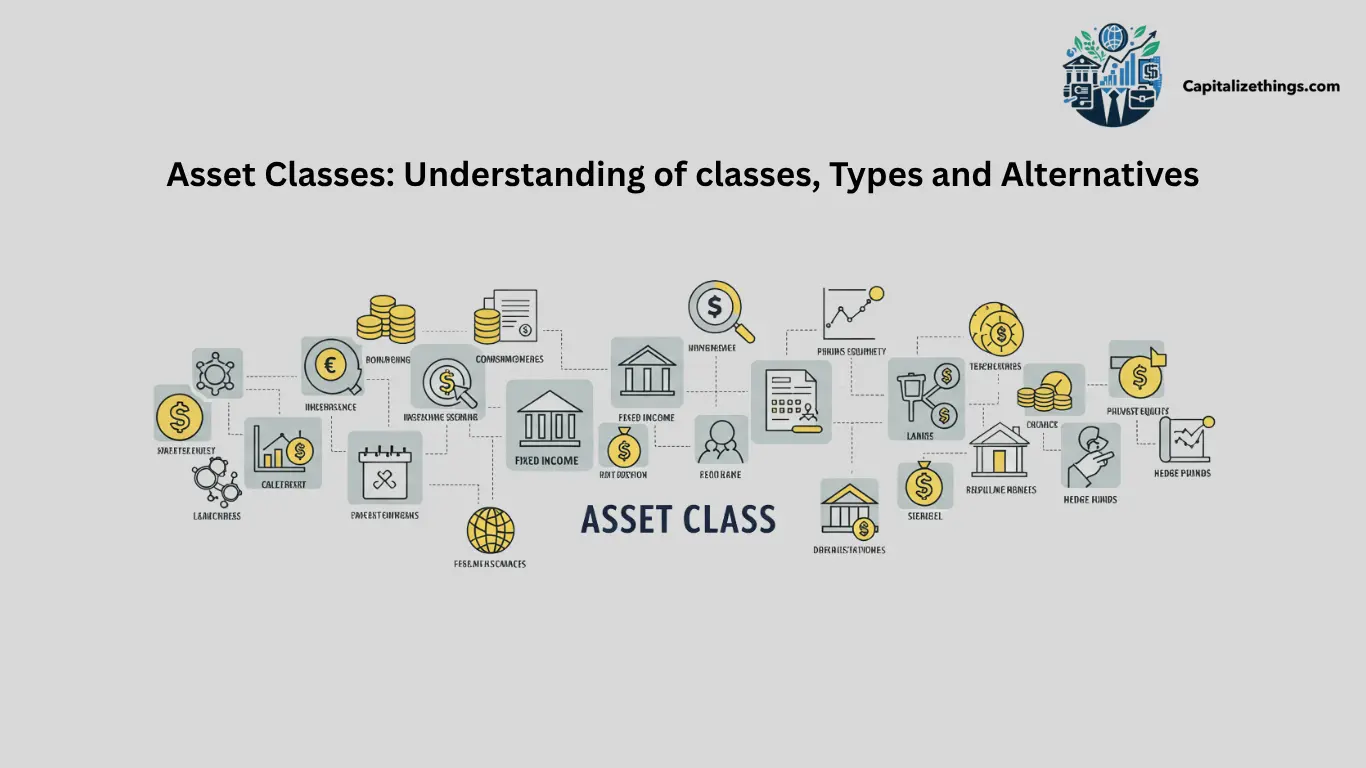


Very interesting information!Perfect just what I was searching for!